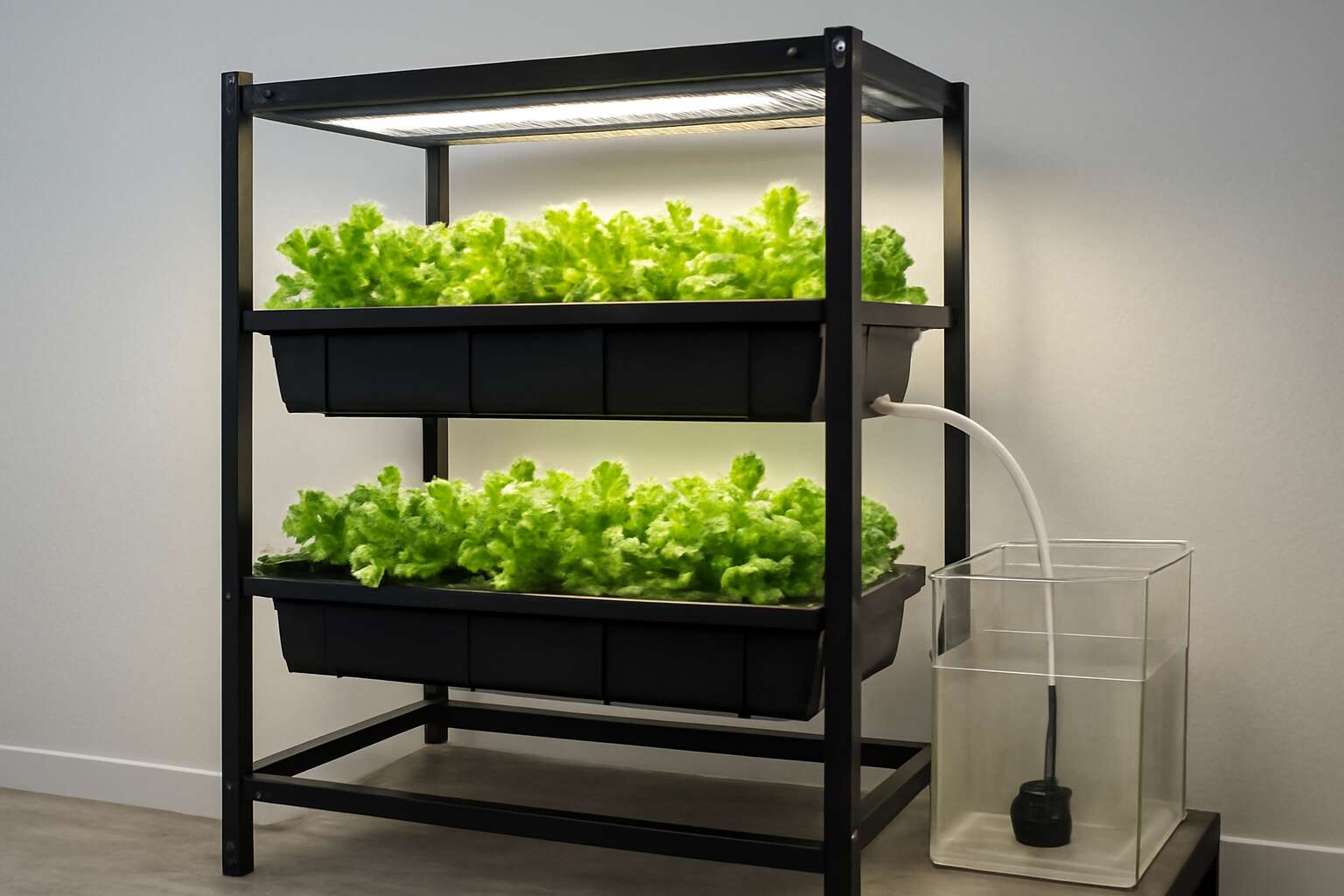
Essential Components for Hydroponic Systems
Growing Medium Options and Considerations
Across South Africa’s urban farms, the unseen foundation can determine a harvest’s fate. The growing medium controls moisture, air, and nutrient access, shaping every root’s growth. Choosing the right hydroponics equipment begins with a medium that matches the system, crop, and climate—so roots stay in balance, not drought or flood!
Growing medium options and considerations flow from system design. The following common choices support different crops and climates:
- Rockwool for sterile rooting
- Coco coir with perlite for balance
- Expanded clay for drainage
- Perlite or vermiculite for light texture
Each medium invites a different maintenance routine, affecting cost, reuse, and waste. Factor media durability, pH impact, and how easy it is to sanitize between cycles. The interplay between medium and system defines the cadence of a harvest, whispering that the right pairing yields more than growth alone.
Growing Mediums: Rockwool, Coco Coir, and Alternatives
Rooted in innovation, the right growing medium is the quiet engine behind South Africa’s urban farms. One degree of root-zone change can tilt a harvest toward faster uptake or slower growth, reminding us that medium choice shapes moisture, air, and nutrient choreography in every root hair.
Rockwool for sterile rooting, Coco Coir with perlite for balance, and Expanded clay for drainage are familiar anchors in hydroponics equipment. Perlite or vermiculite offer a lighter texture for crops that breathe well, especially where climate variability demands rapid drainage.
- Rockwool for sterile rooting
- Coco Coir with perlite for balance
- Expanded clay for drainage
Each medium carries a distinct maintenance rhythm, shaping reuse cycles, waste, and sanitation between cycles. When designing systems for local markets, pH stability and ease of sanitization emerge as crucial complements to cost considerations, echoing South Africa’s resource-conscious approach.
Plant Containers and Environmental Controls
Cape Town rooftop farmers know the secret: the right cradle for the roots unlocks harvest speed more reliably than flashy gadgets. “Control the microclimate, and the crop writes its own success story,” says a veteran grower. The container choice sets moisture, air, and root hair gossip, long before the first nutrient bottle is opened.
Plant containers matter as much as the water they cradle. Pick materials that resist cleaning rituals, fit your bench, and promote steady drainage. Proper sizing and geometry keep roots oxygenated and algae drama at bay. Your hydroponics equipment will hum along quietly when the cradle is right.
- Net pots and baskets for rapid drainage
- Stackable tray systems for compact benches
- Food-safe plastics or ceramic composites for sanitation
Environmental controls tighten the plant’s world: stable temperatures, reliable pH and EC drift management, and gentle air movement to curb condensation. In SA’s variable climate, robust sensors and straightforward calibration beat bravado and keep energy use sane.
Nutrient Delivery and pH Management
South African growers know the punchy truth: precise nutrition beats flashy gadgets every time. Essential components for nutrient delivery and pH management anchor every successful setup. A reliable reservoir, a quiet pump, and a disciplined dosing rhythm keep roots fed as the grow room hums along.
Within that framework, select core gear for hydroponics that stabilizes the drink your plants receive.
- pH and EC sensors for real-time insight
- automatic dosing or injector system for nutrients
- reservoir with a dependable pump for steady circulation
- air stones or gentle aeration to keep oxygen in solution
- cleanable tubing and fittings for sanitation
Simple, robust controls beat bravado in SA’s variable climate. A calm approach to pH drift and nutrient balance saves energy and protects yield. That’s the appeal of hydroponics equipment—steady, predictable results.
Irrigation and Water Delivery Systems
Water Reservoirs and Pumps
Water is the lifeblood of a thriving hydroponic setup. Smart irrigation and precise delivery cut waste and lock in consistent yields. When selecting hydroponics equipment, prioritize reliability, simple maintenance, and the ability to scale as seasons shift across South Africa.
Key components in a compact system include:
- Reservoirs and pumps
- Tubing and emitters
- Pressure-regulating devices
- Timers and controllers
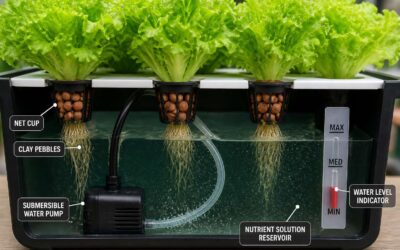
Water Reservoirs and Pumps play a central role. Use food-grade materials, place reservoirs to balance head pressure, and choose pumps based on head height and flow. Submersible or external designs both work in hydroponics equipment, with filtration aiding steady nutrient delivery.
With the right arrangement, this setup keeps roots oxygenated, ensures even distribution, and minimizes downtime in busy markets.
Tubing, Emitters, and Drip Systems
In South Africa, where water is a precious resource, precision in irrigation is money saved. Early adopters report water-use reductions of up to 40% when drip delivery aligns with plant demand. Within hydroponics equipment, tubing, emitters, and drip systems form the backbone of reliable, even hydration and nutrient distribution. This setup keeps roots oxygenated and ready for the next harvest cycle, and I’ve seen it deliver in busy markets!
Consider these components to optimize flow and minimize waste:
- Tubing: food-grade, chlorine-tolerant, flexible for tight setups
- Emitters: adjustable or precision firing to match crop demand
- Drip systems: spatially arranged to cover root zones evenly and reduce runoff
With thoughtful layout and clean filtration, this setup delivers steady nutrient delivery and scalable performance as seasons shift across SA.
Nutrient Film Technique vs Deep Water Culture
Water is a scarce luxury in South Africa, and some growers are reporting up to 40% savings when irrigation aligns with crop demand. In irrigation circles, Nutrient Film Technique (NFT) and Deep Water Culture (DWC) are two lean, reliable approaches within hydroponics equipment. NFT keeps a shallow nutrient film moving over roots; DWC suspends roots in an oxygen-rich reservoir. Both cut waste and stabilize growth, but they tackle different bottlenecks.
- NFT uses a thin, continuously flowing film of nutrient solution over roots.
- DWC suspends roots in a highly oxygenated reservoir for rapid uptake.
- Both rely on dependable pumps and clean filtration to avoid clogging and ensure steady delivery.
Choosing the right setup hinges on space, crop choice, and climate; in tight SA markets, NFT often shines for leafy greens, while DWC suits fruiting crops with dependable oxygenation. This is a facet of well-designed systems that keeps roots fed and air-saturated between harvests.
Automation and Timers
Water is gold in SA, and automation can cut waste by up to 40% when crops pull demand exactly. In the world of hydroponics equipment, timers and smart controllers turn guesswork into repeatable cycles—so the nutrient solution arrives when the roots need it, not on a whim.
- Weather-responsive scheduling
- Precision dosing via pulse pumps
- Remote alerts and error notifications
That level of control keeps energy use sane and roots healthy between harvests, while offering a safety net for busy teams in South Africa’s climate.
Water Quality and Filtration
Water is gold in SA—every drop counts, and precision irrigation makes it sing. In the realm of hydroponics equipment, irrigation and water delivery systems function as a quiet conductor: delivering nutrients with exact timing, maintaining steady pressure, and ensuring roots drink only what they need. The result is healthier plants, lower bills, and a climate-resilient operation that can weather the heat of our summer days.
Water quality and filtration are the unsung heroes. A clean intake, stabilized by layered filtration and gentle mineral balancing, guards the system from clogging and microbial trouble. For reliability, consider a compact filtration trio:
- Mechanical filter to remove particulates
- Activated carbon to erase tastes and organics
- UV or sanitation module to curb pathogens
- In-line conductivity sensor to monitor salinity
With these safeguards, the system preserves nutrient integrity and reduces downtime, letting SA growers focus on growth rather than glitches.
Lighting and Environmental Controls
Grow Lights Types: LED, HID, and Fluorescents
Lighting is the wand that makes flavor bloom. In controlled rooms, tuned light lifts yields across South Africa, trading guesswork for growth. In hydroponics equipment, the right light becomes a living clock—guiding leaves, roots, and fruit toward their peak.
Grow lights come in three main incarnations: LED, HID, and Fluorescents. LEDs offer spectral tuning and cool efficiency; HID delivers fierce intensity with more heat; fluorescents suit seedlings.
- LEDs: spectrum control, low heat, long life
- HID: high PPFD, deep penetration, greater heat load
- Fluorescents: gentle warmth, budget-friendly for clones
Pair the glow with guardians: thermostats, humidity control, and timed ventilation. In South Africa, outages loom; a UPS keeps the room singing, a quiet ally in hydroponics equipment.
Light Schedules and Spectrum
Lighting isn’t ambience—it’s the growth director. A precise photoperiod can lift yields by up to 30% when spectrum and timing align. Here in South Africa, outages loom, so a reliable routine turns fickle power into steady growth—part of robust hydroponics equipment.
Light Schedules and Spectrum: Vegetative stages benefit from 14–18 hours; flowering prefers 10–12. Dawn and dusk ramps soothe plants and save energy; staggered cycles can maximize space without shouting at the canopy.
LEDs offer spectral tuning, balancing red and blue peaks with white for a practical spectrum. Pair this with environmental controls—thermostats, humidity control, and timed ventilation—to keep the canopy stable and stress-free.
- Use a gentle dawn/dusk ramp to avoid shock
- Choose a tunable LED system for crop-stage adjustments
- Measure PPFD at canopy height and adjust fixture height
- Keep a UPS to safeguard against outages
Ventilation, Temperature, and Humidity Management
Power reliability is a quiet deal-maker in SA’s leafy basements. A steady climate—stable temps, clean air, balanced humidity—lets a harvest scale gracefully, even when the grid stutters. In this arena, hydroponics equipment that governs ventilation and temperature becomes more than gear; it’s a steady heartbeat for your canopy and a shield for the roots.
- Ventilation that breathes with the canopy, not against it
- Temperature stability to protect the root zone and microbial partners
- Humidity harmony to suppress mold while keeping transpiration steady
Beyond fans and ducts, sensors, dampers, and an uninterruptible power supply form the backbone, keeping the environment calm through outages. This is the essence of hydroponics equipment: a well-tuned climate that invites uniform growth and resilient yields.
Air Circulation and CO2 Enrichment
Lighting and environmental controls don’t just illuminate a canopy—they set the rhythm of every leaf and root. In controlled spaces, uniform light distribution and precise air exchange become a quiet backbone for steady growth, even when the grid hiccups. hydroponics equipment that manages ventilation and temperature translates into predictable yields and healthier roots. “Stable climate is yield insurance,” a South African grower reminds us!
Air Circulation and CO2 Enrichment hinge on a few reliable components. Key elements include:
- Air circulation fans that maintain gentle turnover
- Ducting and dampers for targeted air zones
- CO2 enrichment controllers and monitors
- Environmental sensors with data logging
Pair these with energy-efficient lighting and smart timers, and the system stays calm through outages and shifts in demand. The result is a resilient canopy and steady transpiration—built to last in South Africa’s grow rooms.
Energy Efficiency and Costs
“Light is a constant, not a luxury,” says a South African grower, and the canopy nods in agreement. Lighting and environmental controls—the quiet engine of hydroponics equipment—set the room’s rhythm. When high-efficacy fixtures glow and intelligent controls choreograph temperature, humidity, and airflow, energy use becomes predictable, even through load-shedding. The result is a calm canopy and steady transpiration!
- High-efficacy fixtures and dimming for tailored brightness
- Intelligent controls and zoning to limit wasted airflow
- Energy-recovery strategies and well-insulated ducting
- Backup power arrangements to bridge outages
Energy efficiency translates to real costs. Smart design trims bills, reduces cooling needs, and lengthens fixture life. Data-logging sensors turn consumption into insight, smoothing budgeting against tariff shifts. In South Africa’s grow rooms, this setup becomes a stable partner in production.
System Design, Setup, and Maintenance
Choosing a System: NFT, DWC, Ebb and Flow, Wick
Smart system design turns a cramped bench into a high-yield machine. In South Africa’s compact urban growscape, the choice matters: NFT, DWC, Ebb and Flow, or Wick each trade precision, resilience, and scalability differently. For serious hydroponics equipment, the focus is on reliability, ease of setup, and predictable maintenance—so the system you pick keeps working when the harvest window is tight!
Here are the standout design trade-offs to consider:
- NFT: lean, energy-efficient film and precise flow
- DWC: maximum root oxygenation with simple plumbing
- Ebb and Flow: flood-and-drain cycles for diverse media
- Wick: low-tech, few moving parts, quiet operation
Maintenance follows the design: check seals, monitor flow, and ensure access for cleaning. The right choice minimizes downtime and keeps your crops thriving without drama.
Space Planning and Setup
In South Africa’s compact urban grows, space is currency. A bench that breathes can lift yields, and the right hydroponics equipment turns a cramped shed into a reliable harvest machine. Harvest windows can shrink by up to 40% without thoughtful space planning, and that toll hits hardest in a busy harvest cycle.
System design should balance precision with resilience. Different hydroponic configurations demand clear access routes, robust pump placement, and tidy cable runs so maintenance never becomes a scramble. Consider these space planning pillars:
- Clear walkways and reachable fittings
- Dedicated, labeled service points for pumps and reservoirs
- Expansion-ready footprints with modular components
Maintenance follows the design: check seals, monitor flow, and ensure access for cleaning. A well-planned bench reduces downtime and keeps crops thriving when the harvest window is tight.
Maintenance and Troubleshooting
Space in South Africa’s compact urban grows is currency, and the system design acts as the bank. When your bench balances precision with resilience, your harvest window stays open even in a tight shed. Reliable hydroponics equipment becomes your quiet partner, turning bottlenecks into throughput!
Structure the setup around three pillars.
- Open corridors for maintenance and quick access
- Dedicated service hubs for pumps and reservoirs
- Modular footprints that scale with your crop cycle
Maintenance and troubleshooting flow from the design. Regular seals, flow checks, and accessible cleaning paths keep downtime minimal. When a fault surfaces, trace the liquid path, inspect fittings, and verify power and control lines on the equipment—precision saves a harvest.
Safety, Compliance, and Sustainability
System Design anchors success in South Africa’s compact urban grows, where every centimeter counts. The framework rests on three pillars: open corridors for maintenance, dedicated service hubs for pumps and reservoirs, and modular footprints that scale with your crop cycle.
- Open corridors for quick access
- Dedicated service hubs for pumps and reservoirs
- Modular footprints scalable to crop cycles
Setup translates design into daily precision. The layout guides a clean liquid path, with accessible cleaning routes and traceable fittings—no guesswork when a fault surfaces. The quiet partnership of hydroponics equipment supports every bench step.
Maintenance safety, compliance, and sustainability fuse into responsible growth. Seals, power lines, and control paths stay aligned with standards and checks, guarding welfare and minimizing downtime.
Expansion and Modularity
Across South Africa’s tight urban grows, modular system design can cut downtime by up to 30% and turn scarce space into reliable production. System Design anchors efficiency with flexible footprints, ready service, and clean liquid routing. That philosophy reshapes how you think about every bench and corridor. That design keeps overhead low, uptime high, and future expansion painless.
Setup translates design into daily precision. The layout guides a clean liquid path, with accessible cleaning routes and traceable fittings—no guesswork when a fault surfaces. The quiet partner, hydroponics equipment, supports every bench step.
Maintenance, safety, and sustainability fuse into responsible growth. Sealed paths, compliant power, and modular connections stay aligned with standards, minimizing downtime. Modularity is not just scale; it’s an expansion plan that grows with your crop cycles, letting hydroponics equipment evolve.

0 Comments