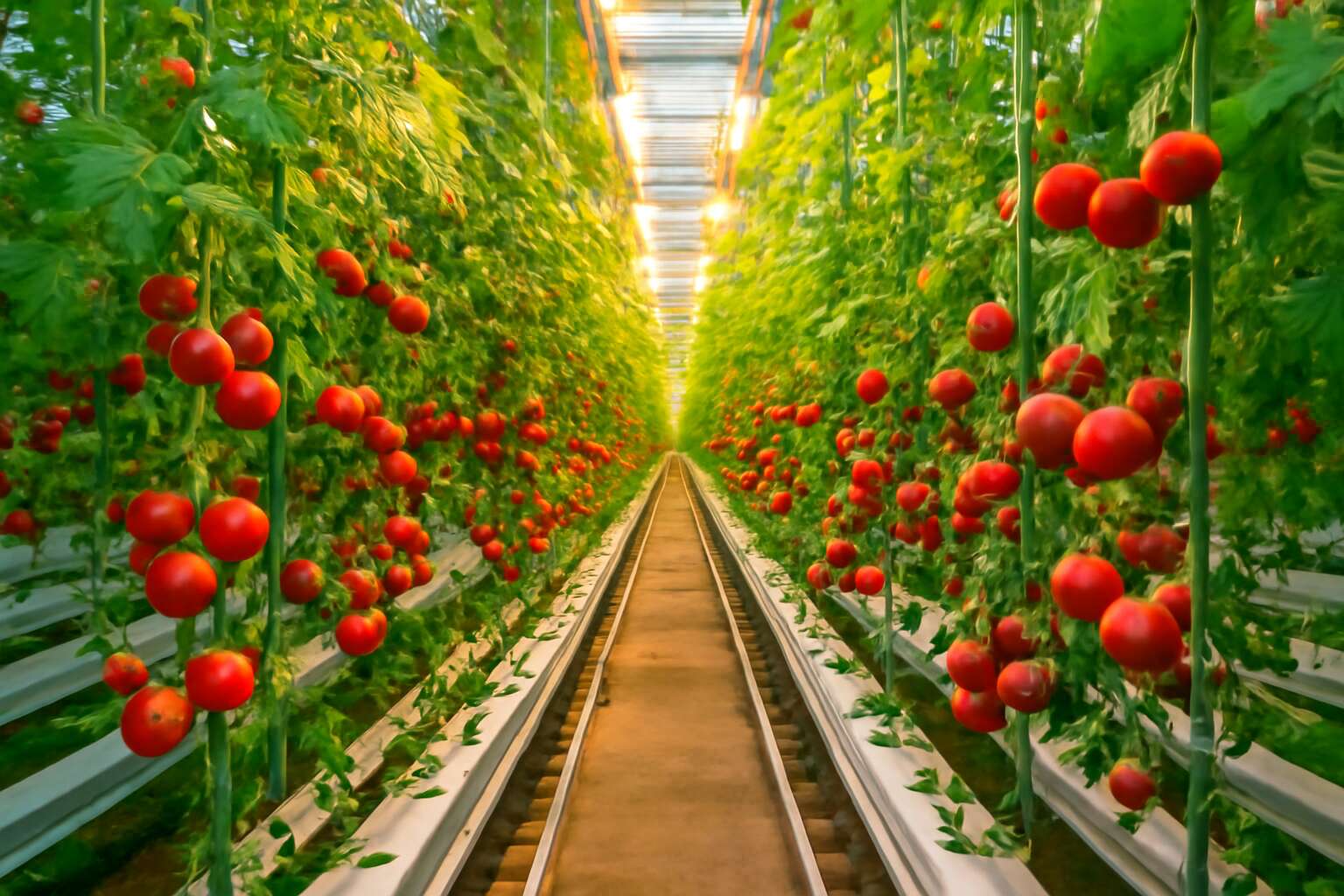
Fundamentals of hydroponic tomato cultivation
System basics and terminology for hydroponic tomato growing
Controlled success in a tight footprint comes from the fundamentals of hydroponic tomato cultivation. In this system, water, nutrients, and oxygen meet the roots directly, with no soil to anchor them. Growers learn to tune EC and pH, regulate light, and monitor airflow to prevent disease. For South Africa’s water-conscious farmers, hydroponics farming tomatoes promises reliable yields in greenhouses or tunnels, even when summer heat bites hard.
A quick glossary helps map the field for newcomers and seasoned growers alike:
- EC and pH: balancing nutrient uptake
- Reservoir and aeration: delivering oxygen to roots
- Growing media and channels: NFT, DWC, or drip trays
- System types: ebb-and-flow, NFT, or drip
These terms translate into everyday choices, from pump size to plant spacing, shaping reliable harvests in controlled hydroponic tomato systems across Southern Africa.
Nutrient management and pH control for tomatoes
As one veteran grower likes to say, “the root zone is a theatre; nutrients are the actors”!
In the realm of hydroponics farming tomatoes, precision in nutrient balance shapes every harvest. Nutrient management in this craft is less about guessing and more about harmony between macro and micro elements, with the pH acting as the quiet gatekeeper. The right balance feeds steady growth and flavorful fruit without the soil’s ballast.
- Balanced NPK and micronutrients
- Regular EC and pH awareness
- Calcium and magnesium considerations
Root nutrition in hydroponics relies on a sensible mix of macronutrients and trace elements, tuned to plant stage and density. Too much salt or an imbalance can dull color or slow fruit fill. This is where vigilant, non-urgent monitoring matters.
In South Africa’s greenhouses and tunnels, the payoff is a predictable crop even as heat bites outside. A quiet rhythm of inputs and tests keeps performance on the right side of reliable.
Choosing growing media and containers
When you talk about hydroponics farming tomatoes, the media you cradle the roots in defines everything from growth rate to flavor. A veteran grower likes to say, “The root zone is the engine room.” In South Africa’s greenhouses, the right media and container setup unlock reliable yields, even as outside temperatures swing. The goal is aeration, drainage, and steady moisture without drowning the roots.
Foundations include media that balance drainage, moisture retention, and root oxygen. Here are common choices in SA operations:
- Coco coir blends for moisture stability
- Rockwool for consistent porosity and easy handling
- Expanded clay (LECA) for durability and excellent drainage
Container choice matters, too: net pots, trough channels, and recirculating systems each have advantages in a controlled SA climate. Matching pot size to plant density helps prevent root crowding and maintains even moisture distribution.
Lighting, climate control, and ventilation essentials
In hydroponics farming tomatoes, lighting and climate control are the heartbeat of every harvest. South Africa’s greenhouses prove a disciplined regime can outpace weather and keep flavor steady.
Lighting essentials strip the day into intention: a spectrum that favors fruiting, steady intensity, and a photoperiod of 14 to 18 hours to keep vines productive without stressing the root zone.
- Balanced spectrum and steady intensity
- Adequate cooling and airflow
- Humidity management for stable transpiration
Climate control locks in a safe temperature window—day 22–26°C and nights 16–18°C—plus humidity that keeps transpiration steady without condensation. If used, CO2 enrichment should be measured and gentle to avoid stomatal shock and burn.
Ventilation and air turnover are the last line of defense: continuous air exchange prevents stale pockets and drives uniform moisture distribution. Employ exhaust and intake setup, with cross-ventilation and automated controls that respond to temperature and humidity rather than clock.
Water quality, reservoir setup, and recirculation basics
Water quality is the heartbeat of hydroponics farming tomatoes. In controlled environments, clean water and stable mineral content can influence crop performance by up to 30%, shaping flavor and firmness across harvest cycles. Balanced oxygen, steady salinity, and trace minerals keep the canopy productive.
Water quality factors extend beyond purity—optimal conditions surprise even seasoned growers! Temperature, microbial load, and gas exchange shape root vigor and transpiration. Reservoirs are built from food-grade materials designed to minimize biofilms, while recirculation forms a gentle loop that stabilizes moisture and nutrient delivery without shocking roots.
- Water quality parameters
- Reservoir materials and cleanliness
- Recirculation for uniform nutrient delivery
In the South African context, local water profiles and energy considerations influence equipment and layouts, aligning fundamentals with seasonal demand.
Popular hydroponic systems for tomatoes
Overview of NFT, DWC, drip, and wick systems
From the sheltered hum of a South African greenhouse, hydroponics farming tomatoes glows like a neon sign in a rain-soaked night. A whisper of science, a storm of efficiency—each leaf a letter in light. Water and nutrients flow in measured rhythm, and the harvest answers with stubborn sweetness.
Within this field, the most popular systems are NFT, DWC, drip, and wick. Each path offers a different chorus to the same tomato melody.
- NFT (Nutrient Film Technique): a shallow nutrient film flows over roots, maximizing oxygen and space.
- DWC (Deep Water Culture): roots hang in an oxygenated nutrient bath, delivering rapid growth.
- Drip systems: steady, adjustable feeds to each plant, flexible for larger containers.
- Wick systems: quiet, simple delivery by capillary action.
Space, climate, and routine maintenance shape the choice, yet every method promises a harvest that travels beyond soil’s shadow into a more resilient future.
Selecting the right system for space, budget, and scale
Smart choice-making begins with space, budget, and ambition. The right system is a discreet blend of footprint, energy appetite, and how swiftly you crave results. In South Africa, growers weigh local costs and maintenance rhythms with the measured courtesy of a market day vendor.
Consider these guiding factors as you compare options for space, budget, and scale:
- Space efficiency and layout flexibility
- Initial and ongoing costs
- Ease of maintenance and reliability
- Water source, climate control needs, and energy use
- Scalability from hobby to commercial operation
Ultimately, the system you select should harmonize with your farm’s routine so every leaf and fruit tells a story of deliberate design. For those chasing the promise of hydroponics farming tomatoes, thoughtful choice is its own harvest.
Automation, sensors, and monitoring tools for tomatoes
Every ambitious grower dreams of tomato yields that don’t flip with the weather. In South Africa, automation can lift yields by up to 40% and slash waste, turning volatile seasons into predictable harvests.
For those pursuing hydroponics farming tomatoes, automation, sensors, and monitoring tools become the invisible hands stitching together consistency—stabilizing pH, EC, water levels, and temperature so plants perform even when the breeze outside tips its hat.
Explore these core components to keep tomatoes predictable and proud:
- Automated irrigation timers and dosing pumps
- Sensor set: pH, EC, temperature, humidity
- Monitoring software with real-time dashboards and alerts
That precision keeps the dream thriving year-round in SA.
Greenhouse and indoor setup considerations
In the realm of hydroponics farming tomatoes, space is the compass and climate the wind. Greenhouse setups blend generous natural light with smart ventilation, while compact indoor rooms lean on vertical racks and dependable LEDs. The aim is a steady, harvest-worthy rhythm that survives capricious weather and fluctuating electricity.
Popular approaches maximize space and ease of care without sacrificing fruit quality. Consider these setup notes:
- Greenhouses: three-zone climate control, shade screens, and resilient cooling to keep roots content.
- Indoor rooms: tall ceilings for stacking, energy-efficient LED spectra, and airtight humidity management to curb disease.
Whichever path, ensure accessible nutrient lines, clean-out routines, and clear pathways for maintenance—letting tomatoes march toward harvest with a quiet, confident tempo.
DIY versus commercial systems for home growers
South Africa’s balconies and small plots are quietly becoming seedbeds of resilience. “If you can dream a string of red, you can grow it,” a gardener told me, smiling at a sunlit row of seedlings. In this climate, hydroponics farming tomatoes turns tight spaces into steady, season-round harvests.
DIY setups reward hands-on learning and big savings, while commercial home systems offer plug-and-play reliability. Consider these contrasts:
- DIY systems: lower upfront costs, scalable racks, ongoing tinkering
- Commercial home systems: built-in nutrient lines, customer support, tighter environmental control
- Decision factors: space, power stability, and maintenance rhythm
Either path can deliver fruit-forward ambition.
Like farmers in the Karoo or the Winelands, home growers shape the rhythm of their own garden with patience and care. The right choice respects your space, your budget, and your daily routine.
Growing tomatoes in hydroponics: best practices
Seed selection, germination, and transplant strategies
Across South Africa, hydroponics farming tomatoes has become a thread in the agricultural tapestry, blending water stewardship with flavor, even under water-stressed skies. A Cape Town grower whispers, “We harvest resilience as surely as we harvest fruit,” and some facilities report up to 30% more consistent yields in controlled rooms.
Seed selection hinges on vigor, disease resistance, and suitability for soilless culture. Germination loves uniform warmth and steady moisture, while transplant strategies favor sturdy root systems and well-formed seedlings that sync with your system’s rhythm— I see that rhythm daily. The result is tomatoes carrying sunlit flavor from leaf to ledger in hydroponics farming tomatoes.
- Seed vigor and disease resistance
- Germination uniformity and temperature tolerance
- Transplant readiness and root stability
Choosing seeds and guiding these moments with care sets the stage for flavorful, resilient fruit in hydroponics farming tomatoes—where science meets dream.
Nutrient schedules, feeding rates, and solution management
In South Africa’s glasshouses and sunlit rooms, growing tomatoes with precision is a daily ritual. Across SA, growers report up to 20% more consistent yields and brighter flavor when nutrient schedules are tuned. For hydroponics farming tomatoes, these schedules steer vigor as surely as the sun steers ripening fruit. The rhythm is gentle: steady EC, balanced N-P-K, and micronutrients that nourish roots and leaves without drowning the system.
A few guiding ideas:
- Align feeding with growth stage and crop load
- Maintain stable pH and a clean reservoir
- Rotate and vary nutrients to prevent salt buildup
As seasons change, the reservoir becomes a living ledger of balance, and the grower learns to listen to the plants’ quiet requests. When tuned right, hydroponics farming tomatoes deliver consistent sweetness and aroma.
Pruning, trellising, and canopy management
In hydroponics farming tomatoes, pruning and trellising become a quiet art I watch as vigor flows without choking the roots. In South Africa’s glasshouses, a well-managed canopy can boost uniformity and flavor, turning every beam of light into a patient harvest.
Pruning disciplines the plant’s appetite for light and shoot growth. By light-touch removal of crowded shoots, the plant concentrates energy on fruiting zones, producing brighter fruit and steadier ripening.
Trellising shapes the canopy, lifting stems onto lines so fruiting zones stay accessible and even. For hydroponics farming tomatoes, a disciplined trellis makes light and air sing. A tight, vertical frame reduces shading and keeps growth away from humid corners where mildew likes to lurk.
Canopy management is an ongoing dialogue with the house. Maintain air gaps, stagger leaf density, and monitor microclimates to avoid hot pockets and damp edges.
- Balanced pruning focus
- Vertical trellis alignment
- Open canopy for airflow
Pollination strategies and fruit set optimization
In hydroponics farming tomatoes, pollination is a tiny orchestra—nurtured by breeze, light, and a touch of vibration. A veteran SA grower quips, “The quiet breeze is the patient pollinator.”
Pollination strategies hinge on a balanced microclimate and thoughtful stimulation. Gentle vibrations and steady air movement help pollen find receptive pistils, while even light and leaf gaps prevent blossoms from playing hide-and-seek. Damp pockets invite mildew and blossom drop, and nobody wants a soap opera in the greenhouse.
- Gentle, non-destructive vibration to encourage pollen release
- Consistent airflow to ferry pollen between blossoms
- Microclimate stability to protect pollen viability
These considerations align with the realities of hydroponics farming tomatoes, delivering more uniform fruit set and brighter, better-tasting harvests across South Africa’s glasshouses and indoor grows.
Integrated pest and disease management in hydroponics
In South Africa’s glasshouses, a tomato can be saved by a whisper of wind and a patient leaf. Across SA, up to 25% yield variability stems from pests and microclimate. I hear a veteran SA grower murmur, “Clean leaves, clean profits,” and I know that in hydroponics farming tomatoes, balance is the true harvest ritual.
Integrated pest and disease management in hydroponics shapes every leaf. The approach favors sanitation, vigilant observation, and selective biocontrols over brute sprays. In this cathedral-like space, damp pockets are banished, fungi kept at bay, and beneficials aligned with the cycle of the roots and the nutrient solution.
In the South African climate, disease-detection and pest-suppressing strategies must be subtle—microclimate stability, clean irrigation, and proactive monitoring maintain plant health without gloom. With steady air, gentle humidity, and a quiet, strategic use of inputs, the crop breathes evenly and the fruit ripens with a brighter, more assured flavor.
Harvest timing, post-harvest handling, and storage
A precisely timed harvest can lift marketable yields by up to 20% in hydroponics farming tomatoes. In these systems, harvest timing hinges on color, firmness, and sugar development, not calendar pages. The right moment preserves texture and brightness, delivering fruit that travels from greenhouse to market with steady appeal.
Post-harvest handling smooths that journey. Gentle handling, clean packing surfaces, and short cool-chain exposure protect the fruit’s aroma and firmness. Consider these factors:
- Temperature stability supports flavor and shelf life.
- Minimal bruising through padded containers.
- Sanitary packaging to reduce decay.
- Controlled moisture to prevent condensation and texture loss.
Storage rounds out the cycle: store at cool, stable conditions with balanced humidity to preserve firmness and avoid split fruit. In South Africa, peak supply seasons benefit from uniform temperatures and careful transit to retailers, keeping the harvest resilient.
Troubleshooting and optimization for yields
Diagnosing nutrient deficiencies and toxicities
Tomato yields in hydroponics farming tomatoes hinge on early diagnosis. Even small mineral imbalances can trim fruit size and set. In trials, early signal-reading boosted consistency for South African growers facing climate swings.
Diagnosing nutrient issues, including deficiencies and toxicities, relies on patterns rather than a single symptom. Watch for signals that separate deficiencies from excess:
- Interveinal chlorosis on new growth
- Edge burn or curling leaves
- Stunted growth with dark, dense foliage
Optimization for yields comes from steady root health and salt control. Treat readings as trends, not one-offs, and maintain balance as seasons shift, keeping the system resilient.
EC/PPM, pH, and water quality troubleshooting
Across South African greenhouses, precise EC control has lifted consistent yields by up to 15% amid climate swings. In the quiet hum of fans, the roots whisper what the leaves confess. In hydroponics farming tomatoes, EC/PPM, pH and water quality are the axis on which growth spins, preventing silent deficits from creeping into canopies.
Watch for signals that separate deficiencies from excess:
- EC/PPM extremes that correlate with tip burn, dull foliage, or slow vigor
- pH drift nudging nutrients into lockout, with edge burn or interveinal yellowing
- Water quality concerns—stale solution, low dissolved oxygen, or cloudy reservoirs
- Inconsistent readings after replenishment or system cleaning
Seasonal shifts demand a steady gaze on dissolved solids, pH margins, and the purity of every drop. In the end, filtration, aeration, and disciplined calibration keep the system singing in tune with healthy fruiting, the shadow of trouble kept at bay in hydroponics farming tomatoes.
System maintenance, clogs, and component wear
Maintenance is the quiet engine behind steady tomato yields! In hydroponics farming tomatoes, a small clog or worn seal can ripple through days of growth, turning momentum into stagnation. The trick is reading the system’s quiet signals—odd vibration, slight pressure drift, or a hint of foam at the reservoir—that precede a dip in vigor.
- Clogs in emitters or tubing reduce flow and create hotspots
- Worn pump seals or loose fittings cause intermittent pressure
- Filtration and aeration appearing tired, with reduced oxygen exchange
- Reservoir clarity and odor shifts after maintenance hint at bloom or stagnation
Seasonal shifts demand a patient, diagnostic gaze; the system’s health rides on tiny, daily cues, not thunderous alarms. When you respect those whispers, you protect the vitality of your crop and preserve the promise of consistent fruit set.
Environmental stress signs and remediation
In hydroponics farming tomatoes, tiny cues drive big yields; miss one whisper from the system and momentum tumbles. The rhythm of roots, air, and nutrient flow reveals itself in quiet signs—the kind you notice only when you’re paying attention!
Troubleshooting and optimization hinge on reading those signs and staying ahead of slow drift. Quick environmental stress signs to watch for:
- Uneven leaf color and curling under heat or light stress
- Slowed growth and uneven fruiting across zones
- Subtle root changes and reservoir clarity shifts
Remediation for yields rests on stabilizing the environment, preserving consistent nutrient flow, and keeping the system clean. In South Africa’s varied climate, daily monitoring and calm, measured responses help keep canopies even and fruit set steady.
Energy efficiency, cost-saving practices, and ROI tips
In a South African greenhouse, a single, well-timed adjustment can tilt the harvest toward prosperity. The dance of lights, pumps, and nutrients creates a rhythm that translates into steady yields for hydroponics farming tomatoes. Read the system’s whispers, and ROI becomes a narrative you can guide.
Troubleshooting yields means treating energy use as part of the crop’s life. Smarter energy planning, efficient lighting, and calm reservoir dynamics cut drift and sustain fruit set without breaking the bank.
- Energy contracts and off-peak pricing to shave peak bills
- Efficient pumps, LEDs, and sensors to lower parasitic losses
- Thermal management and waste heat recovery to keep canopy temperatures steady
- Predictive maintenance to prevent downtime and extend component life
In SA’s climate, readable signals and measured responses turn small readouts into lasting performance for hydroponics farming tomatoes.

0 Comments