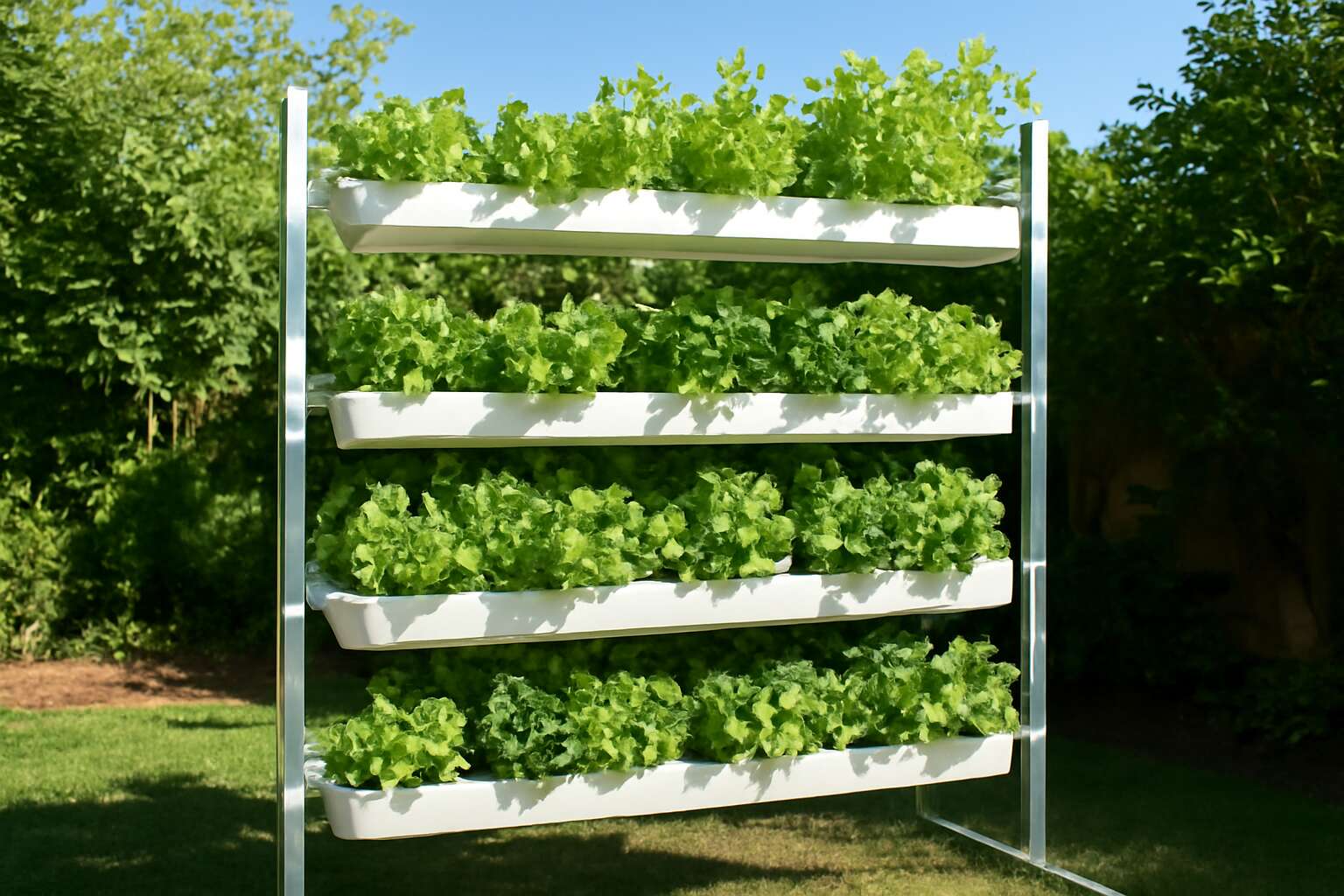
Outdoor Hydroponic System Planning
Assessing Your Outdoor Space and Climate
“The sun is a patient teacher,” farmers in the Karoo say, and in South Africa that patience matters when planning hydroponics outdoors. Before a single tray is filled, a quiet survey of space and climate reveals a garden’s true personality. Light, shade patterns, and shelter from dusk-time gusts shape the setup more than any catalog image ever could.
Assessing the site goes beyond size. A few notes to keep in mind:
- Sun exposure across seasons
- Wind and microclimates
- Drainage and water accessibility
- Security and wildlife considerations
These observations shape how such systems fit into a rural homestead. When the sun climbs, the space breathes, and planning becomes an act of listening!
Choosing the Right Hydroponic System for Outdoors
Outdoor gardens bend to the weather, yet smart planning keeps the harvest honest. ‘The sun is a patient teacher,’ says a Karoo elder, and that patience should guide every outdoor hydroponics choice. Beauty fades without reliable structure!
Selecting a system means aligning space, climate quirks, and daily rhythm. For hydroponics outdoors, options like NFT, DWC, drip, or ebb-and-flow each fit differently. Prioritize UV-stable materials, easy access for topping and testing, and a design that breathes in hot afternoons while sheltering roots from gusts.
- Space and layout compatibility
- System resilience to sun and heat
- Access for feeding and monitoring
- Cost, maintenance, and parts availability
Let the garden’s pulse guide you, not the brochure. The right setup welcomes growth with grace and practicality, season after season.
Layout and Space Optimization for Outdoor Growing
With about 2,500 hours of sunshine a year, South Africa’s outdoors demand a plan as bold as the horizon. In that brightness, hydroponics outdoors becomes a dance of light, wind, and water, where layout determines harvests as surely as roots feel the earth. A compact footprint can shelter roots from gusts and keep nutrient solutions steady, while UV-stable materials endure season after season. The rhythm of heat invites us to weave shade and sun into a living mosaic, granting calm in the afternoon blaze.
Layout and space optimization hinge on the garden’s spine—paths for maintenance, rotation space for crops, and vertical opportunities for trellising.
- Sun-path and wind corridors
- Accessible top-offs and testing stations
- Modular, wind-resistant framing
Let the garden’s pulse guide the setup. In this way, hydroponics outdoors becomes both practical and magical, season after season.
Regulations, Permits, and Safety Considerations
South Africa’s sun invites bold plans, but every bold plan must answer to the rulebook. For hydroponics outdoors, permits, zoning, and safety rules shape every sweeping arc of a plan. “Safety is the seed of every thriving system,” a veteran grower told me, and that counsel blooms as we map setups that weather wind and water. Planning now means fewer surprises when storms roll in and temperatures shift, turning daylight into a harvest that feels as deliberate as a held breath.
- Permits and zoning for structures, water tanks, and electrical work
- Outdoor electrical safety, with weather-rated gear and GFCI
- Water containment and drainage to prevent runoff
- Wind loads and frame integrity for sturdiness
- Fire safety, clear access, and shutoff protocols
These safeguards are not cages but a luminous frame—protecting people, plants, and potential harvests as they unfold in the South African light.
Outdoor Hydroponics Setup: Systems, Components, and Installation
Hydroponic Containers, Frames, and Mounting Options
Across South Africa, open-sky growers report up to 25% more reliable harvests when the setup is tuned to the climate. For hydroponics outdoors, the right containers and frames are the heartbeat of success.
Outdoor hydroponics setups hinge on robust containers, frames, and mounting options that weather wind, rain, and heat. Installation matters as much as the system itself, letting you access roots and nutrient lines without fighting the weather, as if coaxing the garden to listen.
- Hydroponic containers: troughs, reservoir bins, or vertical towers that drain cleanly.
- Frames and structures: corrosion-resistant frames, UV-stable plastics, and modular components for easy reconfiguration.
- Mounting options: ground stakes, wall brackets, and freestanding stands that stand up to sun and gusts.
Design philosophy favors simple, scalable layouts that keep reach and maintenance at the fore; South Africa’s climate rewards flexible mounting and quick drainage, ensuring your crop cycle stays ahead of the sun.
Irrigation, Pumping, and Water Delivery Design
Across South Africa, open-sky growers report up to 25% more reliable harvests when the climate aligns with the season. Outdoor hydroponics setups hinge on a triad: precise irrigation, dependable pumping, and a water-delivery design that withstands sun, wind, and heat. The stakes rise with every gust, yet the architecture keeps roots calm and streams clear.
In hydroponics outdoors, the water-delivery loop must cope with wind and heat, weaving irrigation pressure, pump reliability, and drainage into a single, predictable circuit. That circuit thrives on modular, corrosion-resistant components and UV-stable materials. Key components include:
- Irrigation lines and emitters designed for even coverage
- Pump assemblies with surge protection and adjustable flow
- Reservoir management with aeration and gravity drainage
Beyond parts, installation favors accessible routing, clean drainage, and weather-ready layouts that let roots breathe and nutrients stay on course! Elegant design keeps maintenance to a minimum, while the system whispers back when the sun wanes.
Nutrient Delivery and pH Management in Outdoor Conditions
Across South Africa, growers report up to 25% more reliable harvests when climate and season align. In this reality, hydroponics outdoors demands a precise nutrient delivery and pH management routine that weather and wind can’t shake. The root zone becomes a quiet fulcrum, and the feed must ride the heat without turning volatile or sour, while minerals stay in balance as the day unfolds.
Here, nutrient delivery and pH management are conversations between chemistry and climate, expressed through principles rather than prescriptions.
- Stability of nutrient delivery under heat and light exposure
- pH buffering compatible with crop needs and water chemistry
- Managing seasonal shifts in EC and nutrient balance without abrupt changes
Done with care, the system becomes a patient, weather-aware organism whose roots breathe easy and streams stay clear.
Lighting, Shade, and Supplemental Light Planning
Harvests ride the sun with a quiet genius. Across South Africa, climate alignment can yield up to 25% more reliable harvests, turning risk into rhythm. Outdoor hydroponics setup becomes a choreography of systems, components, and installation lighting and shade, where frames bow to the wind and shade cloth keeps the heat friendly. For hydroponics outdoors, the day becomes a living map.
- Systems: NFT, DWC, or ebb-and-flow trays
- Frames and mounting: weatherproof steel or aluminum, durable anchors
- Lighting and shade: daylight planning, shade fabrics, reflective surfaces
- Supplemental light planning: LEDs or HID options for low light or extended evenings
Together, these elements translate sun, wind, and soil into an enduring, weather-aware ecosystem for hydroponics outdoors.
Environmental Monitoring and Climate Control for Outdoors
Outdoor hydroponics setups turn sun and wind into steady partners. The focus here is on robust systems, dependable components, and installation that endures South Africa’s changing weather. Environmental monitoring uses sensors for reservoir temperature, pH, EC, ambient temperature, and humidity, letting growers respond before stress arrives. A weatherproof frame and durable anchors support airflow and rain runoff, while shade fabrics and reflective surfaces temper heat. hydroponics outdoors benefits from measured shade and wind protection.
Environmental monitoring and climate control translate data into action. Automated controllers regulate circulation, aeration, and nutrient delivery while logging weather patterns for season-to-season adjustments. Plan for redundancy: spare pumps and wind-braced mounts. A well-tuned setup delivers reliability when the afternoon sun climbs and the evening breeze cools, keeping roots hydrated and resilient—proof that careful planning pays off in the field!
Grow Mediums, Crops, and Seasonal Planning for Outdoor Hydroponics
Selecting Outdoor-Suitable Media and Substrates
The best-kept secret of thriving outdoor greens? a grow medium that tames moisture and air, not chokes the roots. In hydroponics outdoors, the right substrate maximizes water use while fending off heat stress under South Africa’s sun. Selecting outdoor-suitable media means weighing drainage, aeration, and local availability.
- Coco coir
- Perlite
- Expanded clay pellets (LECA)
- Rockwool
Crops best suited for outdoor hydroponics lean toward robust, fast cycles: leafy greens, flavorful herbs, vining tomatoes, and peppers—plants that tolerate variable light and wind. Pair selections with media and container choices that support steady root oxygenation and steady nutrient flow, resisting temperature swings without drama.
Seasonal planning weaves climate cues into a steady tapestry: plan for dormancy gaps, rain events, and peak sun without overcomplicating the schedule. A forward-looking cropping rhythm keeps harvests consistent across seasons in SA, turning sunlight into reliable yields rather than a gamble of luck.
Nutrient Scheduling, Salinity, and Water Quality in Open Air
Grow mediums for the open-air workhorse that is hydroponics outdoors demand drainage and air as much as moisture control. Coco coir, perlite, LECA, and rockwool each offer different breathing room for roots. The trick is choosing a substrate that won’t bake in SA sun while still draining fast.
Crops that thrive outdoors lean toward hardy, fast cycles: leafy greens, fragrant herbs, and vining tomatoes and peppers that tolerate wind and variable light. Pair selections with containers that keep roots oxygenated and balance steady nutrient flow.
- Leafy greens (spinach, lettuce)
- Herbs (basil, chives, cilantro)
- Tomatoes/peppers (dwarf or compact varieties)
Seasonal planning stitches climate cues into a reliable rhythm—think dormancy gaps, sudden rain, and peak sun. In SA, monitor nutrient scheduling, salinity, and water quality to prevent salts from creeping up as temperatures swing. hydroponics outdoors rewards careful timing.
Crop Selection: Vegetables, Herbs, and Edibles for Outdoor Hydroponics
Root breath is a quiet advantage; in hydroponics outdoors, the choice of grow medium can tilt a harvest from drought to abundance. Coco coir, perlite, LECA, and rockwool offer varying airspace for roots, with drainage and aeration as the unspoken heroes—especially under SA sun.
For hydroponics outdoors, crops with hardy, fast cycles shine: leafy greens such as spinach and lettuce; fragrant herbs like basil, chives, and cilantro; and dwarf tomatoes or compact peppers. Pair these with containers that keep roots oxygenated and support steady nutrient flow amid wind and variable light.
Seasonal planning stitches climate cues into a reliable rhythm—dormancy gaps, sudden rain, and peak sun becoming predictable patterns. In South Africa, monitor nutrient scheduling, salinity, and water quality to prevent salt buildup as temperatures swing. The outdoors rewards patient timing and tuned expectations.
Seasonal Crop Planning and Vertical Space Use
Grow Mediums are the unsung skeleton of outdoor systems. In hydroponics outdoors, root breath matters as daylight does, and media choice tilts a harvest from drought to abundance. Coco coir, perlite, LECA, and rockwool offer varying airspace and drainage under the South African sun.
Crops prosper with hardy, fast cycles. In hydroponics outdoors, spinach and lettuce lead the pack, while basil, chives, and cilantro perfume the air; compact tomatoes or peppers fill gaps. Choose containers that keep roots oxygenated and guard against wind while maintaining nutrient flow.
Seasonal planning stitches climate cues into a reliable rhythm. In South Africa, track nutrient scheduling, salinity, and water quality to prevent salt buildup as temperatures swing. Vertical space becomes a quiet ally—think wall channels, stacked trays, and hanging planters—to stretch light.
- Wall-mounted hydroponic channels
- Vertical towers or shelving
- Hanging baskets or slatted planters
Patience is the gardener’s ally as seasons turn.
Pro Tips for Plant Pairing and Companion Planting Outdoors
Sun-warmed air and the right grow medium are the quiet engine of abundance in hydroponics outdoors. Coco coir, perlite, LECA, and rockwool offer varying airspace and drainage under the South African sun, shaping root breath and drought resilience.
- Coco coir: moisture retention with air
- Perlite: drainage and light weight
- LECA: reusable, airy, stable
Spinach and lettuce sprint to harvest, while basil, chives, and cilantro perfume the air; compact tomatoes or peppers fill gaps. Choose containers that keep roots oxygenated and protect against wind while keeping nutrients flowing.
- Pair basil with tomatoes to boost aroma and deter pests
- Chives beside greens to help deter aphids
- Cilantro near peppers and spinach for flavor synergy
Seasonal planning stitches climate cues into a rhythm. Track nutrients, salinity, and water quality to prevent salt buildup as temperatures swing. Vertical space becomes a quiet ally—wall channels, stacked trays, and hanging planters.
Maintenance, Pest Management, and Troubleshooting in Outdoor Settings
Preventive Maintenance, Cleaning Routines, and Equipment Longevity
Powering through the day’s heat, hydroponics outdoors reveals its secret: consistency. A tuned preventive maintenance schedule keeps pumps whispering and roots breathing easy. Cleaning routines—wipe-downs, algae checks, and debris scans—build a steady rhythm that the sun-burnished South African garden depends on. “Maintenance is the quiet engine behind every thriving harvest,” a maxim that rings true in every green corner.
Pest Management: Outdoors invites wandering pests, so scouting and barriers matter more than bravado. Regular spacing, natural deterrents, and swift removal of decaying matter protect foliage without heavy chemicals.
Troubleshooting and Equipment Longevity: When symptoms travel from root zone to canopy, track flow, pH shifts, and sensor readings. Longevity rests on sturdy fittings and corrosion-resistant materials.
Even the weathered wind and blazing sun become allies when care, vigilance, and curiosity guide the system.
Pest, Disease, and Mildew Control in Outdoor Environments
In the open air, maintenance becomes a living rhythm. A field survey reports up to 30% yield losses when pests and mildew slip through the cracks, and I’ve witnessed it under the SA sun. With vigilance, pumps whisper and roots stay alive—true for hydroponics outdoors.
- Regular scouting for pests, mildew, and leaf stress
- Natural deterrents and barriers to slow intruders
- Prompt removal of decaying matter to deter rot
- Keeping connections clean with corrosion-resistant materials
When symptoms travel from root zone to canopy, observe flow quirks, pH drift, and sensor readings. The right fittings and thoughtful layout turn potential crises into patterns you can read—without alarm. In hydroponics outdoors, vigilance is the quiet shield against the weather.
Weather Resilience: Storm, Heat, and Cold Preparedness
Storms don’t wait for perfect light; they test every joint. In hydroponics outdoors, a disciplined maintenance rhythm becomes the quiet weather shield, the difference between a minor hiccup and a full halt. In South Africa’s capricious climate, wind, heat, and rain demand a rugged frame and sealed conduits.
Maintenance today means observation over timing: check fittings for corrosion, tidy lines, and keep reservoirs flush and clean. Pest management follows the same logic—guard the gateways and monitor the balance of beneficials, so even a pressure front can pass without inviting trouble. Troubleshooting flows from patterns and patience, not panic, as weather throws curveballs.
- Frame integrity and secure mounting against gusts
- Redundant power or backup pumps for continuity
- Effective drainage and debris barriers to prevent rot
Troubleshooting approach: when you spot a sluggish pump, a creeping heat bloom, or a drooping canopy after a storm, read the weather as a signal and respond with calm calibration rather than alarm. hydroponics outdoors
Water Quality Issues, Algae, and System Troubleshooting
Maintenance in hydroponics outdoors begins with a patient eye and rhythm. In South Africa’s capricious climate, fittings gleam free of corrosion, lines stay tidy, and reservoirs flush. Water Quality Issues and algae bloom ride the tide, demanding vigilance. “Weather is the gardener’s clock,” a veteran says, and maintenance becomes a shield against surprise.
Pest Management in outdoor settings extends to algae and biofilms, not merely insects. I guard the gateways, monitor beneficials, and let the balance of life steer the system. When pressure fronts sweep through, the first line of defense is a well-sealed frame and clean conduits, keeping pests at bay without drama.
Troubleshooting in the field means reading weather as signal and responding with calm calibration, not panic. A sluggish pump, a creeping heat bloom, or a drooping canopy after a storm asks only for assessment and system-level checks. Outdoor hydroponics reward those who listen, observe, and adjust.

0 Comments