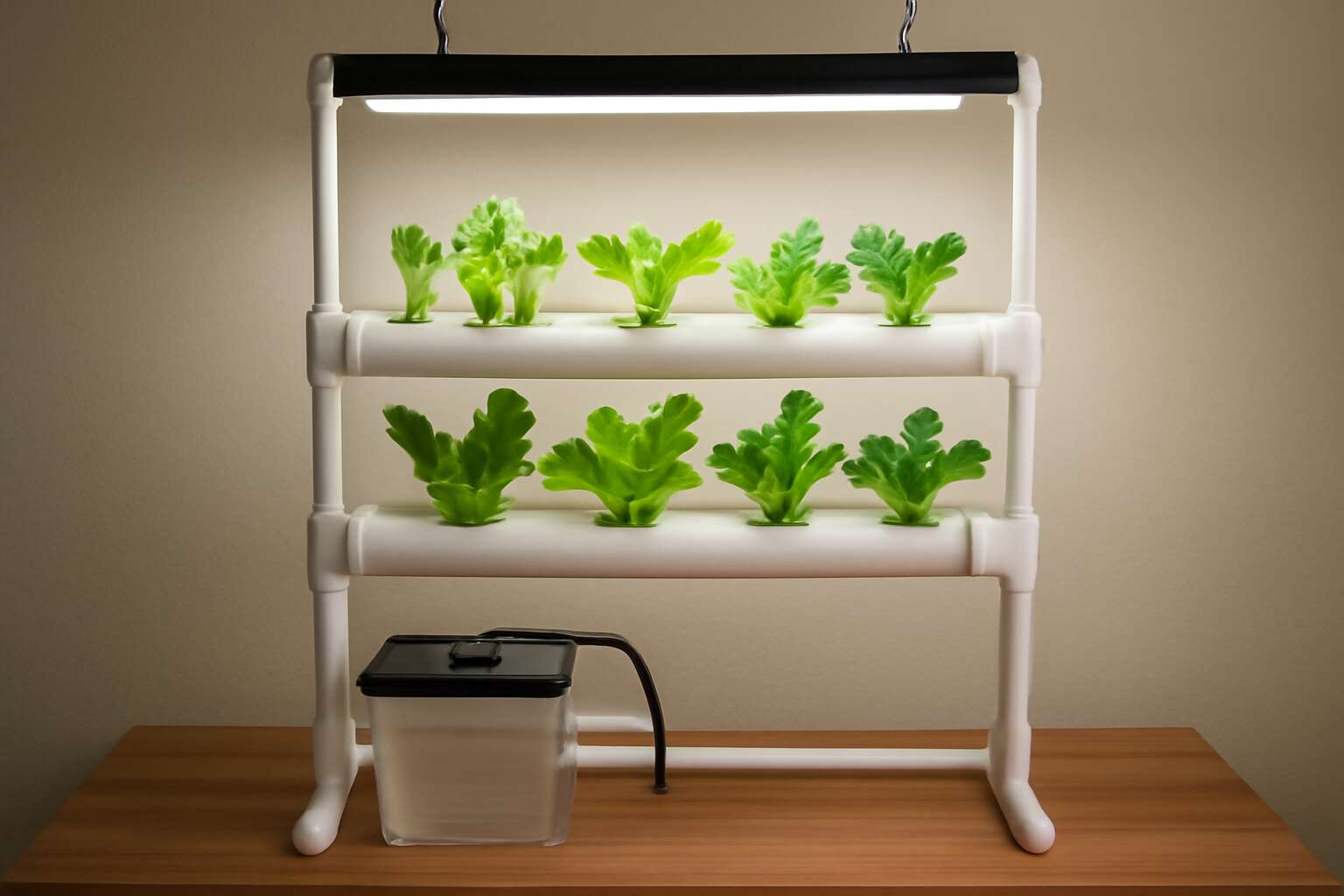
Fundamentals of passive hydroponics without a pump
What is passive hydroponics and how it works
In the quiet margin of a balcony harvest, a diy hydroponic system without pump proves flow can be designed, not demanded. Passive hydroponics relies on gravity and capillary action to move nutrients, cutting out noisy motors and headaches. I’ve learned to value restraint—the art of letting nature assist growth.
What is passive hydroponics and how it works? Roots sit in a wick-friendly chamber while a nourished reservoir lies below. The solution wicks upward, keeping the root zone moist without any pump, and the plant naturally modulates intake based on light and temperature. For South African gardeners, this approach speaks to power limits and water-wise culture; it feels both practical and intimate.
Here are the core elements that make a diy hydroponic system without pump reliable:
- Reservoir beneath the growing tray
- Wick or capillary medium bridging the zone
- Moisture-retentive growing medium
- Stable location with ample light and airflow
Key components of pump-free systems
Across urban South Africa, passive layouts deliver reliable harvests with far less electricity—reports from balcony growers place energy savings in the respectable range of sixty percent when compared with pumped systems. The appeal lies in restraint: the system works with gravity, capillary action, and an eye for quiet efficiency rather than whirring motors!
In a diy hydroponic system without pump, the roots linger in a wick-friendly chamber while a nourished reservoir sits below. The solution climbs by capillarity, keeping the root zone moist and letting plant demand be the honest barometer—growth follows light, temperature, and the patience of gravity.
Key components include the following:
- Reservoir beneath the growing tray
- Wick or capillary medium bridging the zone
- Moisture-retentive growing medium
- Stable location with ample light and airflow
With these elements, the design stays practical and intimate, a whisper of cultivation in a climate that respects water and rhythm.
Benefits and limitations compared to pumped systems
From Cape Town balconies to Gauteng kitchens, a diy hydroponic system without pump speaks softly yet promises harvests. Across urban South Africa, energy-savvy setups report energy savings near sixty percent versus pumped systems. It is restraint in action—gravity and capillary action doing the lifting while we listen.
Fundamentals hinge on a wick-friendly chamber, a reservoir beneath, and a capillary bridge to the growing tray. The moisture-retentive medium cradles roots as solution climbs slowly, keeping the zone hydrated without a motor’s whirr.
Benefits and trade-offs include:
- Low energy use and fewer moving parts
- Gentle, predictable moisture without pumps
- Easy to assemble in small spaces
Compared with pumped systems, it offers quiet operation and simpler maintenance, but less precise nutrient control and slower growth.
With these limits in mind, this diy hydroponic system without pump thrives where light and patience meet, delivering intimate harvests without a tap of electricity.
Ideal crop choices for passive designs
Fundamentals of passive hydroponics without a pump hinge on gravity and capillarity, not on a whiny motor. A dripless reservoir sits tucked beneath a growing tray, with a wick or capillary bridge ferrying solution upward to the root zone. The moisture-retentive medium—coco coir, perlite, or a light clay-based mix—keeps roots damp while the air pockets prevent soggy stagnation. In a well-tuned setup, evaporation supplies a gentle cycle, and the plant’s roots draw what they need without pumps kicking in. A diy hydroponic system without pump blends simplicity with discipline, rewarding patience with steady harvests—delightfully quiet, too.
Ideal crop choices for passive designs favour compact, fast-growing greens and fragrant herbs. Lettuce varieties, spinach, and baby kale flourish in steady moisture bands. Basil, cilantro, and mint bring aroma and flavor with modest root demands. In urban South Africa, balcony-friendly options like pea shoots and microgreens offer quick rewards.
- Lettuce and baby greens
- Herbs: basil, cilantro, mint
- Spinach and baby kale
- Pea shoots or microgreens
Choosing a no-pump design for DIY setups
Gravity-fed systems explained
Gravity is patient, yet it can be precise. In a diy hydroponic system without pump, water finds its course, turning a room into a green chorus. ‘Gravity is the oldest, most faithful pump,’ says a veteran SA grower, and that force shapes delivery without noisy equipment. I’ve tested this approach on my balcony, and the rhythm never disappoints.
Choosing a no-pump design means weighing layout, height, and return paths. For gravity-fed systems, the difference between success and drift is patience and planning. The following features guide the flow:
- Consistent head height to sustain steady flow
- Simple tubing with gentle gradients and minimal bends
- Passive aeration and safe overflow routing
These choices let South African growers coax greens from modest spaces, with less noise and fewer moving parts. The system becomes a quiet partner, inviting observation rather than obstruction, a reminder that resilience can be built into the simplest design.
Wicking beds for hydroponics
Across South Africa, compact gardens are proving that big harvests can arrive quietly. In fact, a growing number of urban dwellers report that pumping noise disappears from the balcony once a clever no-pump approach takes over. The diy hydroponic system without pump relies on gravity and patient layout, turning every windowsill into a thriving, low-maintenance zone.
Wicking beds for hydroponics offer a natural rhythm: a shallow reservoir feeds a mat or fabric wick that draws nutrient solution up into the media. Roots sip steadily, paths stay clean, and your plants stay hydrated even during a power hiccup. On South African balconies and small courtyards, this design answers the prayers of quiet, reliable growth, and I feel it breathe with the seasons.
- Consistent moisture via capillary action
- Simple, gasketed seals to prevent leaks
- Manageable wicking depth with transparent overflow
Scaled with care, it fits modest spaces and seasons.
Nutrient film technique without a pump
Choosing a no-pump design for a compact grow space starts with understanding flow and gravity. A diy hydroponic system without pump relies on planful layout, a gentle slope, and a reliable reservoir, letting nutrient solution move without noise or energy use. NFT can be arranged to feed channels that drain back by gravity, keeping roots moist and maximizing space on a balcony or windowsill.
Consider the essentials below:
- Channel width and slope tuned for gravity feed
- Reservoir height and overflow control to prevent floods
- Reliable seals and corrosion-resistant materials for longevity
With mindful layout, you gain dependable growth in small spaces, a practical edge for South Africa’s urban balconies where power outages are common but crops still thrive!
Flood and drain without electronics
Balcony space is precious, and so is the quiet hum of your apartment. Gravity-driven, pump-free gardens are the urban grower’s guilty pleasure, sidestepping load shedding and those annoying motor noises. A well-timed nod to reliability beats flashy gear any day—there’s nothing to fix when the lights go out. A seasoned balcony farmer likes to quote, “Slow water, bright harvests!”
Flood and drain without electronics relies on gravity, simple layout, and a reliable reservoir. The trick is predictable flow and durable seals that won’t corrode under nutrients. It’s forgiving, too: a diy hydroponic system without pump relies on gravity-fed returns rather than motors, letting you enjoy greens on a South African balcony even when the grid acts up.
Materials, tools, and safety for pump-free hydroponics
Essential materials list
Across South Africa, urban growers report up to 40% water savings with passive designs! Turning balconies into verdant experiments, a diy hydroponic system without pump thrives on gravity, capillary action, and patient observation—the kind of magic that happens when roots drink nourishment from a carefully staged reservoir.
Materials at a glance:
- Food-grade reservoir and lid
- Growing medium (coco coir or perlite)
- Net pots
- Clear nutrient reservoir and measuring jugs
- pH test kit
Tools to keep beside you:
- Utility knife
- Drill and sealant
- Measuring jug and funnel
- Gloves and goggles
Safety matters: Use food-grade containers, label nutrients, store out of reach of children, ventilate the workspace, wash hands after handling solutions, and never mix unrelated concentrates. Precision and care keep the garden thriving.
Tools and workspace setup
Across South Africa, urban growers report up to 40% water savings with passive designs, a statistic that jolts the balcony gardener awake. For a diy hydroponic system without pump, gravity and patient observation do the heavy lifting, letting roots drink nourishment from a reservoir staged with quiet precision.
Materials at a glance:
- Food-grade reservoir and lid
- Growing medium (coco coir or perlite)
- Net pots
- Clear nutrient reservoir and measuring jugs
- pH test kit
Tools to keep beside you:
- Utility knife
- Drill and sealant
- Measuring jug and funnel
- Gloves and goggles
Safety matters:
- Use food-grade containers
- Label nutrients
- Store out of reach of children
- Ventilate the workspace, wash hands after handling solutions
- Never mix unrelated concentrates
Safety considerations and plumbing basics
Across South Africa, urban growers report up to 40% water savings with passive designs—a quiet revolution for balcony farmers!
In a diy hydroponic system without pump, gravity and patient observation do the heavy lifting. I watch the reservoir drain and feel the roots drink in a quiet rhythm.
Materials at a glance:
- Food-grade reservoir and lid
- Growing medium (coco coir or perlite)
- Net pots
- Clear nutrient reservoir and measuring jugs
- pH test kit
Tools to keep beside you:
- Utility knife
- Drill and sealant
- Measuring jug and funnel
- Gloves and goggles
Safety matters and plumbing basics:
- Use food-grade containers
- Label nutrients
- Store out of reach of children
- Ventilate the workspace, wash hands after handling solutions
- Never mix unrelated concentrates
- Ensure seals are tight and tubing is food-grade to prevent leaks
- Position reservoirs to leverage gravity for steady flow
Sourcing affordable components
Across South Africa’s sunlit balconies, a quiet revolution grows: a diy hydroponic system without pump that uses gravity and patience to feed the roots. It’s a small miracle—no motor, just sunlight, gravity, and deliberate arrangement for a steady rhythm.
Materials at hand matter: a food-grade reservoir and lid, growing medium (coco coir or perlite), net pots, a clear nutrient reservoir, measuring jugs, and a pH kit—simple components that keep the cycle clean and predictable.
Tools are companions on the journey: a utility knife, a drill with sealant, a measuring jug and funnel, gloves and goggles. This diy hydroponic system without pump rewards quiet observation.
Safety matters: use food-grade containers, label nutrients, store out of reach of children, ventilate the workspace, wash hands after handling solutions, never mix unrelated concentrates, ensure seals are tight and tubing is food-grade to prevent leaks, and leverage gravity for a steady flow.
Step-by-step build concepts for gravity-fed and wick-based systems
Plan your layout and water reservoir
Water obeys the gravity of intention, and in compact South African gardens that philosophy translates into practical harvests. A diy hydroponic system without pump leans on passive forces—gravity, capillarity, and a touch of clever design—to deliver steady moisture without electronics. Let’s chart a clean, space-conscious approach that respects small spaces and bright yields.
Step-by-step build concepts for gravity-fed and wick-based systems focus on layout and the water reservoir.
- Plan layout so the reservoir sits above the plant beds, letting gravity pull the nutrient solution along gentle sloped channels to each row.
- Size and position the reservoir to minimize refills, account for plant demand, and avoid air locks; add an overflow and simple venting to prevent stagnation.
- For wick-based beds, run absorbent wicks from the reservoir into the growth media, testing capillary draw and ensuring even moisture distribution without forcing flow.
Assemble a gravity-fed drip network
Gravity is the quiet engine behind a diy hydroponic system without pump. In South Africa’s compact urban gardens, this hands-off approach turns small balconies into green oases, delivering steady moisture without electricity. A few deliberate moves—layout, a high reservoir, and gentle slopes—make all the difference. Picture nutrient solution gliding from above through lightly tilted channels, feeding each bed with calm consistency while roots stay hydrated and vibrant.
- Visualize gravity-fed paths from the reservoir to beds with gentle slopes to achieve a smooth, steady flow.
- Consider overflow and venting to prevent stagnation and air locks in warm days.
- For wick-based beds, imagine absorbent wicks drawing moisture from the reservoir into the media, seeking even distribution through capillary action.
These step-by-step concepts form a practical gravity-fed drip network suitable for balconies, patios, and tiny backyards, proving passive systems can yield bright harvests with minimal fuss.
Set up a wick-based planter and media
On South Africa’s compact balconies, a quiet revolution grows: herbs thriving with gentle gravity and patient wicking. The diy hydroponic system without pump relies on gravity and capillary action to hydrate roots with ease.
- Layout and reservoir placement
- Gentle channel slopes
- Overflow and venting
Step-by-step build concepts begin with a thoughtful layout. Visualize a high reservoir and lightly tilted channels that deliver a steady drip, with overflow and vents ready for warm days.
Wick-based setup: position a planter and run a discreet wick from the reservoir into the media. Choose media that drains freely and cushions roots, such as coconut coir.
- Wick materials
- Media options
- Container considerations
Sealing, airflow, and plant support
Step-by-step build concepts begin with a thoughtful layout. Picture a high reservoir feeding lightly tilted channels that drip with gravity, a quiet South African balcony garden on warm days. In a diy hydroponic system without pump, sealing and airflow become the invisible backbone that keeps roots happy and water moving with quiet persistence.
- Seal joints with food-grade silicone or compatible sealant for drip-tight connections.
- Install venting at high points to relieve pressure and reduce airlocks.
- Provide plant support with gentle anchors or a lightweight trellis so stems stay aligned as they stretch.
- Position wick and media so capillary action matches the drip rate, avoiding waterlogging.
Tuning the flow is a craft; when done right, a diy hydroponic system without pump hums with gravity and wick-drawn nourishment.
Testing and first-cycle run
Gravity is the oldest pump—pulling nourishment through a balcony in South Africa with style and discipline. In a diy hydroponic system without pump, you choreograph incline network and let capillary action do the rest, so roots drink without a motor.
Step concepts emerge as you sketch the flow:
- Design a gravity-fed channel system with a light tilt to keep liquid moving steadily, prioritizing smooth joints and minimal turbulence.
- Place wicks and media to balance the drip rate and dry pockets, so capillary draw keeps roots evenly moistened.
- Incorporate discreet venting and anchor points so air travels where needed without starving the roots of moisture.
Concepts interlock as curvature guides the build.
Testing and first-cycle run becomes a quiet audit: observe drip consistency, check for leaks, and monitor root-zone moisture with simple cues rather than instruments. That diy hydroponic system without pump hums with silent efficiency.
Maintenance, troubleshooting, and optimization without a pump
Regular checks and maintenance schedule
Even in South Africa’s sun-baked summers, a diy hydroponic system without pump quietly outperforms bulky setups that guzzle power. The beauty is simplicity: fewer moving parts, fewer headaches, and a garden that breathes through gravity and timing. Maintenance becomes a mindful ritual rather than a chore!
Regular checks keep it thriving and aligned with South Africa’s climate. Use a simple rhythm:
- Reservoir clarity and level
- Seal integrity at joints and channels
- Root zone moisture and media condition
- Algae risk and light exposure in the tray
When trouble crops up, look for uneven moisture, stagnant zones, or unexpected dryness in corners. Without a pump, airflow and light consistency matter: protect from heat drift, shadows, and drafts. Aim for stable temperatures and tidy channels to optimize performance.
Diagnosing nutrient and pH issues
South Africa’s sun is a patient tyrant, and a diy hydroponic system without pump can flourish under its glare when it learns to lean on gravity. I’ve learned patience is the true water this system drinks! A local survey pins 68% of early failures on nutrient balance and pH drift.
Troubles show as uneven moisture or dry pockets. Without a pump, gravity and timing govern flow, so each fluctuation matters. When diagnosing nutrient and pH issues, watch for signs of imbalance in plant vigor.
To troubleshoot on the fly, these observational checks help keep signals clear:
- Note pH consistency and nutrient balance in vigor
- Observe root zone moisture patterns and texture
- Watch light distribution to avoid shadows
Fine-tuning means small adjustments: steady temperatures, tidy channels, patient observation—gravity does the rest.
Troubleshooting flow and distribution
Maintenance in a diy hydroponic system without pump is a study in patience and precision. Gravity does the lifting, but tiny drifts in moisture and pH ripple through the root zone and plant vigor under South Africa’s bright sun. Daily checks—channels, spacing, and temperature—keep the rhythm steady.
To troubleshoot flow and distribution, observe the roots and moisture patterns; notice any dry pockets where water stalls. Watch light distribution to prevent bottom-root shadows that choke uptake. For quick checks, consider these steps:
- Ensure even moisture reach in the root zone and inspect for dry pockets
- Confirm gravity-fed drip reaches all plant zones within the intended interval
- Track nutrient balance and pH drift by vigor cues
Optimization comes from small rituals: clean channels, steady temperatures, and patient observation—let gravity do the rest. The diy hydroponic system without pump rewards quiet, dependable growth.
Scalability and upgrades for higher yields
South Africa’s sun makes every drop count: maintenance in a diy hydroponic system without pump is a patient art under bright skies. Regular checks of channels, spacing, and temperature keep the rhythm true, letting gravity carry nourishment while you monitor pH and moisture with calm precision. It thrives on patience, yielding quiet, dependable growth.
Troubleshooting flow and distribution demands a careful eye for uneven dampness. Look for dry pockets where water stalls, and ensure the gravity-fed drip reaches every plant zone within the intended interval. Watch light distribution to prevent bottom-root shadows that choke uptake. Quick checks: confirm even moisture and pH drift cues.
Optimization follows simple rituals: cleanse channels, stabilize temperatures, and observe without rush. For scalability and higher yields, consider modular expansions rather than a single leap—ready-to-join extensions, a larger reservoir with a modest baffle, and a subdivided drip network.
- Modular channel extensions
- Larger reservoir with baffle to smooth flow
- Subdivided drip network for zone-specific feeds

0 Comments