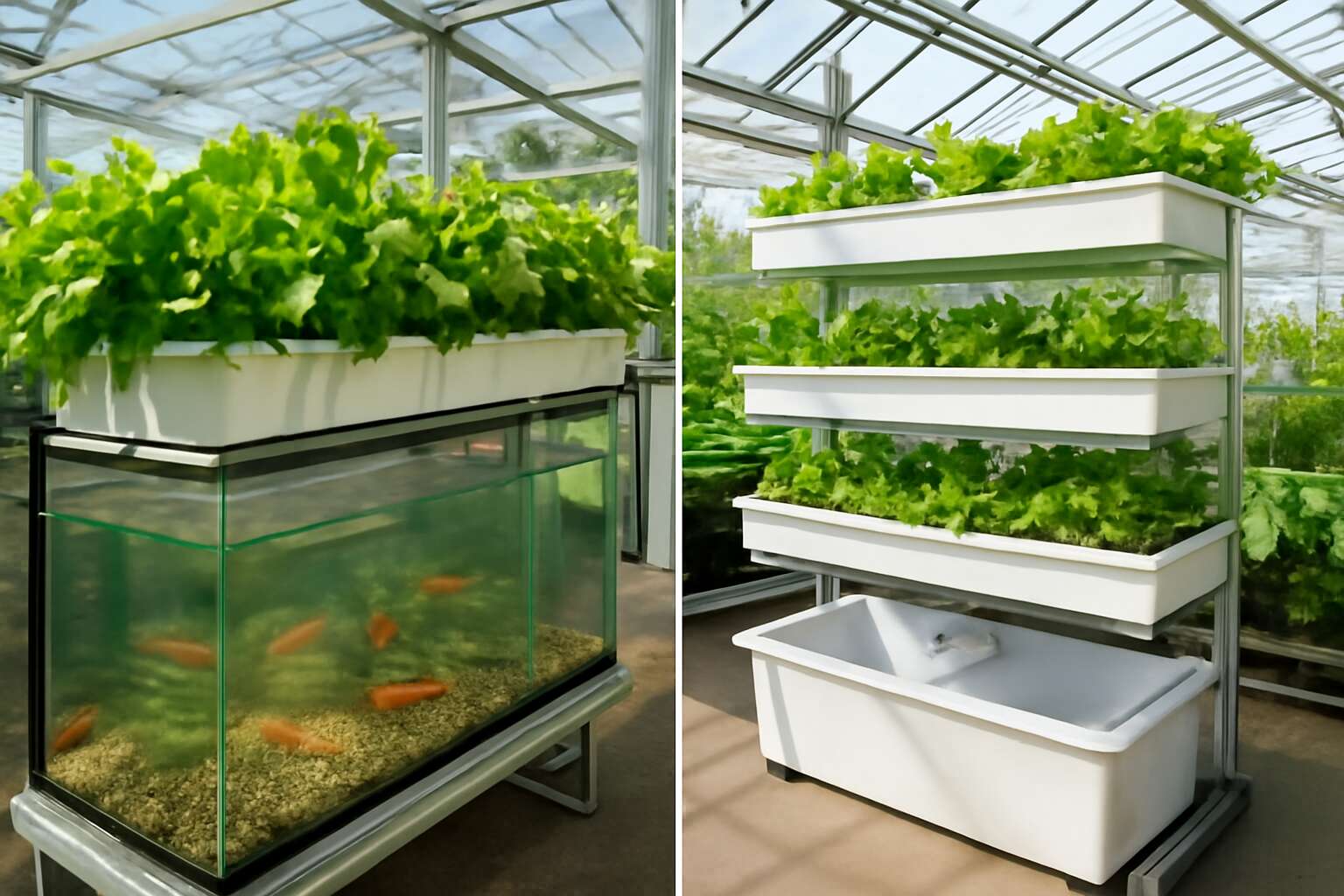
Overview of aquaponics and hydroponics
What is aquaponics?
Across South Africa’s urban yards, aquaponics can cut water use by up to 90% while delivering fresh harvests year-round. This isn’t magic—it’s the balance I see daily: a loop of fish, bacteria, and plants turning waste into nourishment and keeping water circulating.
What is aquaponics? It blends fish farming with soil-free plant culture, where fish waste feeds plants and plants purify the water. In a compact loop, nutrients move through a fish tank and grow beds, a living system that invites readers to compare aquaponics vs hydroponics.
Key features include:
- Integrated nutrient cycle
- Water-efficient design
- Low-energy operation
Hydroponics, by comparison, grows plants in a nutrient solution with no soil, offering precise control, scalability, and quick yields—but without the living loop that distinguishes it from aquaponics.
What is hydroponics?
Across South Africa’s urban yards, water is a scarce luxury that clever gardeners respect. aquaponics vs hydroponics isn’t a war of temperaments so much as a tempo: one system leans into a living loop, the other into a precise, soil-free engine. The resulting harvest cadence and maintenance ritual reveal the garden’s personality.
What is hydroponics? It’s growing plants in a nutrient solution with no soil, offering exact control, scalable setups, and rapid yields. By contrast, aquaponics stitches a small ecosystem together—fish waste feeds the plants, microbes do the cleansing, and the plants polish the water in a self-contained cycle.
- Integrated nutrient cycle
- Water efficiency
- Low-energy operation
In the hands of a thoughtful urban farmer, those distinctions translate into space efficiency, resilience, and a garden that hums with quiet, practical charm. I’ve seen compact systems flourish on crowded balconies from Cape Town to Pretoria—proof that design, not drama, wins.
Core differences in approach
“The garden hums when the cycle is honest,” a Cape Town balcony whisper—an axiom I’ve carried into every urban plot. Across South Africa’s urban yards, aquaponics vs hydroponics is a study in tempo as much as technique. Aquaponics leans on a living loop—fish waste feeds the plants, microbes do the cleansing, and water returns polished to the roots.
Core differences in approach emerge quickly:
- Integrated nutrient cycle vs external inputs
- Water efficiency and energy use
- Maintenance rhythm and resilience
For city growers from Cape Town to Pretoria, those distinctions translate into space, design, and a garden that hums with practical charm. In this conversation, the right path mirrors a gardener’s rhythm and ambitions.
Key benefits and trade-offs
Across South Africa’s heat and bustle, every drop counts. Urban growers report up to 70% water savings with tightly managed systems, turning scarce resources into sustainable harvests. When you compare aquaponics vs hydroponics, two distinct philosophies emerge—one leans on a living nutrient loop, the other on precise, externally fed nourishment. These approaches shape small spaces from Cape Town balconies to Pretoria kitchens, each with its own rhythm and charm.
Overview and trade-offs unfold quickly. Aquaponics relies on a living ecosystem: fish, microbes, and plants sharing the same water loop; hydroponics uses controlled nutrient solutions with plant roots thriving in a tailored medium.
Key benefits and trade-offs include:
- Water efficiency and nutrient recycling
- Maintenance rhythm and resilience
- Initial setup costs and scalability
In South Africa’s urban landscapes, the choice shapes space planning and daily routines, turning balconies into productive living rooms.
System design and components
Growing media and containment
System design is the quiet art of turning space, water, and appetite into a workable ecosystem. In the South African climate, a well-planned layout is half the battle won. When comparing aquaponics vs hydroponics, the difference often shows up in how the loop is built—the hardware is the handshake that keeps both fish and foliage singing!
I adore how neatly the components align.
- Fish tank or reservoir feeding the system
- Grow beds or channels that hold the growing media
- Circulation: pumps, aeration, and filtration
- Sump, plumbing, and water control
- Monitoring gear: pH, temperature, flow, and alarms
Growing media and containment set the tone for reliability and upkeep. In warm South Africa, LECA or river pebbles keep roots aerated while keeping nutrients within reach; sturdy liners and sealed tanks avoid aquatic soap operas of leaks. The right material palette shortens maintenance and preserves balance between plants and fish.
Water management and circulation
“Water is life,” they say, “and in South Africa’s heat a well-tuned loop keeps it singing.” System design is the quiet handshake where space, water, and appetite converge, shaping reliability, resilience, and the rhythm of daily upkeep.
When you compare aquaponics vs hydroponics, the difference isn’t only what you grow, but how the loop is built. Aquaponics leans on a living biofilter that converts fish waste into plant feed; hydroponics trusts a carefully blended nutrient solution and dedicated filtration. I’ve seen projects sing when the loop stays balanced, the return lines never whisper of leaks, and the system hums with a quiet, almost magical rhythm.
- Efficient pump and pipe routing to minimize energy and dead zones
- Reliable containment with leak-proof fittings and sturdy liners
- Integrated monitoring for pH, temperature, and flow with alarms
The right architecture lets the system breathe, turning every cycle into a quiet, persistent harvest.
Fish culture components
Across South Africa, a well-tuned loop turns water into a steady harvest, quietly proving that structure matters more than sheen. The difference between aquaponics and hydroponics isn’t only about what you grow; it’s about how the system is built—space, water, and appetite speaking the same quiet language.
System design is the architecture that keeps the dance calm: efficient pumps, leak-proof containment, and integrated monitoring that catches a whisper of trouble before it becomes a shout. Fish culture components anchor this balance, from tank size to biofilter capacity.
- Fish tanks and stocking density
- Sump and return lines
- Biofilters and solids management
- Aeration and climate control
In the aquaponics vs hydroponics debate, these components determine rhythm: one leans on a living biofilter, the other on a precise nutrient mesh. The right architecture lets the loop breathe, turning every cycle into a quiet, persistent harvest.
Nutrient dynamics and dosing
In the quiet architecture of a system, design is the difference between a pulse and a stall. In the aquaponics vs hydroponics debate, design matters; from tank geometry and sump placement to the quiet guard of a biofilter, it determines how nutrients travel and how the cycle breathes. Aeration and leak-proof containment conduct the flow, guiding microbial work as the ammonia becomes nitrate.
- Nutrient source: aquaponics relies on fish waste feeding the biofilter; hydroponics uses explicit nutrient solutions.
- Nitrification and nitrate management: maintain biofilter capacity and avoid ammonia spikes.
- pH and EC balance: stable pH supports microbes and plant uptake.
- Automation vs cycling: hydroponics often uses programmed dosing; a healthy biofilter relies on feeding and microbial activity.
When the nutrient dynamics flow with intention, the system settles into a quiet rhythm, turning every cycle into a patient, persistent harvest.
Costs, efficiency, and scalability
Initial setup costs
“Efficiency is destiny,” a South African urban grower likes to say, and in a drought-prone landscape the price tag of setup becomes the central character in the aquaponics vs hydroponics debate. Costs, efficiency, and scalability are not mere numbers—they shape strategy and soul.
Initial setup costs for aquaponics tend to be higher, driven by tanks, pumps, and plumbing that must coexist with fish and crops. Hydroponics typically relies on clean, contained channels and a nutrition reservoir, offering quicker returns but less redundancy.
Efficiency and scalability hinge on smart design, reliable power, and a steady water cycle. In practice, consider these cost drivers:
- Modular expansion potential
- Energy requirements and backup power
- Maintenance and component lifespans
In South Africa, grid reliability and water stewardship will tilt the scales toward whichever path proves most resilient for producers.
Operating costs and resource use
In drought-prone South Africa, every drop and watt counts. Recirculating systems can slash water use by as much as 90% vs traditional soil grow-outs, a fact that makes aquaponics vs hydroponics a compelling choice for urban producers. This isn’t just numbers—it shapes risk and resilience.
Operating costs hinge on energy, water, and ongoing maintenance. Aquaponics blends fish culture with plant growth, so electricity for pumps and aeration is a fixed line item, while hydroponics leans on nutrient solutions and monitoring.
- Energy requirements and backup power for uninterrupted cycles
- Maintenance cadence and component lifespans, from pumps to filtration
- Water treatment, nutrient dosing, and fish feed costs in mixed systems
In South Africa, grid reliability and water stewardship weave into the business case, demanding designs that maximize redundancy and minimize waste.
Energy efficiency and backup systems
In drought-prone South Africa, recirculating systems can slash water use by up to 90%, turning scarcity into strategy. The choice between aquaponics vs hydroponics is more than method—it is a creed of risk and resilience. Costs hinge on pumps, filters, and the steady heartbeat of monitoring. When the lights stay on, urban farms endure!
- Backup power: solar with battery storage or a generator
- Redundant pumps and filtration to safeguard cycles
Energy needs hinge on pumps and aeration; maintenance cadence and component lifespans shape the bottom line. In mixed systems, water treatment, dosing, and fish feed costs creep into the ledger. Modular designs rise with the dawn, scalable and urban-friendly, making aquaponics vs hydroponics a measure of weather, cost, and courage.
Scalability considerations
In drought-prone South Africa, recirculating systems slash water use by up to 90%, turning scarcity into strategy. The choice between aquaponics vs hydroponics is a creed of risk and resilience, not merely method. Costs hinge on pumps, filters, and the steady heartbeat of monitoring.
Efficiency comes with a price tag that mirrors maintenance cadence and component lifespans. Here’s where the money flows:
- Initial capital for tanks, pumps, and plumbing
- Ongoing energy, media wear, and water testing
- Feed and dosing considerations for mixed systems
Scalability is the quiet engine behind durable urban farming. Modular designs, vertical stacking, and shared facilities let you grow with space. Backup power—solar with battery storage or a generator—plus redundant pumps and filtration safeguard cycles when the grid wobbles.
ROI and budget planning
Costs start with the big-ticket items: tanks, pumps, plumbing, and filtration. In South Africa, where water and power are precious, a home-sized recirculating system often runs between R80,000 and R180,000, with larger setups climbing higher. The aquaponics vs hydroponics decision shapes equipment needs, from media beds to sensors and backup pumps.
Efficiency has a price tag that tracks maintenance cadence and component lifespans. Expect ongoing energy bills for pumps, aerators, and dosing pumps, plus water testing and media wear. That choice isn’t just method—it’s about risk and resilience.
Scalability ROI and budget planning: modular designs, vertical stacking, and shared facilities let you grow with space. Plan for backup power—solar with battery storage or a generator—and redundant pumps and filtration to guard cycles when the grid wobbles. Budget spine: capital, operating costs, and contingency.
- ROI timeframe
- Maintenance cadence
- Energy and water costs
- Depreciation and incentives
Crops and harvest considerations
Plant compatibility and growth cycles
Across controlled grows, harvest times hinge on the system’s nutrient choreography. The aquaponics vs hydroponics debate plays out in every tray: faster greens, steadier yields, and a living balance that thrives under South African light when managed with nuance. Lettuce can mature in about 21 days in ideal settings, though crops and climate shift that window.
Plant compatibility and growth cycles hinge on nutrient availability, pH, and root-zone conditions. Leafy greens and herbs tolerate compact media, while vine crops demand support and longer cycles to reach harvest brightness without stressing roots or fish.
- Fast-growing greens: lettuce, spinach, chard
- Herbs: basil, cilantro, mint
- Small fruiting crops: cherry tomatoes, cucumbers
Choosing crops in either system should balance rapid turnover with sustained nutrient throughput, aligning harvest calendars with maintenance schedules rather than rigid timelines.
Disease and pest management
Crop choices in controlled grows fuse with sun and season. In aquaponics vs hydroponics, harvest timing follows the nutrient choreography and system stability. South African sun fuels leafy bursts—lettuce, spinach, and chard—into quick 21‑ to 30‑day crops, though climate nudges the window. Vine crops need support and longer cycles to reach brightness.
Disease and pest management in aquaponics vs hydroponics hinges on keeping the system’s biosecurity tight and microbial balance resilient. In aquaponics, the fish and biofilters tilt pest pressure through a living ecosystem; in hydroponics, clean reservoirs and sanitized media control spread.
- Biocontrols and biofilters in aquaponics support a living pest counterbalance.
- Sanitation and clean reservoirs in hydroponics curb pathogen spread.
- Physical barriers and routine monitoring help both systems stay resilient.
Vigilance, curiosity, and timely adjustments keep yields steady under South Africa’s vibrant growing seasons.
Yield potential and market value
Markets across South Africa prize crisp harvests delivered on sunlit mornings. In the contest between aquaponics vs hydroponics, yield potential is a tale of tempo and texture: leafy greens can turn in 21 to 30 days when light is generous, while vine crops stretch the calendar to sweetness and size.
Market value tracks consistency as much as weight. The pristine water, stable nutrients, and biosecurity of aquaponics help the logo and the shelf life; hydroponics often secures uniform packs that couriers love!
- Leafy greens (lettuce, spinach, chard): rapid turnover and premium display value at local markets.
- Herbs and microgreens (basil, cilantro, parsley): high unit price in boutique restaurants and meal kits.
- Vine crops (tomatoes, cucumbers): larger fruit, longer cycles, strong seasonality with steady demand.
Practical adoption and best practices
Choosing between systems for your goals
From a sun-warmed shed on the edge of a South African suburb, the quiet hum of a compact system writes a small legend of abundance. aquaponics vs hydroponics isn’t about conquest; it’s about aligning your space, climate, and priorities. The choice hinges on what you value—water efficiency, ecosystem balance, or the pace of crop cycles—and how resilient the setup feels during load-shedding or a dry spell. In this landscape, each system wears a different coat of patience and promise, and the magic lies in matching them to your goals!
Practical adoption means respecting space, climate, and maintenance tempo. For choosing between systems, let these guiding cues point the way:
- space footprint and layout
- reliable water source and filtration
- crop variety and growth cadence
When these threads align, the path reveals itself with quiet confidence.
Maintenance routines and monitoring
Practical adoption starts with rhythm more than gear. In South Africa’s home gardens, a well-tuned loop can dramatically reduce water use and boost reliability. Backyard experiments across SA report up to 70% lower water consumption with steady maintenance. When weighing aquaponics vs hydroponics, start with a simple maintenance tempo: what you can sustain, season after season, regardless of the weather. It’s a small, steady magic you can hear in the hum of a healthy system!
- Daily visual checks: leaks, flow, and pump sound.
- Weekly parameter snapshots: pH, DO, and filter clarity.
- Monthly calibration and inspection: sensors, gaskets, and component wear.
Whether you lean toward aquaponics vs hydroponics, consistency in checks and calibration keeps systems thriving. A clear rhythm translates to fewer surprises and steadier harvests, whatever climate you inhabit.
Common myths and misconceptions
SA backyard micro-farms prove it: in my experience, South African loops cut water use by up to 70% when rhythm guides gear. In the aquaponics vs hydroponics debate, reliability outruns fancy equipment. Practical adoption favors steady, climate-smart choices over one-off fixes.
Keep your mind on consistency. The strongest systems survive weather swings because they run on a predictable tempo: not perfect, but persistent!
Here are common myths with plain truth.
- Aquaponics is always more water-efficient than hydroponics — not always; outcome depends on design and inputs.
- Aquaponics is maintenance-free — false; regular checks apply, though complexity varies.
- You must mimic a full farm to succeed — not necessarily; small, climate-smart setups work in SA.
Case studies and real-world examples
South Africa’s arid corners demand systems that endure, not dazzle. In the aquaponics vs hydroponics debate, reliability outruns romance. SA backyard micro-farms show up to 70% water savings when operation follows a steady, climate-smart tempo—proof that practical adoption trumps showmanship.
- Case study: Western Cape micro-farm with compact footprint, gravity-driven circulation and modest energy input kept yields steady through drought periods.
- Case study: Durban rooftop project using modular components and robust fish-to-plant nutrient cycling to withstand outages.
- Case study: Gauteng kitchen-garden experiment showing climate-smart plant choices and compact design can thrive without sprawling infrastructure.
These real-world examples illustrate how practical adoption anchors success in the ongoing debate—where consistency and local context trump novelty.

0 Comments