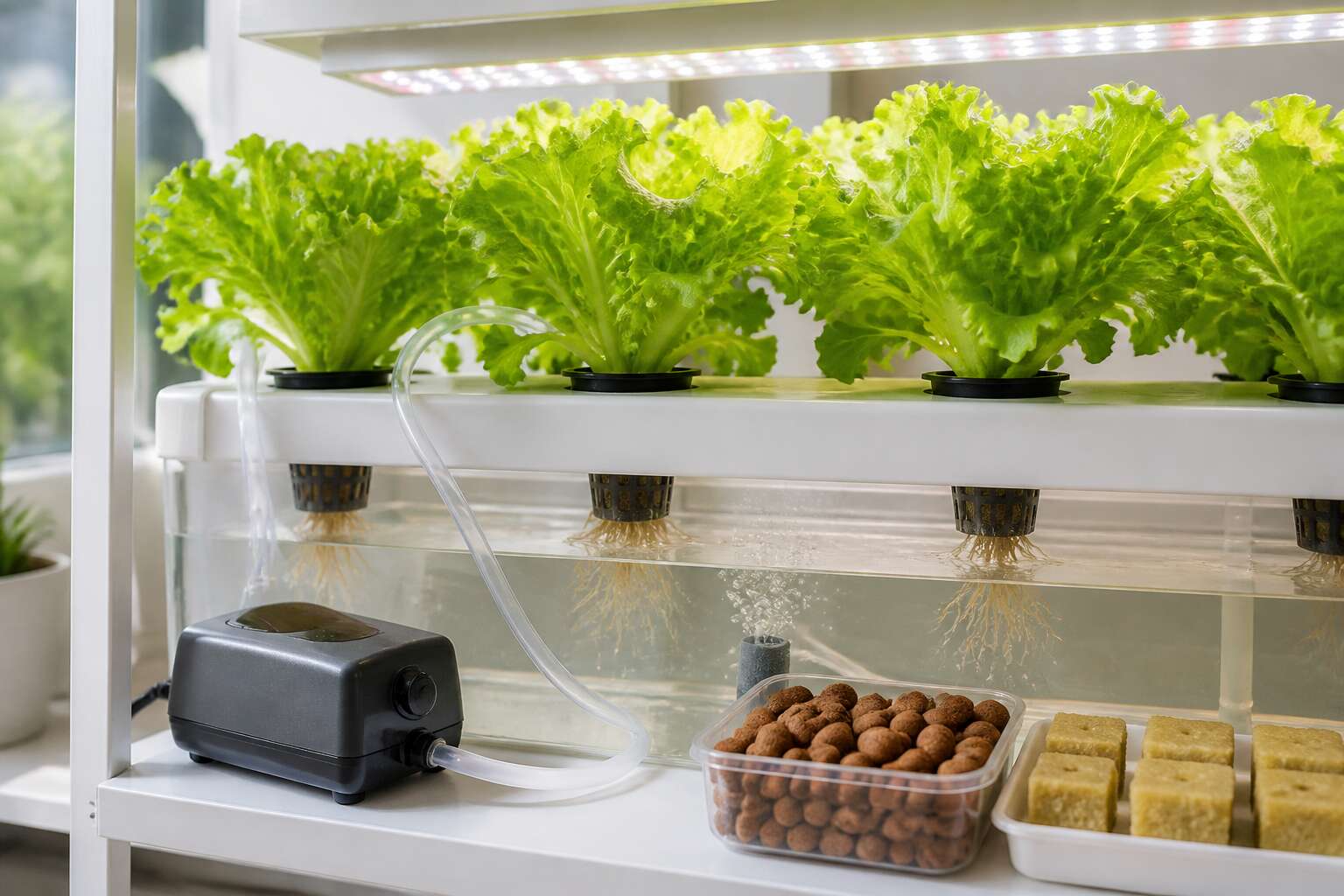
Essential Components of a Soilless Setup
Supportive Growing Substrates
South Africa’s hydroponic growers face a simple truth: the growing substrate often determines success more than the nutrient mix. A soilless setup needs materials that hold moisture while letting oxygen reach the roots. Perlite is light and porous. Coco coir retains water well and breaks down slowly.
When selecting hydroponic system materials, consider how each component interacts. I have tested clay pebbles and rockwool. The substrate sits between the plant and the nutrient solution. In a hot region like Limpopo, a substrate with high water retention reduces watering frequency.
Here is a breakdown of common substrates:
- Vermiculite: holds moisture and nutrients
- Perlite: improves aeration and drainage
- Expanded clay: reusable and stable
Each option changes how the system behaves. Ignoring substrate structure causes root rot or nutrient lockout. That is why hydroponic system materials should never be an afterthought!
Water and Nutrient Reservoirs
In a soilless setup, the reservoir holds more than water. It stores the entire nutrient solution that feeds every plant. Without a properly sized reservoir, your hydroponic system materials fail before the first root touches the solution!
I have seen growers in Johannesburg struggle with undersized tanks. A small reservoir causes pH swings and nutrient imbalances. For a hot region like Limpopo, the reservoir should sit out of direct sunlight.
- Food-grade plastic resists chemical corrosion.
- A dark inner surface blocks light and inhibits bacterial growth.
- An access lid allows easy monitoring and cleaning.
The water and nutrient reservoirs must match your crop’s demand. A larger volume buffers temperature changes.
Air and Oxygen Supply Mechanisms
Roots require dissolved oxygen above 5 milligrams per litre to survive. Below that threshold, the entire crop suffocates in plain water. I have watched growers mistake yellowing leaves for nutrient deficiency when the real culprit was stagnant water. A pump rated for your tank volume, paired with fine-pored air stones, creates micro bubbles that permeate the root zone. These humble pieces of hydroponic system materials perform an invisible life-giving exchange.
Consider the setup:
- Air pump with adjustable output
- Air stones or diffusers to break bubbles
- Tubing that resists kinking
Each component prevents hypoxia in the root zone. Warm water holds less oxygen, so monitor temperatures. In South African summers, a water chiller becomes necessary for dense root masses. The difference between a thriving crop and a wilting one lies in this quiet, constant aeration!
Lighting Systems for Indoor Growth
Lighting transforms a soilless setup from a passive tray of roots into a productive growing environment. The sun delivers roughly 1,000 micromoles of photosynthetically active radiation on a clear Highveld morning. Indoor growers must replicate that intensity with diodes and reflectors. Many overlook the spectral curve, yet red wavelengths drive flowering while blue controls vegetative stretch.
I have seen crops stall under weak fluorescents that promised full spectrum but delivered little more than ambient glow! The hydroponic system materials for lighting include:
- Full spectrum LED panels with adjustable dimmers
- Reflective sheeting to bounce scattered photons
- Hanging ratchets for precise canopy distance
Light penetration drops sharply when fixtures sit too high. In South African winters, natural light remains strong, but indoor setups demand consistent photoperiods to avoid stress.
Selecting Containers and Structural Frameworks
Net Pots and Mesh Cups
A single tomato plant can develop over two meters of roots, all confined to a small container. That is why selecting the right containers and structural frameworks matters as much as the water itself. The best hydroponic system materials hold plants securely while allowing roots to breathe and grow downward.
Net pots and mesh cups provide the necessary support. Their open lattice design lets roots poke through and reach the nutrient solution below. For larger plants, a sturdy framework or grow channel adds stability. Different crops require different holders. For example:
- Net pots for seedling support and easy transplanting
- Mesh cups for smaller herbs and greens
- PVC pipes or channels for horizontal layouts
Each piece must suit your space and crop type. The materials you choose influence root health, drainage, and airflow. A thoughtful framework keeps the system accessible and simple to maintain.
Trays and Channels for Nutrient Flow
Your nutrient solution travels a path that defines your entire system. The trays and channels you choose determine how evenly that path distributes liquid to every root zone. In South Africa, where water efficiency matters, shallow trays with gentle slopes outperform flat designs for consistent flow. Channels made from food grade plastic or stainless steel resist corrosion and simplify cleaning.
When selecting structural frameworks, consider load weight, access for maintenance, and expansion potential. The right hydroponic system materials reduce dead zones and stagnation points. A practical arrangement might include:
– Gully channels for long rows of leafy greens.
– Flood tables for batch feeding schedules.
– Vertical towers for limited floor space.
Each configuration changes flow rate and oxygenation. Matching your container depth to crop root mass prevents unnecessary energy loss.
Vertical Towers and Frames
Vertical towers stack growing areas to use height efficiently. In South Africa, where urban space compresses, this design saves floor space. Selecting containers and structural frameworks for vertical towers demands attention to material weight and joint stability. Hydroponic system materials like galvanised steel and food grade PVC withstand high humidity without warping.
Frames must carry the combined load of water, plants, and net pots. A 1.8 metre tower can hold over 30 growing sites, which makes bracing essential. When selecting hydroponic system materials for frames, consider these points:
- Load rating for static and dynamic weight
- Corrosion resistance for humid conditions
- Modular connections for future expansion
The containers themselves often use a reservoir at the base, but vertical towers pass nutrients from top to bottom. This flow depends on the frame keeping every column level. Even a two degree tilt changes water distribution and stresses the joints.
Tubing and Connectors
Tubing and connectors carry nutrient solution from the reservoir to every plant site. In South Africa, where summer heat can exceed 35 degrees Celsius, UV stabilised PVC and polyethylene tubing resist cracking and algae growth. The diameter of the main feed line must match the pump output, otherwise pressure drops and plants at the far end receive less nutrient solution.
Connectors deserve equal attention. Barbed fittings create a watertight seal when paired with stainless steel clamps. Threaded connectors allow for disassembly during cleaning, which prevents salt buildup. For larger systems, I recommend quick release couplings.
- Match tubing diameter to pump flow rate
- Use UV stabilised materials for outdoor exposure
- Choose food grade connectors to avoid chemical leaching
These hydroponic system materials determine whether your nutrient delivery remains consistent or fails silently over time.
Support Structures for Tall Plants
Container choice often decides root health in warm climates. Dark, food grade plastics block light and keep root zones cool. For tall crops, structural frameworks must endure more than dead weight. Heavy fruit, wind gusts, and daily movement stress every joint.
- Anchor vertical posts into a concrete base or rigid floor
- Choose galvanised steel for humid environments
- Allow horizontal wire to slide through eye hooks for adjustment
These hydroponic system materials determine whether a trellis holds a season or fails at peak fruiting. I prefer fixed bases over freestanding frames when growing indeterminate varieties. The right combination of container mass and anchored support creates a stable environment through summer thunderstorms.
Water and Nutrient Delivery Components
Submersible Pumps and Airlift Options
Every drop of nutrient solution travels through a journey governed by your choice of pump. Submersible pumps rest quietly in the reservoir, pushing water upward with dependable pressure that suits most vertical systems. Airlift options, in contrast, rely on rising bubbles to carry liquid along a tube, which creates a softer flow ideal for delicate root zones. The distinction often comes down to energy efficiency versus raw power. When you are selecting hydroponic system materials, pay attention to the pump’s maximum head height, because that determines how high the solution can climb. Airlifts work best in shallow trays or nursery channels where pressure remains low. Their simplicity also reduces mechanical failures, making them a favorite for small-scale growers. Choosing between these two methods shapes the entire watering rhythm, so match the mechanism to the physical layout of your garden.
Drip Emitters and Sprayers
Water and Nutrient Delivery Components Drip Emitters and Sprayers
The difference between a thriving root zone and a silent failure often comes down to a single drip emitter. This small component releases nutrient solution in measured drops, one by one, into the medium below. The slow delivery suits plants that prefer steady moisture without the stress of flooding. Sprayers, by contrast, atomize the solution into a fine mist, casting it across roots suspended in air. The choice between them changes the feeding rhythm.
Consider the demands of your crop:
- Drip emitters offer precision, delivering water to individual plants with minimal waste.
- Sprayers cover larger surface areas, ideal for propagation chambers and aeroponic root zones.
Both components belong to the broader hydroponic system materials. When choosing hydroponic system materials, pay attention to flow rate and emitter spacing. Clogging remains the main risk. Filters and pressure regulation are necessary, especially when using organic nutrients that carry sediment. Root structure determines whether a drip emitter or sprayer suits the garden.
Irrigation Timers and Controllers
A missed watering cycle is rarely a dramatic event. It is a silent pause that stresses roots and stalls growth. In hydroponics, consistency is the contract between grower and plant, and irrigation timers are the enforcers of that agreement. These devices dictate when the pump activates, how long the nutrient solution flows, and how frequently the cycle repeats. Without them, the entire choreography of delivery collapses into guesswork.
Basic plug-in timers handle the mechanical schedule. They are reliable for simple on and off cycles, but they do not react to environmental shifts. Controllers bring a sharper intelligence to the operation. They monitor moisture levels, light intensity, and even the electrical conductivity of the solution. This allows the system to adjust feeding based on real conditions rather than a fixed clock. The distinction matters. A timer follows orders; a controller thinks.
The choice of controller should match the scale of your operation and the sensitivity of your crop. When selecting hydroponic system materials, the timer and controller deserve the same scrutiny as the pumps and tubing. Consider the following functions that separate a basic unit from a capable one:
– Multiple zone control for different plant stages
– Sensor inputs for moisture and temperature
– Battery backup to preserve settings during outages
– Manual override for immediate adjustments
A mechanical timer uses gears and pins, offering durability but limited precision. A digital controller provides second by second accuracy and programmability, which is essential for aeroponic systems that need frequent short bursts. Power outages pose a hidden threat. A timer that loses its programming during a blackout can leave roots dry for hours. Models with internal memory and battery backup prevent this failure. Also, check the amperage rating against your pump’s draw to avoid overheating. The connection between these components and the rest of your hydroponic system materials is straightforward, but the consequences of a mismatch are severe. The quiet clicking of a relay or the soft glow of an LED display is the heartbeat of the grow. Pay attention to it.
Nutrient Mixing and Dosing Equipment
A single millilitre of stock solution separates a balanced feed from a toxic one. Nutrient mixing and dosing equipment carries that difference. A dosing pump must match the viscosity of your concentrate. Some units handle thick suspensions. Others skip or clog when the mix contains precipitates.
Mixing tanks deserve scrutiny. A conical bottom drains completely; a flat one leaves a stale pool. Agitation matters too. Gentle recirculation dissolves salts without pulling in air, which can oxidise the solution.
Inspect your hydroponic system materials for resistance to acids and chelates:
- Polypropylene resists most nutrient acids
- PTFE handles harsh pH swings
- Acrylics offer visibility but may craze over time
Monitoring and Environmental Control Gear
pH and EC Meters
Monitoring your nutrient solution isn’t optional if you want healthy plants. pH meters and EC meters are essential components of your hydroponic system materials, converting chemical changes into clear data.
Regular calibration using buffer solutions keeps readings accurate. A pH probe dripping with old salts will mislead you, causing lockout. EC meters measure total dissolved solids, warning you before nutrient burn sets in. Consider these features:
- Automatic temperature compensation
- Replaceable probe sensors
- Waterproof casings
I prefer handheld units over benchtop models for daily checks. They fit inside a bucket and tolerate drops. Remember, cloudy screens lose visibility, so choose a unit with a bright display.
Thermometers and Hygrometers
Temperature and humidity are the invisible variables that shape your plants’ health. A thermometer and hygrometer belong on your hydroponic system materials checklist, as roots and foliage respond to changes before you see visible symptoms. The air’s moisture content, or relative humidity, determines how hard your plants must work to transpire and absorb nutrients.
Your climate station does more than report conditions. A hygrometer measures the moisture content in the air, while a thermometer tracks heat patterns that shift when pumps run or lights switch on. These readings prevent condensation on leaves, a precursor to fungal infections.
Consider these features when selecting your gear:
- Probe placement for accurate air readings, not just surface temperature
- Maximum and minimum memory to track overnight fluctuations
- Calibration options for long term reliability
I mount my sensors at canopy level, away from direct light. This placement captures the true environment your plants endure. A grow room that looks comfortable to you may still stress your plants through subtle shifts in temperature and humidity.
Water holds heat differently than air, so your reservoir may need a separate thermometer. That reading tells you when nutrient solution gets too warm for dissolved oxygen to remain available. These monitoring tools turn your hydroponic system materials into a feedback loop, letting you respond to your plants’ environment before a problem takes hold.
Ventilation and Exhaust Systems
Ventilation and exhaust systems remove heat, humidity, and airborne pathogens from your grow space. Plants draw carbon dioxide during the photoperiod, so a sealed room quickly runs short on usable air. An exhaust fan creates negative pressure that pulls fresh air through intake vents. This exchange protects your hydroponic system materials from moisture damage and keeps leaf surfaces dry.
Components to evaluate:
- Inline fans sized to your room’s volume
- Ducting with smooth interior surfaces
- Carbon filters and odour scrubbers
Each element must match your space. Undersized fans strain and fail. Oversized fans waste energy and disturb airflow. The right balance allows your climate sensors to do their job properly. Ventilation turns your hydroponic system materials into a complete, self-regulating environment.
Heating and Cooling Devices
A single degree of drift in root zone temperature can alter nutrient uptake and trigger stress responses. Monitoring and environmental control gear turns raw sensor data into steady, repeatable conditions. Controllers read inputs from thermometers and hygrometers, then switch heating or cooling devices before your plants feel the change.
These systems work with your hydroponic system materials to buffer against load shedding and seasonal swings. Consider what your space demands:
- Heat pumps that both warm and cool water
- Chiller units for nutrient reservoirs
- Thermostatic controllers with hysteresis settings
Each device must match the volume it serves. Oversized units short-cycle, undersized units run forever. The right pairing keeps your environment stable and your inputs predictable.
Grow Lights and Reflectors
Over 30% of grow light output can vanish into dark walls and unreflective surfaces. That silent loss is why reflectors and monitoring environmental control gear belong in the same breath as the hydroponic system materials themselves!
PAR sensors capture the actual photon flux hitting your canopy, unlike simple air temperature readings. Data loggers track daily light integrals, so you know when your plants have had enough before they stretch or burn. Reflector geometry changes everything. Wing reflectors spread light across wide trays, while diamond reflectors focus intensity for vertical towers. A controller reading these sensors can adjust fixture height or output on the fly. This measured approach turns expensive watts into predictable growth.
Automation and Sensor Kits
Load shedding does not have to spell disaster. A reliable automation kit can switch pumps and lights to backup power before your reservoir oxygen depletes. These kits gather data from multiple sensors and act instantly, removing human error.
A controller that reads air pressure, fluid flow, and ambient light can adjust dosing pumps and ventilation dampers in real time. This integration is where hydroponic system materials become truly intelligent. For a modest investment, you gain a system that watches itself while you sleep.
- Sense the environment
- Log the trends
- Decide based on thresholds
- Actuate the response
That chain of events turns raw data into decisive action. When a sensor detects a pH drift, the controller compensates before roots suffer. The result is a stable, autonomous growing environment that adapts to South African conditions.
Maintenance Tools and Safety Equipment
Cleaning Brushes and Sterilizing Agents
A lingering biofilm can stop a crop within days. Sterilising agents and scrubbing brushes are the maintenance side of a hydroponic system materials collection. I have used the same cleaning sequence for four years, and it has never failed. Scrub the feed lines and tray joints with a narrow brush first. Then move to a wider brush for the reservoir base. Run food-grade hydrogen peroxide through the circuit, then flush with clean water.
Nitrile gloves and goggles belong in every session. These items protect your hands and eyes when handling sanitisers. The safety equipment is as critical as the grow media.
Common tools include:
a line brush for pipe ends
a wide brush for tray corners
microfibre cloths for probes
a calibrated sprayer for sanitiser
Store sealed sanitisers apart from nutrient stock. That habit preserves water chemistry and extends the lifespan of your hydroponic system materials.
Protective Gear and Gloves
Protective gear often feels like an afterthought until the first spill. A single splash of concentrated sanitiser can turn a routine session into a costly interruption. In a country where water chemistry and climate demand precision, the handler is the most vulnerable component in the operation. Your skin and eyes deserve the same consideration as your nutrient mix.
The right tools make maintenance a deliberate practice rather than a reactive chore. A dedicated kit keeps every task predictable. Over the years, I have learned that improvisation with household items often leads to cross contamination or missed residues. The following pieces form the core of a reliable routine:
- A narrow line brush for pipe interiors and emitters
- A wide scrub brush for tray corners and channels
- Lint free microfibre cloths for sensor probes
- A calibrated sprayer for even sanitiser application
Safety equipment is not a luxury. Nitrile gloves provide dexterity while shielding the skin from harsh oxidisers. Goggles prevent accidental splashes from reaching the eyes, especially when working with pressurised sprayers. These items are consumables, and they require replacement when worn. The effectiveness of your entire hydroponic system materials collection depends on the consistency of these small habits. Store all protective gear separately from your nutrient stock to avoid chemical interactions. A clean, organised workspace reflects a healthy growing environment.
Spare Parts and Backup Systems
Spare parts are the quiet insurance policy of any hydroponic setup. A failed pump or a cracked fitting rarely announces itself at a convenient moment. In South Africa, where delivery delays can stretch for days, keeping a small stock of critical components saves more than time. It saves the entire crop.
Consider these essential backups:
- Spare impellers and seals for your submersible pump
- Extra tubing and connectors for quick line repairs
- Backup pH and EC probes that stay dry until needed
Backup systems extend beyond individual parts. A second small pump for nutrient circulation ensures oxygen keeps moving if the primary unit fails. Pre-mixed nutrient reserves prevent disruption during power outages or meter calibration errors. These items form a core part of the hydroponic system materials every grower should evaluate. Maintenance tools and safety equipment lose their value without spares on hand. An organised cabinet transforms a potential crisis into a minor adjustment, keeping the whole operation steady.

0 Comments