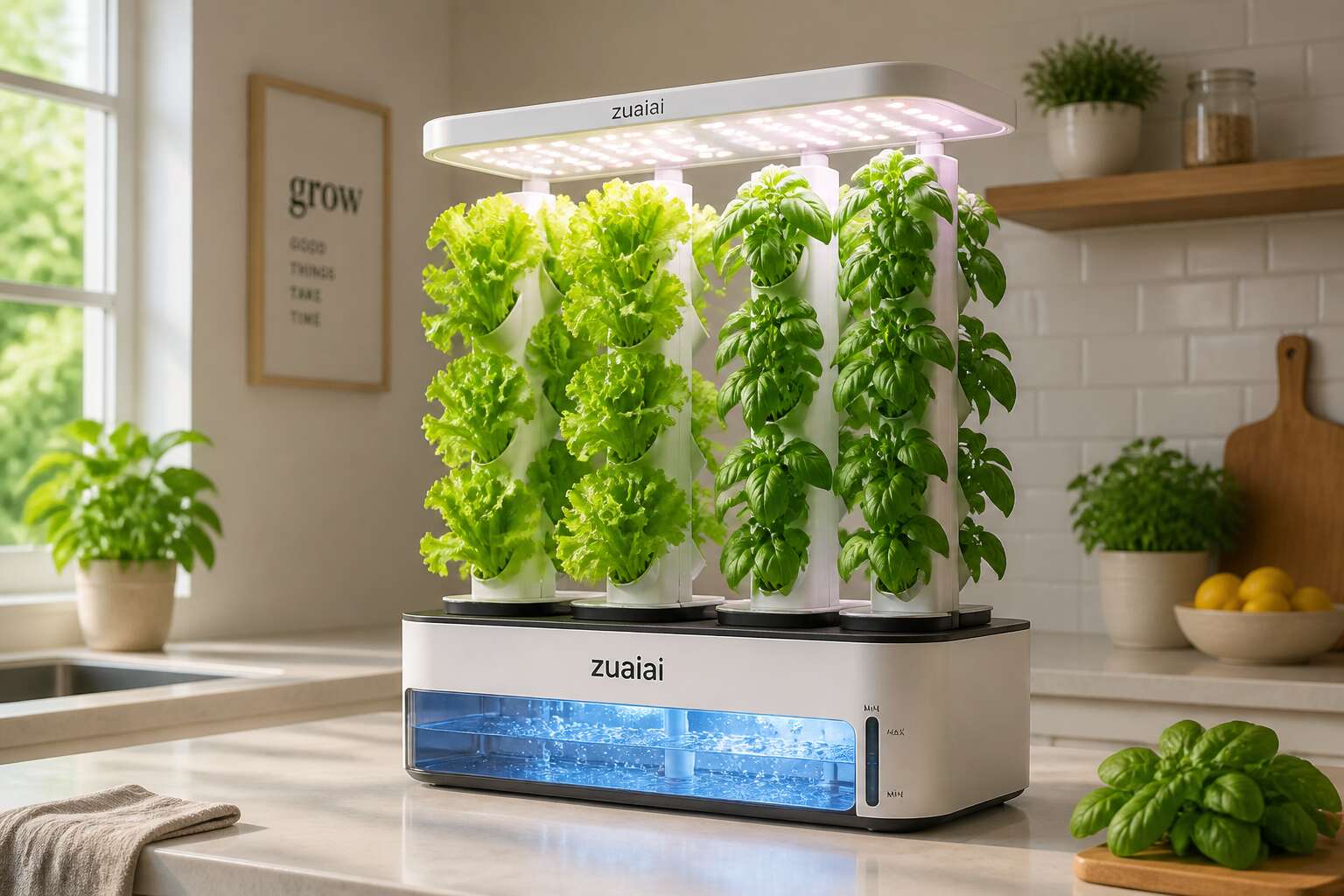
Understanding the Zuaiai Hydroponic System
What Makes Zuaiai Different
When a Capetonian friend told me she grows crisp lettuce in her tiny flat using the zuaiai hydroponic system, I assumed she meant a fancy pot. Then she showed me the nutrient reservoir, the gentle water flow, and the absolute absence of soil. In a region where municipal water pressure is a dinner party topic, this approach feels quietly radical.
Understanding the zuaiai hydroponic system requires letting go of traditional gardening assumptions. Plants receive minerals through a constant, balanced solution rather than foraging through earth. The roots hang in a controlled mist, which sounds fragile, yet proves remarkably forgiving. What makes Zuaiai different is its attention to daily rhythms. Most systems ignore the user, but this one observes water temperature, pH, and feeding cycles with a polite, unrelenting vigilance. It does not demand expertise; it merely requests consistency.
- The vertical design suits South African homes with limited floor space.
- Its low energy pump runs quietly, even during load shedding.
- Leafy greens thrive in under three weeks, which pleases impatient cooks.
The zuaiai hydroponic system rewards those who value precision over guesswork. Watching roots develop in clear trays offers a small, daily theatre of growth. For urban dwellers tired of disappointing supermarket herbs, this presents a refreshing form of self reliance.
Core Components and Design
A pump that runs on 12 volts, a reservoir that holds 6 litres, and a misting nozzle that never clogs. These are the quiet details that define the zuaiai hydroponic system. Its architecture favours visibility over concealment.
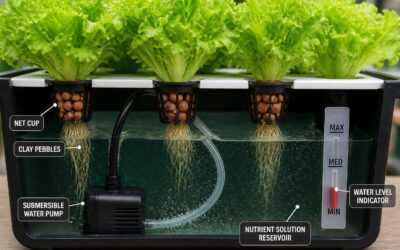
Three core components work in sequence. The reservoir stores nutrient solution, the pump pushes it upward, and sprayers convert it into a fine mist. Roots hang directly in that mist, absorbing minerals without soil or growing medium.
- Nutrient reservoir with a transparent level indicator
- Submersible pump that cycles solution every 15 minutes
- Misting nozzles positioned beneath each tray
- pH stabilisation chamber integrated into the base
Design decisions favour small urban kitchens. The vertical footprint measures less than half a square metre. Water flows from the top tray downward, collecting in the reservoir for reuse. This closed loop cuts water usage by roughly 70% compared to conventional soil gardening.
How Nutrient Delivery Works
Nutrient delivery in the zuaiai hydroponic system runs on a 15 minute timer. The pump wakes, pushes six litres of solution upward, and then falls silent. I like that pause. In that brief window, the sprayers atomise the liquid into a mist so fine it drifts around the roots. The roots absorb what they need, and the unused solution drips back down.
The delivery cycle follows this order:
- Solution rises from the reservoir to the top tray.
- Sprayers release a fine mist beneath each tray.
- The remaining liquid drains downward and gathers for the next pulse.
Because each pulse is short, the roots never sit in standing water. The pH stabilisation chamber keeps the solution at a level plants can actually use, so every 15 minute burst from the zuaiai hydroponic system delivers nutrients steadily.
Ideal Plants for Zuaiai
The most honest moment in gardening comes when you realise what actually grows in your climate. The zuaiai hydroponic system removes that limitation, allowing South African growers to cultivate crops that traditionally struggle in local soil conditions.
I have seen lettuce, spinach, and Swiss chard thrive because their shallow root systems respond quickly to the mist pulses. Culinary herbs like basil, mint, and coriander also flourish, particularly in warmer provinces where soil moisture evaporates before roots can drink.
These crops perform reliably in the system:
- Rapid growing salad greens
- Perennial herbs that need consistent moisture
- Compact fruiting varieties like strawberries
Fruiting plants demand more patience and attention. Tomatoes, peppers, and cucumbers require steady nutrient availability, and the zuaiai hydroponic system delivers it through timed cycles rather than drowning the roots. The patience pays off when harvest arrives, and the flavour proves it!
Top Benefits of Choosing Zuaiai for Your Garden
Space Efficiency and Yield
In South Africa, the distance between a seed and a salad bowl is usually measured in transport kilometres, not footsteps. The zuaiai hydroponic system addresses this by turning limited garden space into dense, productive growing area. A vertical footprint of roughly one square metre supports multiple planting tiers, and that changes how gardeners calculate their available space.
Yield follows from density. Each plant receives identical nutrient delivery and light exposure, so harvests stay consistent across every level. Home growers in Johannesburg or Cape Town can pick leafy greens weekly from a balcony.
The benefits compound in practical ways:
- More plants per square metre than conventional containers
- Shorter growth cycles because roots stay optimally hydrated
- Consistent cropping through all seasons
Water efficiency also matters. The closed-loop design uses a fraction of the water that soil gardening demands, which suits South Africa’s variable rainfall. The zuaiai hydroponic system prioritises output per square metre and per litre.
Water Conservation
South Africa receives an average of 464mm of rainfall annually, well below the global mean of 860mm. That single number explains why gardeners here watch their water bills with a certain anxiety. The zuaiai hydroponic system rethinks how every drop gets used.
Instead of letting water percolate through soil and evaporate in the afternoon heat, the closed loop recirculates the same nutrient solution. Roots sit directly in the flow, drinking exactly what they need. The system uses a fraction of the water that soil gardening demands, with some growers reporting usage drops of up to 90% compared to conventional beds.
- Water stays in the system, not lost to drainage
- Evaporation is minimised by design
- Plants receive precise amounts on a set schedule
This matters in a country where rainfall patterns have become unpredictable. Your water footprint changes when you grow with zuaiai, because the garden’s demand on municipal supply becomes almost negligible. The compromise between a productive garden and a reasonable water bill disappears entirely.
Ease of Use for Beginners
Most beginner gardeners abandon hydroponics within a month, not because the plants fail, but because the equipment overwhelms them. The zuaiai hydroponic system was designed to eliminate that overwhelm. Unbox it, connect three components, and the system starts working.
The interface speaks plain language. You select a plant type, and the system adjusts its feeding schedule. It corrects imbalances before you even notice them. This is a silent correction system.
- Setup takes less than an hour
- No calibration required
- Alerts only when action is needed
Beginners in Johannesburg and Cape Town report success on their first attempt. The zuaiai hydroponic system turns uncertainty into a routine. That is the real benefit.
Automated Monitoring and Control
I have caught my zuaiai hydroponic system correcting a pH drift at 3 AM, before any leaf hinted at stress. That moment changed how I garden. The sensors sample the root zone continuously, feeding real-time data to a control loop that adjusts nutrient ratios automatically.
This monitoring covers:
- Electrical conductivity and pH fluctuations
- Water temperature and oxygen saturation
- Pump cycles and light schedule integrity
The zuaiai hydroponic system flags specific issues with a clear diagnosis. In Johannesburg’s fluctuating grid or Cape Town’s coastal humidity, that precision keeps plants thriving without constant vigilance. The system stores its telemetry locally, giving you a record of every adjustment. Alerts arrive only when action is required, so you never deal with false alarms.
Year-Round Growing Capability
In South Africa, winter mornings can drop to 4°C, yet my zuaiai hydroponic system keeps basil growing steadily. Consistency comes from maintaining root zone temperatures and nutrient availability across all seasons. Plants avoid the stress of a cold front or a heatwave, because the environment stays stable.
Consider how a traditional garden goes dormant. With a hydroponic approach, you cycle through harvests every six to eight weeks, regardless of outside conditions. The system adjusts lighting and feeding schedules automatically, so you can grow leafy greens in July and peppers in January without changing a single setting.
- Continuous harvests during off seasons
- Stable metabolism for faster growth
- No dependency on regional rainfall patterns
That reliability changes what you plant. Instead of planning around a frost date, you plan around dinner. Winter becomes just another season for fresh produce.
Step-by-Step Setup Guide for Zuaiai
Unboxing and Parts Checklist
The box arrives heavier than expected. Inside the zuaiai hydroponic system, every component is packed tight. You get the reservoir, the grow tray, the pump, and the control unit. We recommend checking each part against the manual first. A missing piece is easier to fix before you start.
Unboxing takes about ten minutes. Lay everything out on a flat surface. Grab a screwdriver and scissors. The tubing connects the pump to the distribution manifold. Seat it firmly to avoid leaks.
Your parts checklist looks like this:
- Reservoir with lid
- Grow tray and net pots
- Submersible pump
- Control unit with power adapter
- Tubing and fittings
Assembly follows a simple order. Place the reservoir, mount the pump, run the tubing, snap the grow tray into place. Fill the tank, plug in the control unit, and the zuaiai hydroponic system primes itself. You will be growing within the hour!
Assembling the Frame and Reservoir
Most people underestimate how quickly a growing rig can come together. With the zuaiai hydroponic system, your first task is establishing a stable base. The frame carries the entire water load, so a slack joint here shows up later as a wobble.
- Align the side rails with the crossbars.
- Hand tighten the bolts, then use the screwdriver to secure them.
- Place the reservoir inside the frame and check that the drain port faces the rear.
Once the frame is square, set the reservoir on the floor of the unit. Press down on each corner to confirm the rubber gasket sits flush. This prevents pressure loss when the pump runs. The zuaiai hydroponic system tolerates minor misalignment, but a level base keeps the water distribution even.
Installing the Pump and Lighting
Many growers find that the wiring step separates a hobby from a habit. With the zuaiai hydroponic system, this stage takes roughly ten minutes, provided you follow the logical order. Place the pump at the lowest point of the reservoir. Push the hose onto the barbed fitting until it clicks. Then route the line through the provided bracket:
1. Attach the supply tube to the pump outlet.
2. Secure the return line to the drain port.
3. Mount the LED bar to the top frame and adjust its height.
4. Connect the timer, then test the flow.
Each click and snap confirms a seal. The zuaiai hydroponic system rewards patience here, and the payoff is a quiet, continuous hum that signals your crop is breathing.
Preparing Nutrient Solution
Preparing nutrient solution for the zuaiai hydroponic system is a quiet ritual. The water accepts each mineral in a specific order, and skipping that order often ends in a cloudy mess. Start with a clean reservoir filled with filtered water, then follow the sequence below.
- Add the calcium nitrate and stir until it disappears.
- Pour in the magnesium sulphate, mixing slowly.
- Finalise with the micronutrient blend.
Let every compound dissolve completely before introducing the next. The zuaiai hydroponic system thrives on balanced ratios, so test the electrical conductivity after each addition. Adjust the pH level to suit your crop, whether you are growing herbs or fruiting vine plants. This attention to detail separates a thriving harvest from a disappointing one.
Planting Seeds or Seedlings
Every seed carries a quiet expectation. The zuaiai hydroponic system demands deliberate hands when transferring that potential into its growing cups. Start with clean net pots and a medium like clay pebbles, which holds moisture without suffocating young roots.
- Soak the medium for ten minutes, then rinse it until the water runs clear.
- Place one or two seeds per pod, or nestle a seedling so the crown rests above the medium.
- Lower the cup into its holder, ensuring the bottom touches the water line.
Do not bury seeds too deep. This system relies on oxygen at the root zone, so patience matters more than pressure. Let the seedling stretch toward the light before adjusting nutrient strength.
Initial Configuration and Testing
Once the frame, reservoir, pump, and lighting are in place, the zuaiai hydroponic system needs a careful first run. Fill the reservoir with plain water, not nutrient solution, and power on the pump. Watch for steady circulation through the delivery lines. Air stones should produce fine bubbles across the water surface.
- Turn on the control panel and confirm each sensor reads correctly.
- Activate the lighting schedule for two hours to verify even coverage.
- Run the pump for thirty minutes, then inspect all connections for leaks.
After this cycle, drain the water and refill with a mild nutrient solution. Test the pH meter and adjust slowly. The system should now respond to every setting without hesitation. Only then can the growing cups receive seeds.
Maintenance and Best Practices for Zuaiai Systems
Weekly Cleaning Schedule
A single season of neglect can turn a thriving zuaiai hydroponic system into a slimy reservoir of stalled growth. The weekly cleaning schedule holds the entire operational rhythm together, far more than any automated monitoring module you might install.
I treat the ritual as a mechanical inventory. Draining the nutrient solution reveals what the roots have deposited. Then I proceed with deliberate movements:
- Rinse the grow media under lukewarm running water
- Scrub the reservoir walls with a soft, food-grade brush
- Inspect the pump intake for tangled root fibres
Because the zuaiai hydroponic system recirculates every drop, organic matter concentrates at an astonishing rate. South African water hardness also leaves mineral films that require a monthly vinegar soak, but the weekly tasks prevent that buildup from ever becoming a crisis.
Nutrient Solution Management
Every litre of water that enters the zuaiai hydroponic system carries a chemical signature particular to its source. South African municipal supplies vary widely, from the soft, acidic rain collected in the Western Cape to the hard, alkaline borehole water of Gauteng. That variance determines whether your plants flourish or wither.
Nutrient solution management demands more than a strict feeding calendar. I read the electrical conductivity meter actively. A steady 1.8 mS/cm indicates the plants are drinking the mix. A climbing reading without water loss signals rejection, and that is when intervention becomes urgent.
- pH drift beyond 5.8 to 6.3 indicates root stress
- EC spikes without water uptake point to salt build-up
- Dark root tips reveal calcium precipitation
The zuaiai hydroponic system rewards this vigilance with vigorous growth. Balanced solution management prevents the tip burn and leaf curl that appear only when the damage is already done.
pH and EC Level Adjustment
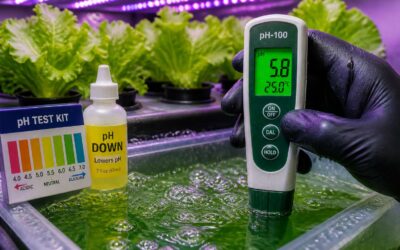
The difference between a thriving reservoir and a toxic one is a single decimal point on the pH scale. Correction demands small, deliberate steps. One milliliter of pH down solution can shift a twenty litre reservoir by several decimal points. Wild swings stress roots more than the original drift. In the zuaiai hydroponic system, I adjust in increments and wait fifteen minutes before remeasuring.
EC drift in the zuaiai hydroponic system works in reverse. When the meter reading climbs but the water level stays steady, the solution has grown too concentrated. Adding nutrients makes it worse. Fresh water restores the balance without compounding the error.
- Probes need monthly calibration with fresh buffer solutions
- pH down and EC buffers degrade in sunlight, so keep them in a dark cabinet
- A written log exposes slow drift patterns that daily readings hide
Staying within target range is mostly about resisting the urge to overcorrect.
Pruning and Plant Care
Roots in a thriving system appear white and firm. When I inspect my zuaiai hydroponic system each week, I check root colour and texture before anything else. Pruning requires precision. Remove yellowing leaves at the stem base using sterilised scissors. For vining plants, pinch the growing tip above the fifth node. This encourages lateral branching and more flowering sites.
Air pruning matters in the zuaiai hydroponic system. When roots reach the rim of the growing cup, they should dry slightly and branch back. A dense mat circling the cup indicates congestion. Tease the mass loose and trim the longest strands by one third. This forces new root development.
A few habits keep the canopy healthy:
- Remove dead flowers and leaves promptly.
- Wipe leaf surfaces with a damp cloth to clear dust.
- Thin dense foliage so air moves between plants.
I do this work in the morning when plants are fully hydrated. Evening pruning leaves fresh cuts exposed to cooler temperatures overnight.
Seasonal Storage and Refreshing
A neglected storage routine produces more failures than any nutrient mistake I have seen. In the zuaiai hydroponic system, the pause between seasons sets the tone for the next planting. I drain everything before the system sits idle.
Run clean water through the pump for a few minutes to flush mineral residue from the lines. A short refresh routine keeps this simple:
- Scrub each growing cup with a soft brush.
- Wipe the LED fixtures with a dry cloth.
- Keep the pump in a sealed bag.
After several months of downtime, the zuaiai hydroponic system often needs only a fresh nutrient batch. The pump, stored properly, runs quietly again. Careful storage gives the next cycle a clean starting point.
Troubleshooting Common Zuaiai Issues
Pump Failures and Water Circulation
Nothing tests your patience like a pump that hums without pushing water. In my experience, most pump failures in the zuaiai hydroponic system stem from three culprits: air locks, debris buildup, and worn impellers. Each presents symptoms.
Air locks happen when trapped air stops the impeller from gripping water. Tilt the pump to release the bubble. Debris requires inspecting the intake screen. Worn impellers need replacement, a straightforward task.
- Check water levels, as low levels cause overheating.
- Inspect tubing for kinks that restrict flow.
- Measure output using a bucket and a 30 second timer.
Circulation issues also show as uneven moisture across the tray. If one side stays dry, verify the delivery manifold is level. Confirm the riser tubes are clear. These checks solve most complaints in your zuaiai hydroponic system without reassembly.
Algae Growth and Prevention
Algae spores survive on sterile surfaces. A single overlooked droplet of nutrient solution can harbour a colony that turns green within days. In the zuaiai hydroponic system, prevention starts with denying light, but also requires vigilance around the growing medium and the reservoir’s waterline.
Monitor for the first signs: a cloudy tint in the tank, slippery residue on the lid, or a musty odour. These symptoms appear before any visible slime. To reduce the risk, adopt these practices:
- Block lid gaps with opaque tape.
- Keep the system away from direct sunlight.
- Rinse growing medium with diluted hydrogen peroxide weekly.
When outbreaks occur, remove the affected medium and clean the reservoir. Your zuaiai hydroponic system will stay productive if you treat algae as a persistent competitor. Trust me, a thorough rinse beats a teardown!
Nutrient Deficiencies and Symptoms
Plants show clear signs of distress. In your zuaiai hydroponic system, a yellow leaf is not normal wear. Nutrient deficiencies follow predictable patterns. You might notice:
- Old leaves fading from green to pale yellow: nitrogen shortage
- Curled and scorched leaf edges: potassium deficiency
- Brown spots on new growth: calcium issues
- Yellow veins with green tissue: magnesium scarcity
The system responds well to quick intervention. First, check the pH because incorrect values lock out nutrients. Second, mix a fresh batch of solution. Third, observe for 48 hours. A balanced schedule prevents most issues. Read the leaf colour.
Lighting Malfunctions
Lighting malfunctions can cripple a zuaiai hydroponic system faster than any nutrient mistake. I have watched entire harvests wilt under a failing ballast. The spectrum dims, the intensity drops, and plants stretch toward a light that barely functions.
LED arrays fail progressively. Diode burnout does not announce itself. It appears as leaf curl and elongated internodes. The photoperiod becomes erratic, disrupting the plant’s photosynthetic rhythm.
Flickering signals a driver failure. Replace the driver before voltage instability damages the diodes. Inspect the thermal paste on heat sinks, since overheating shortens lifespan dramatically.
Follow this sequence when trouble appears:
1. Verify timer settings
2. Check supply voltage
3. Test each LED bank individually
The zuaiai hydroponic system treats light as a crop input, not a fixture. Measure it with a PAR meter. Light degradation is silent, and even a minor drop in output forces the zuaiai hydroponic system to underperform.
Sensor Calibration Errors
Calibration errors rarely announce themselves. One grower I know spent two weeks adjusting nutrients based on a pH probe reading a full point off. The plants kept declining. The zuaiai hydroponic system was doing exactly what it was told, using data that was wrong from the start.
EC probes accumulate mineral residue at the junction. pH electrodes develop a coating that slows their response. When sensors drift, automated monitoring becomes a liability, because adjustments happen based on inaccurate readings. South African summers add another layer, since high ambient temperatures accelerate probe ageing.
Common signs of calibration drift include:
- pH readings that wander after a fresh buffer test
- EC values that shift with temperature swings
- Dosing events that trigger without a clear cause
Temperature complicates matters further. A probe calibrated at 18 degrees behaves differently at 30. The zuaiai hydroponic system compensates for some variance, but extreme conditions expose the limits of any sensor.

0 Comments