The Science Behind Hydroponic Potatoes
How Potato Plants Respond to Soil-Free Environments
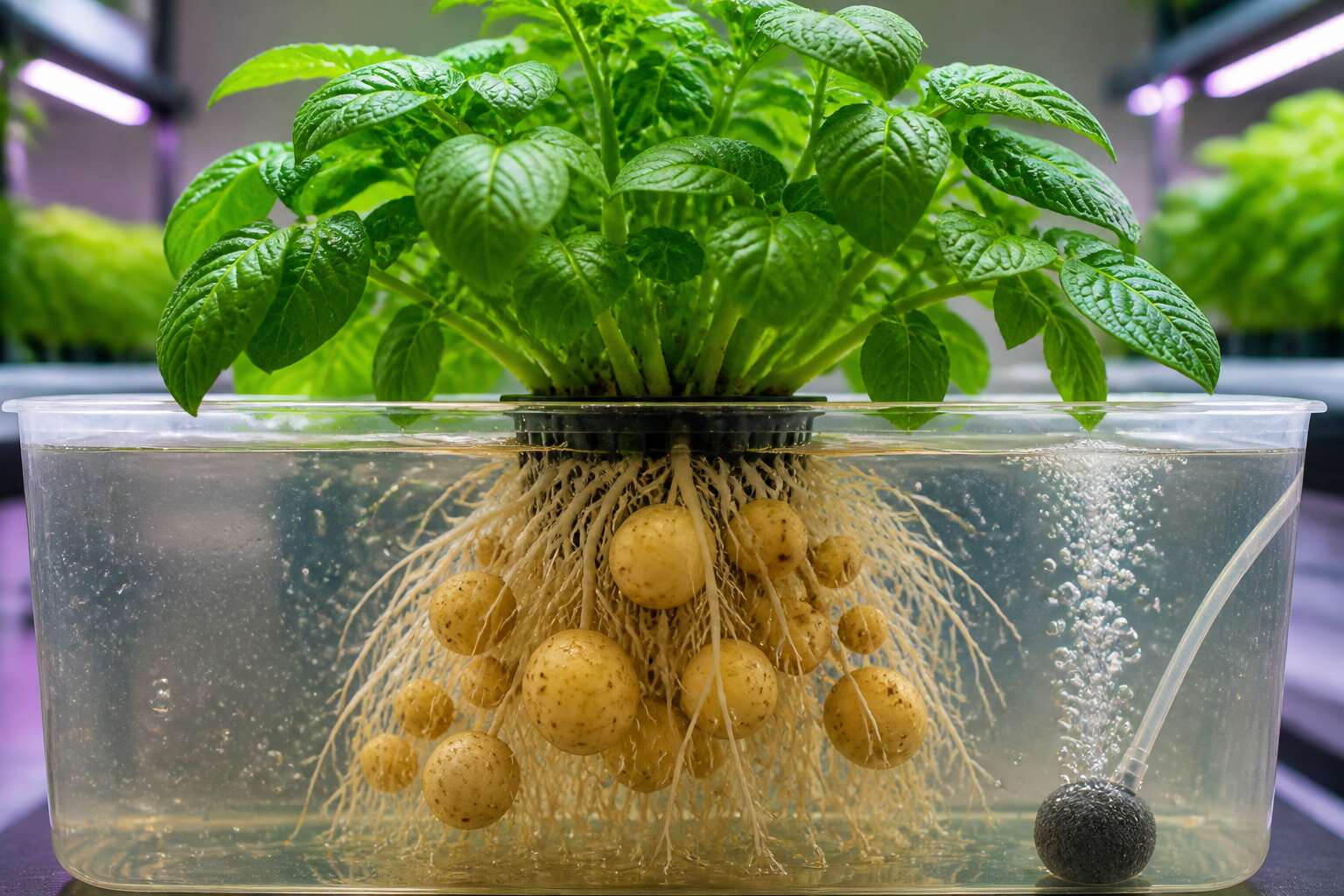
Potato roots are secretive organs. They do not yearn for soil; they yearn for oxygen and minerals. In a hydroponic trench, those roots encounter a constant, oxygenated mist. Can hydroponics grow potatoes? The answer is a resounding yes, visible in the swollen stolons that form beneath the waterline.
I have watched tubers develop in these soilless channels, their skins unblemished by grit. The plant reallocates energy away from root expansion and toward tuber bulking. Without the compressive weight of earth, the crop grows larger and more uniform. The science is straightforward: aeration and nutrient solubility replace the unpredictable chemistry of open fields.
Key Differences Between Soil and Hydroponic Growth Stages
Potatoes supply 30% of South Africa’s vegetable output, yet most cultivation remains trapped in soil. The question, can hydroponics grow potatoes, has a clear answer: yes, and the process reveals sharp contrasts in plant physiology.
Hydroponic systems deliver nutrients directly to roots, bypassing soil’s buffering capacity. This forces faster nutrient uptake and more precise control over tuber development. In soil, potatoes contend with compaction, pests, and uneven moisture; in water, these variables disappear.
Growth stages differ markedly. A hydroponic potato completes sprouting in a week, then enters vegetative growth where light intensity drives leaf expansion. Tuber initiation follows, triggered by nutrient ratios rather than root confinement. Bulking then proceeds uninterrupted by drought or disease.
- No soil-borne pathogens
- Uniform tuber sizing
- Shorter growth cycle
The science rests on dissolved oxygen and balanced nitrogen. So can hydroponics grow potatoes? Look at a netted tray of swollen tubers for proof.
Understanding Tuber Initiation in Water-Based Systems
Potato tuber initiation in water-based systems depends on a biological trigger, not root confinement. When hydroponic solutions hold a balanced nitrogen to potassium ratio, stolons begin swelling. This precision is impossible in soil, where nutrient release varies. Oxygen levels in the root zone further dictate success. Dissolved oxygen above 6 mg/L encourages uniform tuber set, while lower levels stall the process.
- Nitrogen to potassium ratios near 1:1.5
- Root zone temperatures around 18 degrees Celsius
- Dissolved oxygen above 6 mg/L
Temperature adds another layer. Growers chill the reservoir during initiation, which signals the plant to shift energy into tubers rather than leaves. Photoperiod manipulation also works; shortening daylight hours enhances the hormonal signal. I have watched this process bring reliability to tuber set. So can hydroponics grow potatoes with predictable yields? The evidence says yes, and can hydroponics grow potatoes at scale? That depends on your control over these initiation factors.
The Role of Oxygen and Root Zone Temperature
Root zone temperature and dissolved oxygen are the deciding factors in a hydroponic potato system. I have watched growers monitor nutrient formulas while ignoring these two, then wonder why tubers never form. Oxygen drives root respiration. Temperature governs metabolic rate. When both fall into the right range, tuber initiation becomes reliable.
Warm reservoirs create a double problem. As water heats up, it holds less dissolved oxygen, and the roots suffer twice over. The plant responds by favouring foliage over tubers. This is where the practical answer to can hydroponics grow potatoes becomes clear. It can, but only when the root environment stays cool enough to hold oxygen and warm enough to keep metabolism active. That narrow window is the real answer to can hydroponics grow potatoes.
Essential Equipment and System Setup
Selecting the Right Hydroponic System for Potatoes
A single potato plant can yield up to 8 kilograms of tubers in a well managed hydroponic system. That yield depends on your equipment choices, and I have found that selecting the right system architecture matters more than the nutrient formula you use.
Deep water culture handles leafy greens, but it struggles with potatoes. The tubers need physical room to expand, so flood and drain systems or Dutch buckets outperform static water setups. Each plant requires roughly 20 litres of growing medium to accommodate both roots and swelling tubers.
When South African growers ask can hydroponics grow potatoes, the answer shows up in the hardware. A dark reservoir blocks sunlight, which prevents tuber greening. Perforated drain tubes keep the medium from becoming waterlogged.
A functional starter setup includes:
– 20 litre buckets filled with clay pebbles
– A timer controlled submersible pump
– Opaque lids fitted with net pots
Nutrient film technique remains unsuitable for tuber crops. Potatoes need a medium that holds moisture yet drains freely, allowing expansion without restriction.
Choosing the Best Growing Medium for Structural Support
A single potato plant in a well managed hydroponic system can yield up to 8 kilograms of tubers, but that number hinges on the physical support you provide. When growers ask can hydroponics grow potatoes, the answer often lies in the growing medium more than the water chemistry. The medium must anchor the plant while allowing the developing tubers to push outward without resistance. A static water environment causes the roots to suffocate and the tubers to rot.
A simple grow bag or a 20 litre bucket filled with clay pebbles offers the ideal balance. The pebbles create air pockets for oxygen while retaining enough moisture for nutrient uptake. To prepare the medium:
1. Rinse the clay pebbles thoroughly to remove dust.
2. Layer the pebbles to a depth of at least 30 centimetres.
3. Cover the top with a light proof material to block light.
This structure prevents waterlogging and tuber greening. A timer controlled pump delivers nutrient solution in cycles, keeping the medium moist but not saturated. The question of can hydroponics grow potatoes dissolves when you see how the medium supports the plant’s expansion. Choose a coarse material like perlite or expanded clay, and the tubers will develop cleanly and evenly.
Lighting Requirements for Optimal Tuber Development
Can hydroponics grow potatoes with basic gear from a local hydro shop? Yes, and the equipment list is shorter than you might think. A submersible pump, a timer, an air stone, and a nutrient reservoir cover the essentials. That is the entire system!
Lighting requires more thought. The leaves need a full spectrum lamp running 14 to 16 hours a day. The tubers need absolute darkness. Any light leak turns the exposed skin green and bitter. Cover every clear surface on your containers.
The workable lighting schedule:
- 14 hours of light for active photosynthesis
- 10 hours of complete darkness for tuber respiration
- Red spectrum light for tuber initiation
- Blue spectrum light to control leaf height
Growers who master this simple setup find that can hydroponics grow potatoes with consistent results.
Managing Space and Vertical Growth Constraints
The physical footprint of a potato plant surprises most growers. The canopy spreads one metre across while tubers require a dark chamber below. The answer to can hydroponics grow potatoes rests in managing this vertical tension, not in adding more gear.
Container dimensions and spacing shape the whole system:
- A 20 litre to 40 litre container per plant provides sufficient tuber room
- A 30 centimetre gap between plants permits airflow through the canopy
- The reservoir sits beneath the grow site so the pump pushes nutrients upward
Vertical scaffolding carries the foliage as stems grow heavy. A simple trellis prevents collapse into neighbouring systems. Stacked towers reduce floor footprint, but each tier must allow harvest access. Some growers separate the foliar zone from the root chamber with a top-support frame. That separation keeps the answer to can hydroponics grow potatoes firmly in the affirmative.
Ventilation and Climate Control Essentials
Ventilation does more than move air. It clears humidity that invites rot and keeps carbon dioxide flowing to the leaves. In South African conditions, where summer heat spikes quickly, a thermostat-controlled exhaust fan becomes the difference between a thriving crop and a wilted one. Climate control also means cooling the nutrient solution, since roots suffer above 68 degrees Fahrenheit.
- Inline fan with humidity sensor
- Thermostat for air temperature
- Water chiller for warm climates
- Oscillating fan for canopy movement
Can hydroponics grow potatoes? Yes, provided the system includes these basics. The reservoir pump pushes cooled nutrient upward, and the exhaust fan adjusts to daily temperature swings. Without this setup, tuber formation stalls even with perfect light and spacing.
Nutrient and Water Management
Formulating Nutrient Solutions for Potato-Specific Needs
Most nutrient formulas treat potatoes like tomatoes, which is a mistake. Potatoes demand higher potassium during tuber bulking and a careful nitrogen balance. The question of can hydroponics grow potatoes often hinges on these precise nutrient shifts. Water management is equally critical. The root zone should stay moist but never saturated. I have found that monitoring electrical conductivity daily prevents salt buildup, which stunts tuber formation.
Key adjustments for potato-specific feeding include:
– Lower nitrogen after flowering to direct energy to the tubers
– Increase potassium steadily through the growth cycle
– Maintain calcium and magnesium to prevent hollow heart
These changes are straightforward once you understand the plant’s needs.
Monitoring pH and Electrical Conductivity Levels
Somewhere between your second and third cup of coffee, you will find yourself glaring at a pH meter like it personally insulted your ancestors. That is the unglamorous reality of asking can hydroponics grow potatoes. The answer remains yes, but only if you respect the electrochemical sensitivities of your nutrient bath.
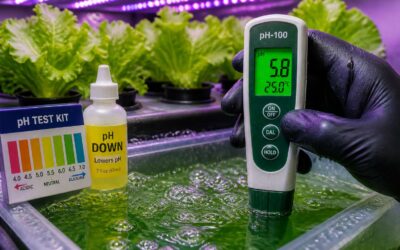
Check pH every single morning. Keep it between 5.5 and 6.0. Electrical conductivity should sit around 2.0 to 2.5 mS/cm during the bulking phase. Drift beyond that range, and your tubers will respond with a stubborn sulk that no amount of encouragement fixes.
- Calibrate probes weekly
- Test the solution before each feeding
- Adjust using phosphoric acid or potassium hydroxide
Water management means keeping the root zone moist, never saturated. Flooded media invites rot faster than a Cape Town downpour ruins a braai. A quick glance at the runoff each day tells you more than any expensive sensor.
Adjusting Feeding Schedules During Different Growth Phases
Feeding schedules for potatoes in water demand more than a fixed calendar. The plant shifts from leafy growth to tuber bulking, and each phase requires a different nutrient profile. The can hydroponics grow potatoes question returns during this transition. Yes, but only if you adjust with precision!
During the vegetative phase, keep nitrogen higher for foliage. Once tuber initiation begins, cut nitrogen by a third and boost phosphorus and potassium. Water management changes too. The root zone needs a wet-dry rhythm, not constant submersion. Check drip lines and runoff daily. I prefer to drain the reservoir every ten days.
- Seed to sprout: half strength
- Foliage growth: full nitrogen
- Tuber bulking: low nitrogen, high potassium
This prevents nutrient lockout and keeps plants from stalling. The exact numbers depend on your system’s volume and growth rate. The principle remains consistent.
Oxygenation and Irrigation Techniques for Root Health
The real answer to can hydroponics grow potatoes lies in the health of the root zone. Oxygenation is not optional. A submerged root system will suffocate, so I rely on aeration stones or venturi injectors to keep dissolved oxygen above six parts per million. Irrigation timing matters just as much. Short pulses with a dry interval prevent waterlogging and encourage dense root growth.
For the potato bed, I use these root health checks:
- Inspect root colour daily, white and firm is ideal
- Feel the medium, it should be moist but not dripping
- Measure oxygen levels weekly
I prefer drip irrigation over constant misting. It delivers water slowly to the crown and allows the upper medium to breathe. This rhythm reduces rot and keeps the tubers in contact with oxygen. So, when someone asks can hydroponics grow potatoes, I point to the roots first. Healthy roots make the yield possible.
Common Pitfalls and How to Avoid Them
Preventing Tuber Rot in High-Moisture Environments
Tuber rot occurs when moisture sits around the developing potato. In deep water culture, a submerged tuber becomes vulnerable. The plant’s respiration creates warm, humid spots, ideal for Pythium and other water molds. I have seen crops lose firmness within days, the tubers turning soft and translucent from excess water.
Prevention relies on positioning. Elevate tubers above the nutrient film, or select a coarse medium that drains quickly. Air pumps should provide vigorous circulation. The question can hydroponics grow potatoes has a conditional answer. Water is necessary but cannot accumulate. When the root zone has consistent oxygen, tubers remain healthy.
Dealing With Nutrient Deficiencies and Toxicities
Nutrient imbalances appear first in the lower leaves. Yellowing between veins often signals magnesium deficiency. Burned leaf edges point to potassium toxicity or irregular EC spikes. These symptoms mimic each other, which complicates diagnosis.
I keep a log of every feeding adjustment. The plant’s growth stage dictates what it needs. Early vegetative growth demands nitrogen. Tuber bulking shifts the balance toward potassium and phosphorus. Overfeeding causes salt buildup, which blocks water uptake.
- Interveinal chlorosis means magnesium deficiency
- Leaf tip burn suggests excess salts
- Stunted growth with dark leaves indicates nitrogen toxicity
Regular calibration of your EC meter prevents most issues. A drift of even 0.2 can trigger a series of problems. The question can hydroponics grow potatoes depends on this precision. Healthy tubers follow from balanced nutrition, not guesswork.
Managing Pests and Diseases Without Soil-Based Remedies
One aphid becomes a colony in a week. Hydroponic potato systems lack soil, which normally harbors predators and buffers disease. Spider mites and thrips love warm, dry air. Keeping plants healthy determines whether can hydroponics grow potatoes successfully.
I skip chemical sprays. Physical barriers and biological controls work better. Yellow sticky cards catch adults early. Predatory mites eat spider mites before they spin webs. Nutrient film systems need daily root checks because exposure invites trouble.
Avoid these pitfalls: ignoring airflow brings fungal gnats, and reusing net pots spreads pathogens. Inspect roots every morning. Remove sick plants right away. Pythium moves fast through water.
- Quarantine new tubers for three days
- Place sticky cards at canopy level
- Disinfect pruning shears after each cut
Without these measures, your crop will fail.
Avoiding Excessive Vegetative Growth at the Expense of Tubers
Excessive shoots take energy from the very organs you want. In hydroponic potato systems, a nutrient solution heavy in nitrogen often produces towering vines and sparse harvests. The plants look magnificent, yet the yield disappoints. Shifting to a higher potassium ratio once flowers appear redirects energy downward.
Photoperiods matter too. Keeping lights on beyond twelve hours encourages leaves over tubers. I have seen growers mistake lush growth for success. Resist that urge! Check stolon tips for swelling signs.
- Reduce nitrogen by 30% after the fourth week
- Lower light cycles to ten hours
- Harvest foliage if it exceeds 60 centimeters
Can hydroponics grow potatoes when the canopy dominates? Only if you prune aggressively and balance the feed. The system rewards discipline, not indulgence.
Structural Collapse and Plant Support Failures
Can hydroponics grow potatoes with a sprawling canopy and zero stability? Yes, but only if you respect the physics of weight. I once watched a thriving crop tip an entire channel overnight. The tubers were perfect, but the plant had quietly outgrown its trellis. You must build support before the stolons appear, not after the stems bend!
Support failures happen when growers rely on thin twine or poorly anchored lids. Use rigid mesh or spacer boards. Secure each stem to a stake. Check the framework every time you adjust the reservoir. Here is what I look for weekly:
- If the plant leans, the anchor point is wrong.
- If the root mass lifts, the lid is too weak.
- If the channel bends, the spacing is too wide.
The real question is not whether the system can bear fruit, but whether it can bear the plant itself.
Temperature Fluctuations That Halt Tuber Formation
Temperature fluctuations sabotage tuber formation in hydroponic systems. When the reservoir climbs past 24°C, stolons stop swelling while the foliage still looks healthy. I have watched a perfect nutrient solution fail because the greenhouse cooled sharply after sunset.
Stability matters more than the ideal reading. Can hydroponics grow potatoes when the roots bake by day and chill overnight? Only if you insulate the reservoir and hold the nutrient solution between 18°C and 22°C from tuber initiation to harvest.
- Keep the reservoir off cold concrete floors.
- Add a chiller for summer and a heater for winter.
- Check temperatures after dark, not only at midday.
A two degree shift can halt tuber formation for days.
Maximizing Harvest and Quality
Signs That Your Hydroponic Potatoes Are Ready to Harvest
Can hydroponics grow potatoes? The proof lies in the harvest. As plants near maturity, they send clear signals. Leaves shift from deep green to pale gold, then droop. Stems weaken at the base. These are natural cues, not distress. Watch for these readiness signs:
- Foliage has yellowed and begun to fall over.
- Tubers push against the growing medium, creating visible bumps.
- Skin does not rub off easily when you touch it.
For maximum quality, withhold nutrient solution for two weeks before harvest. This hardens the skins and extends shelf life. Let the tubers rest in the medium. When the plant’s top growth dies back completely, lift each tuber gently. Check for firmness and avoid bruising. Consistent moisture during the final weeks prevents splitting. Patience rewards you with dense, flavorful potatoes.
Comparing Yield and Size With Traditional Soil Farming
Hydroponic setups regularly produce ten or more tubers per plant, while field crops typically yield five to eight. Soil yields in the Free State and Western Cape vary with rainfall and soil health. Hydroponic systems remove that uncertainty. Can hydroponics grow potatoes with better size? Yes. Controlled oxygen and nutrient delivery produce more uniform tubers per plant.
Quality differs as well. Soil-grown potatoes develop knobs and cracks from stones and inconsistent moisture. Hydroponic tubers grow free of these constraints. They emerge with smooth skins and predictable shapes. Several variables drive this advantage:
- Optimal root zone temperatures kept between 18 and 21 degrees Celsius
- No competition from weeds or soil-borne pathogens
- Precise harvest timing based on plant maturity
Maximizing harvest means monitoring these factors closely. In my experience, when you ask can hydroponics grow potatoes with premium quality, the answer appears in every smooth, heavy tuber.
Post-Harvest Cleaning and Curing Techniques
Harvest day arrives with a strange quiet, a moment suspended between months of vigilance and the weight of what the water has given. When the nutrient flow ceases and the root zone begins to dry, the tubers have already signaled their readiness. I have watched growers pull entire plants from inert media and find clusters of potatoes that look almost artificial, so uniform they seem manufactured. The question can hydroponics grow potatoes with consistent quality is answered in that instant, when the skin sets firmly and the flesh resists pressure.
Post-harvest handling demands the same precision as the growth cycle. The moment tubers leave the system, they enter a fragile state where moisture and temperature become adversaries. I recommend immediate cleaning with low pressure water to remove any clinging substrate, then a careful inspection for cuts or soft spots. Tubers with damaged skin will rot quickly, and one compromised potato can threaten an entire storage batch.
Curing transforms the harvest into a stable product. Freshly harvested hydroponic potatoes carry excess surface moisture that invites decay. I place them in a dark, well ventilated space at 15 to 18 degrees Celsius for two weeks. This period allows the skin to thicken and minor abrasions to heal. The relative humidity should hover near 85 percent, enough to prevent shrinkage but low enough to discourage fungal growth. Monitoring these conditions daily is tedious, but the payoff appears in storage life.
– Keep the curing area free of light to prevent greening.
– Turn the tubers every few days to ensure even drying.
– Hold curing temperatures steady; sudden drops cause condensation.
After curing, I move the potatoes to a cooler environment at 4 to 8 degrees Celsius with high humidity. Hydroponic tubers, having grown without soil contact, carry fewer surface pathogens, so they often store longer than field grown equivalents. The answer to can hydroponics grow potatoes that endure in storage is a measured yes, provided the curing discipline holds. The process is neither glamorous nor quick, but it separates a passable harvest from a remarkable one.

0 Comments