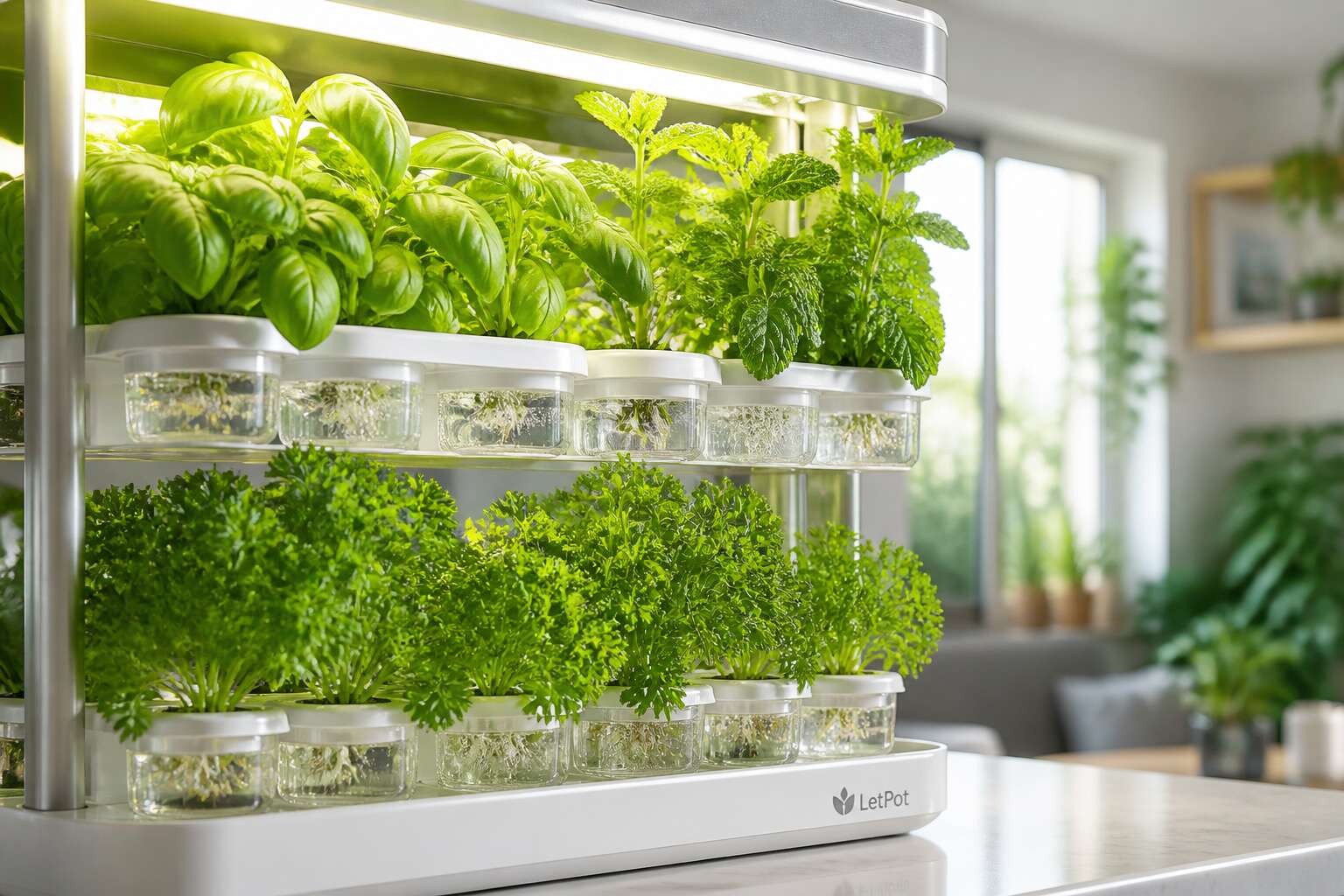
Choosing the Right Growing System for Indoor Herbs
Deep Water Culture vs. Nutrient Film Technique
For a hydroponics herb garden, the choice between Deep Water Culture and Nutrient Film Technique is like choosing between a lazy river and a water slide. DWC suspends roots in oxygenated water, perfect for basil that wants to nap all day. NFT runs a thin film over sloped channels, chasing lettuce like a caffeine fiend. Your space and temperament matter. Consider these factors:
- Root type: DWC suits heavy feeders like rosemary, NFT suits quick growers like leafy greens.
- Pump failure: DWC forgives an outage for hours, NFT leaves you with crispy plants in minutes.
- Maintenance: NFT demands regular channel cleaning, DWC simply needs an airstone check.
If you hate fiddling with timers, DWC wins. If you love tinkering with plumbing, NFT fascinates. Both deliver fresh herbs, but only one will match your patience level.
Ebb and Flow Systems for Compact Spaces
Ebb and Flow systems flood the grow tray, saturate the roots, then drain completely. This cyclic action gives roots access to nutrients and oxygen in equal measure. For a compact indoor setup, the design works well because everything stacks vertically.
In South African households, space often dictates what you can grow. A hydroponics herb garden built around Ebb and Flow fits on a kitchen counter or a balcony shelf. The reservoir below the tray holds the nutrient solution, so the whole unit stays tidy. I have seen growers convert a single metre of counter space into a productive herb station.
- The timer controls flood frequency
- The medium supports root structure between cycles
- The tray accommodates several herb varieties
Plants receive consistent feeding without constant attention. That is the real appeal of this system!
Vertical Towers and Wall-Mounted Options
Vertical towers change how we think about vertical space. They turn a bare wall into a living pantry. In a Johannesburg flat, a tower with twelve planting pockets can hold basil, parsley, and coriander without occupying a single square metre of floor. The nutrient solution pumps upward and cascades down through each level, so the top herbs drink first and the lower herbs receive the runoff. This design suits a hydroponics herb garden because it matches the natural growth habit of leafy plants.
Wall mounted options use the same principle but attach directly to a wall. They work well in narrow kitchens or on balcony railings. The key is choosing a system with a reliable pump and a reservoir you can reach without a ladder.
- Planting pocket depth, deeper pockets support larger root masses
- Light exposure, wall mounted units need direct sun or a grow light
- Reservoir size, smaller tanks require more frequent topping up
A hydroponics herb garden should fit your routine. The best system is the one you maintain.
Wick Systems for Low-Maintenance Beginners
Not every hydroponics herb garden announces itself with pumps and gurgling water. A wick system works in near silence. A braided cord dips into the nutrient reservoir and draws solution upward into the growing medium through capillary action. It is, in my view, the most forgiving entry point into hydroponics.
The trade-off is throughput. A wick delivers moisture slowly. Fast-growing herbs like mint will still thrive, but heavy feeders may outpace the wick’s capacity. Choose smaller leafy herbs and give the system time to equalise.
Consider these realities before committing:
- The reservoir must sit below the growing tray.
- The wick must stay in firm contact with both medium and solution.
- The medium should be porous, like perlite or coco coir.
This quiet method asks for patience, not machinery. Beginners often overestimate their enthusiasm and underestimate their consistency. A first hydroponics herb garden that forces you to slow down may be exactly the discipline you need.
Essential Equipment and Setup for a Thriving Herb Garden
Selecting Grow Lights: LED vs. Fluorescent
Choosing the right light source determines how every leaf develops in your hydroponics herb garden. I have seen growers obsess over nutrients while their herbs stretch pale and thin under inadequate bulbs. The difference between LED and fluorescent changes your energy bill, your heat management, and the texture of the plants.
Consider what each technology demands from you:
- LED units convert most electricity into usable light, producing less heat and allowing closer placement to the canopy.
- Fluorescent tubes remain cheaper to buy initially, but their output degrades faster and they consume more power.
The steady hum of an LED driver feels different from the flicker of an aging tube. One offers stillness; the other asks for vigilance. For a hydroponics herb garden in South Africa, where power interruptions shape daily routines, the efficiency of your lighting system becomes part of your household rhythm rather than a distant specification.
Growing Media: Clay Pebbles, Coco Coir, and More
The foundation of any thriving hydroponics herb garden lies beneath the surface. Growing media determines how roots anchor, breathe, and absorb nutrients. Clay pebbles provide excellent drainage and aeration, while coco coir retains moisture and stabilises pH. Perlite adds lightness, and vermiculite retains water effectively.
Consider these common choices:
- Clay pebbles for reusable, stable support
- Coco coir for pH neutrality and root resilience
- Perlite for increasing oxygen around roots
- Vermiculite for moisture retention in dry climates
The setup matters as much as selection. Rinse clay pebbles thoroughly before first use to avoid dust. Soak coco coir in buffered calcium solution to prevent magnesium lockout. Match the medium to your system. Drip systems pair well with pebbles, while wick systems favour coir’s capillary action.
Ventilation and Air Circulation Strategies
A thriving hydroponics herb garden asks for more than water and light. The air itself must move. Plants draw in CO2 and release moisture, so stagnant air invites mould and weakens stems. In my experience, oscillating fans add gentle movement, while an extractor fan pulls stale air out. This matters in South Africa, where warm interiors can quickly turn humid.
Essential equipment is simpler than many expect.
- A submersible pump to move nutrient solution reliably
- A timer to automate feeding cycles
- A reservoir with a lid to block light and algae
- A pH meter for daily checks
Without these, a hydroponics herb garden becomes a collection of parts rather than a system. Air circulation works in layers. Position fans at canopy height to strengthen stems. Use an exhaust fan to manage temperature. Open vents to refresh oxygen. Each layer supports healthy transpiration.
Water Pumps, Timers, and Delivery Systems
Every hydroponics herb garden depends on water movement. A submersible pump delivers nutrient solution, and in South Africa, loadshedding tests that reliability. I once lost a basil crop to a pump that failed during a blackout. Now I keep a spare.
Timers automate feeding cycles. Mechanical timers survive power surges better than digital ones. A reservoir with a lid blocks light and algae growth. The pump should sit below the water line to avoid cavitation.
- A submersible pump rated for continuous duty
- A timer with battery backup
- Inline filters to protect fine emitters
Delivery systems, drip lines or spray bars, distribute solution evenly across the root zone. A pH meter stays within reach for daily checks. This equipment turns a hydroponics herb garden from a collection of parts into a functional system.
Sensors and Controllers for Automation
Every hydroponics herb garden has silent variables that escape the eye. Temperature swings during Johannesburg afternoons, electrical conductivity drift, humidity spikes after watering. Sensors catch these shifts before they become problems.
I rely on a dual probe that measures both temperature and EC in the reservoir. The controller reads data every few seconds. It handles tasks I used to do by hand:
– Nutrient dosing adjustments
– Pump cycling based on moisture levels
– Alarm alerts when readings fall outside safe ranges
When loadshedding strikes, controllers with battery backup keep monitoring even when the pump stops. A relay switch pauses feeding cycles during blackouts and resumes when power returns. This automation keeps a hydroponics herb garden stable through conditions that would otherwise ruin a crop.
Selecting and Starting Herb Varieties for Indoor Cultivation
Top-Performing Herbs: Basil, Mint, and Cilantro
Starting a hydroponics herb garden requires more than assembling hardware, and choosing the right plants from the first day sets the tone for your entire system. While leafy greens are forgiving, culinary herbs offer the best return on your investment in space and nutrients. You want varieties that tolerate the constant moisture of a hydroponic setup and recover quickly from pruning, since you will be harvesting continuously.
A dependable hydroponics herb garden relies on a few workhorses. Basil thrives because it grows fast and handles repeated cutting, especially if you pinch flowers as they appear. Mint is almost too vigorous, so you may want to give it its own container. Cilantro is trickier because it bolts in high heat, but it performs well when you keep the water temperature below 22°C. For a quick reference, consider these starter selections:
- Genovese basil, which gives you classic large leaves for pesto
- Spearmint, which stays bushy and handles humidity well
- Slow-bolt cilantro, which buys you extra weeks before it flowers
I have found that direct seeding into your growing media works better than transplanting for most herbs, though basil benefits from a small nursery period. Mint will root from a cutting in plain water, giving you a head start without seed costs. Cilantro does not like root disturbance, so sow it directly where it will grow. Each plant has its own quirks, and respecting those quirks prevents most early failures.
Starting from Seeds vs. Purchasing Transplants
Seed starting demands patience, but it produces roots that know only water. Purchased transplants offer speed, yet they bring soil-bound roots into a different world. That mismatch often causes a visible stall in a hydroponics herb garden.
The choice is not about convenience alone. Transplants recover, but they take time to trust their new environment. Seeds, sown directly into clay pebbles or coco coir, commit to the system without memory of another life.
Consider the trade-offs:
- Dill and fennel resent transplanting and should always be seeded in place.
- Thyme and oregano grow slowly from seed but develop resilient root structures.
- Rosemary roots readily from cuttings, avoiding seed costs and waiting time.
Your temperament matters. If you need momentum, buy transplants. If you want roots that belong to their environment without apology, start from seed. Every harvest in your hydroponics herb garden reflects that decision.
Spacing and Plant Density for Maximum Yield
Spacing in a hydroponics herb garden balances ambition against airflow. Cramming basil and mint together invites humidity to linger where it should not. I treat each variety as a distinct plant with its own territorial demands.
For indoor cultivation, I have found these spacing rules hold:
- Basil needs 15 cm between plants to develop broad leaves without shading neighbours.
- Mint can run rampant, so give it 20 cm or isolate it entirely.
- Cilantro grows upright, 10 cm suffices, but thin ruthlessly.
Plant density decides yield more than any nutrient schedule. Too many roots in one net pot create competition that stunts growth. A hydroponics herb garden rewards restraint. Give each root system its required volume, and the harvest follows.
Companion Planting Within a Single System
Choosing varieties for a hydroponics herb garden feels like casting a play. Some herbs demand the spotlight, others thrive in the shadows. I select based on growth rates and root habits, not just flavor. In South Africa’s indoor spaces, compact thyme and oregano perform well alongside upright dill.
Companion planting within a single system requires attention to chemical signalling. Certain herbs release allelopathic compounds that inhibit neighbours. Fennel can suppress basil, while parsley and chives often coexist peacefully. Aggressive spreaders like mint need isolation, always.
- Basil pairs with oregano, both share similar nutrient needs.
- Chives and dill support each other’s growth in shared channels.
- Mint must be separated or it will dominate the root zone.
In a hydroponics herb garden, testing combinations in small batches before scaling up is the only safe route. Observation matters more than any chart.
Herbs That Thrive Under Constant Moisture
Most herbs prefer a wet-dry cycle, but a true water lover refuses to wait. In a hydroponics herb garden, varieties like watercress, Vietnamese coriander, and celery leaf flourish when their roots stay soaked around the clock. These plants tolerate low oxygen at the root zone better than basil or rosemary ever will!
I start these cultivars in rockwool cubes, keeping the cubes moist but not drowning them for the first week. Once roots emerge, transfer to a raft or channel with steady flow. Here are herbs for a hydroponics herb garden that make constant moisture a feature, not a flaw:
- Watercress: peppery leaves, ready to harvest within a month
- Vietnamese coriander: heat-tolerant with a cilantro-like kick
- Celery leaf: milder than celery, perfect for soups
Keep water temperature below 24°C to prevent rot. That single habit saves more crops than any nutrient tweak.
Culinary vs. Medicinal Varieties to Consider
When I curate a hydroponics herb garden, I separate culinary workhorses from medicinal allies. Culinary varieties like dill, fennel, and lemon balm earn their place with daily harvests. Medicinal herbs such as feverfew, valerian, and echinacea demand patience! Yet they reward with tinctures and teas that transform a small system into an apothecary.
Consider the growth habit before committing. Culinary herbs often tolerate frequent pruning, while medicinal roots and flowers need longer cycles. This system lets me control the rhythm precisely, but I must match the cultivar to the water depth.
- Feverfew for migraine relief
- Valerian for deep sleep
- Echinacea for immune support
A balanced setup features two culinary and two medicinal varieties. That selection keeps the growing area productive without overwhelming daily attention.
Nutrient Solutions and Feeding Schedules for Leafy Herbs
Understanding NPK Ratios for Foliage Growth
In soil, nutrient availability changes constantly. In a hydroponics herb garden, every root tip floats in a solution engineered to deliver precisely what it needs. That precision makes NPK ratios the most important variable you control. A hydroponics herb garden rewards attention to these simple numbers.
Leafy herbs like basil, mint, and cilantro are nitrogen hungry. They build foliage quickly and demand a consistent supply. A standard feeding schedule starts at half-strength nutrients and climbs as plants mature. Watch for the warning signs:
- Yellowing lower leaves indicate nitrogen shortage.
- Stunted growth often points to weak phosphorus.
- Brown leaf edges suggest potassium deficiency.
I find that a 3:1:2 ratio of nitrogen, phosphorus, and potassium serves most leafy crops well. Electrical conductivity readings commonly sit around 1.4 mS/cm during active growth. That number shifts with temperature, so monitoring matters!
Organic vs. Synthetic Nutrient Blends
One thing a hydroponics herb garden forces you to decide is whether to feed with mineral salts or organic blends. Synthetic nutrients dissolve completely and remain immediately absorbable, which makes pH and EC adjustments more predictable. Organic solutions, however, require beneficial microbes to mineralize compounds, and those microbes need oxygen and stable water temperatures.
A feeding schedule for leafy herbs might look like this:
- Week one: quarter strength.
- Week two: half strength.
- Week three onward: full strength.
I tracked both approaches over two full growth cycles. The synthetic line behaved consistently. The organic line demanded daily checks, and when I forgot to aerate properly, it dropped pH swiftly. For most growers in South Africa, synthetic blends deliver more reliability. If you choose organic, prepare to stay attentive to your reservoir.
Monitoring pH and Electrical Conductivity
The reservoir became a rival when I stopped checking it twice a day. Leafy herbs show distress through pH drift before visible wilting appears. Basil, mint, and cilantro prefer a range of 5.5 to 6.2. Electrical conductivity reveals whether plants are drinking water or consuming nutrients. A rising EC reading points to water loss outpacing nutrient uptake. Falling EC signals heavy feeding.
Daily observations matter more than any fixed schedule. Week one calls for quarter strength nutrients, week two moves to half strength, and week three onward runs at full strength. These numbers mean nothing if the reservoir swings wildly between checks. For any hydroponics herb garden, consistency in readings catches problems before leaves show it.
Adjusting Feeding Frequency by Plant Growth Stage
Nutrient solution strength is not a static recipe. Young seedlings in a hydroponics herb garden drink less and need milder food. As roots expand and leaves multiply, their appetite shifts. I adjust the reservoir every few days rather than following a strict calendar. The plant is the only schedule that matters.
During the first true leaf stage, I run nutrients at quarter strength. Once the second set of leaves appears, half strength supports the rapid top growth that leafy herbs are known for. Full strength arrives only after the root system shows white, vigorous tips on every inspection. Each tray in a hydroponics herb garden develops unevenly, so feeding frequency follows the slowest plant, not the fastest.
- Seedling stage: quarter strength for the first 7 days
- Vegetative stage: half strength until the plant reaches 15 cm
- Mature stage: full strength with weekly EC checks
Symptoms of Nutrient Deficiencies and Fixes
Nutrient deficiencies in a hydroponics herb garden often show up first as leaf discolouration. Yellowing between veins usually means magnesium is short. Brown leaf tips point to potassium burn or low calcium. I check the roots before adjusting anything. Pale new growth often clears up with a small dose of chelated iron.
- Nitrogen shortage: older leaves turn yellow, growth slows.
- Calcium deficiency: new leaves look twisted or blistered.
- Phosphorus problem: stems and veins take on a purple tint.
Fixes depend on your base water quality. Hard water already contains calcium, so balance the mix before adding more. A pH drift above 6.5 locks out iron and manganese. Keep the reservoir steady for your hydroponics herb garden. If symptoms appear, test the EC first! Then adjust in half steps. Wait three days before changing anything else.
Overcoming Common Growth Challenges and System Issues
Preventing Algae in Reservoirs and Growing Trays
Walk past a neglected reservoir and you may see a green film that signals trouble. Algae competes with your herbs for dissolved oxygen and nutrients. In a hydroponics herb garden, prevention starts with denying algae light. Opaque reservoirs, sealed lids, and solid growing trays block the spectrum that encourages growth.
A quick weekly inspection covers pump lines, tray corners, and exposed solution surfaces. Slimy surfaces need scrubbing and a clean water rinse. Nutrient solution left longer than a week invites trouble, especially during warmer months.
Another grower I know switched to a dark, food grade tote and stopped scrubbing trays every weekend. Algae favours warmth and stagnant water. Solution temperatures below 22 degrees Celsius and gentle circulation discourage algae. Those habits, plus a strict light barrier, keep the hydroponics herb garden thriving without constant intervention.
Identifying and Treating Root Rot
Root rot can destroy a thriving crop in days. It announces itself through wilting leaves and a sour smell. In a hydroponics herb garden, roots turn brown or black and feel slimy. The cause is usually a pathogen taking hold where oxygen levels have dropped.
Roots are inspected at the first sign of stalled growth. Healthy roots stay firm and pale, but I have seen infected ones break apart easily. A failing air pump or warm solution above 24 degrees Celsius triggers this condition!
- Discolouration starting at the root tips
- Soft, mushy texture when pressed
- Stunted herb growth despite proper pH
Treatment involves trimming affected roots and rinsing the system with diluted hydrogen peroxide. The hydroponics herb garden solution stays cool and aerated to prevent recurrence.
Managing Indoor Pests: Aphids and Fungus Gnats
One aphid can give birth to dozens of nymphs in a week. In a hydroponics herb garden, one overlooked leaf becomes a colony by the next feeding cycle. Aphids cluster on new growth, drain sap, and excrete honeydew that attracts sooty mould. Fungus gnat larvae hide in the growing media and chew root hairs, leaving herbs vulnerable to wilting.
Scouting is the only reliable defence. I look for sticky patches on leaves and small white eggs beneath the canopy. In my hydroponics herb garden, I also check the surface of clay pebbles and coconut coir, where fungus gnat larvae thrive.
- Adult gnats hovering near the water line
- Aphids clustered at the stem tips
- Honeydew residue on the reservoir cover
Neem oil disrupts aphid reproduction. Yellow sticky cards reduce gnat numbers. But these remedies only work when you catch the problem early. Let pests settle in, and you are hosting insects, not growing herbs.
Fixing Leggy Stems and Yellowing Leaves
Leggy stems and yellowing leaves usually mean the plant is stretching for light or struggling with nutrient uptake. In a hydroponics herb garden, light distance and pH drift cause most of these problems. Basil and mint elongate when the LED array sits too far above the canopy. Lower the fixture and the new internodes shorten within days.
Yellowing follows a predictable pattern. Iron deficiency bleaches the young leaves, while nitrogen shortage settles into the older foliage first. Measure the EC level before adding anything. A quick pH swing can lock out micronutrients even when the reservoir holds a balanced mix.
Plants respond quickly once the root cause is corrected. With stable light height and regular monitoring, the system stays productive without constant intervention.
Stabilizing Water Temperature for Root Health
Water temperature directly affects root health in a hydroponics herb garden. In South Africa, summer reservoir temperatures often climb past 26°C, and that is when roots begin to suffocate. Warm water holds less dissolved oxygen, which slows metabolism and invites opportunistic pathogens.
Stabilizing temperature requires attention to where the reservoir sits. In my experience, direct sunlight through a window is the primary cause of overheating. Move the tank to a shaded spot, or wrap it in reflective insulation. This step alone prevents most overheating problems! A simple aquarium heater covers cold winter nights, while a dedicated water chiller becomes necessary during heatwaves.
- Root health depends on a narrow band between 18°C and 22°C
- Midday is when reservoir temperatures peak
- Insulation works best before temperatures drift
Consistent root temperature keeps nutrient uptake steady and prevents stress responses that stall growth. Without that stability, every other correction becomes temporary.
Maintenance Routines and Harvesting Techniques for Continuous Production
Cleaning and Sterilizing the System Between Cycles
A hydroponics herb garden demands discipline between planting cycles. After each harvest, I drain the reservoir and inspect every pipe and tray. Cleaning and sterilizing the system between cycles prevents pathogens from taking hold. I flush the lines with diluted hydrogen peroxide, then rinse with plain water.
Harvesting techniques for continuous production require a different approach than soil gardening. I cut leaves individually rather than pulling whole plants. This keeps the roots undisturbed and the crown producing. Regular harvesting encourages bushier growth and prevents flowering, which alters flavour.
For my own routine:
- Drain the nutrient solution.
- Disassemble the trays and scrub mineral deposits.
- Run a sterilising solution through the system.
- Rinse and air dry all components.
Once the system is clean, I reset the timer and start fresh with new seedlings. This rhythm keeps the hydroponics herb garden productive year round, and it still delights me!
Pruning Herbs to Encourage Bushier Growth
Maintaining a hydroponics herb garden requires daily attention to details that soil growers can ignore. I check water levels, root colour, and new growth each morning. The routine takes minutes, but it catches small problems before they escalate.
Harvesting for continuous production demands a sharp knife and a consistent method. I never pull whole plants. I cut individual stems just above a leaf node, which forces the plant to branch. The roots stay undisturbed, and the crown keeps producing.
Pruning follows the same logic. I pinch back top growth on basil and mint weekly. The plant responds with two new shoots where one was cut. Regular pruning delays flowering, which keeps the flavour clean.
My pruning priorities in this hydroponics herb garden are simple:
- Flower buds are removed before they open.
- Leggy growth gets cut back by a third to force lower branching.
- Crowded clusters are thinned so each remaining stem receives airflow.
Harvesting Methods That Promote Regrowth
Roughly 40 percent of home hydroponic harvests fail because growers cut everything at once. A hydroponics herb garden produces best when you treat each plant as a renewable resource. I snip outer leaves from basil and mint every other day, signalling the crown to send up fresh growth.
The cutting method matters as much as the schedule. I use sharp kitchen shears and cut above the second true leaf. This leaves enough stem to support new shoots. Dull scissors crush plant tissue, which invites infection.
My harvest order works in three steps:
- Older outer leaves go first.
- The apical tip stays untouched for faster recovery.
- Overlapping stems come off to let light reach lower growth.
In my system, plants regrow within seven days when the reservoir holds near 22 degrees. Some basil plants keep producing for four months!
Rotating Crops to Extend the Growing Season
The true potential of a hydroponics herb garden emerges when you stop thinking in single harvests. I rotate crops every three weeks, pulling out spent plants and sliding in seedlings from a separate nursery tray. This staggered schedule keeps the reservoir active and the nutrient solution stable.
Maintenance narrows to three tasks: scrubbing the pump intake, checking the pH drift, and trimming roots that clog the drain. For continuous production, follow this rotation rhythm:
- Start new seedlings every ten days.
- Move mature plants to the brightest position.
- Remove one third of older plants weekly.
This method extends the growing season indefinitely. The system never empties, and the herbs never stop.
Troubleshooting Water Pump and Timer Failures
A hydroponics herb garden teaches you to read small signs before they become failures. My pump started whining last month. The impeller had accumulated mineral scale despite regular cleaning. A vinegar soak fixed it in fifteen minutes. Timer malfunctions reveal themselves through stunted growth, since roots receive water at the wrong intervals. Verify the program against actual clock time before replacing any hardware.
Harvesting for continuous production demands a steady hand and clean scissors. Cut each stem just above a node where new growth will emerge. Morning harvests preserve volatile oils, while evening cuts stress the plant less. I alternate between the two.
When troubleshooting, follow this sequence:
- Test the power outlet with another device.
- Listen for pump vibration without water flow, which indicates an air lock.
- Check the timer’s internal battery if digital.
These checks resolve most disruptions in a hydroponics herb garden without dismantling the system.

0 Comments