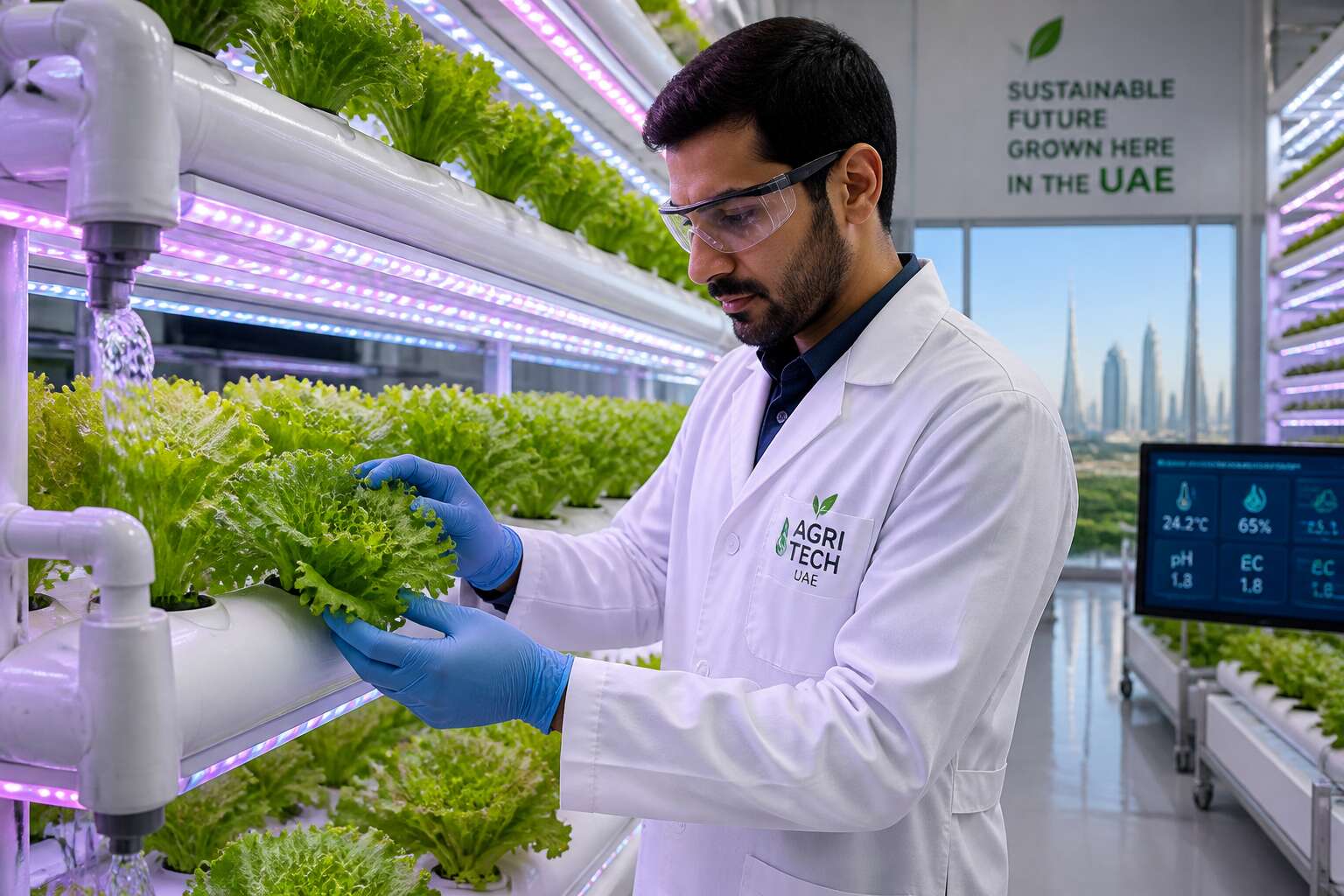
The Growing Demand for Hydroponic Farming in the UAE
Why the UAE is Investing in Soil-Free Agriculture
The UAE imports roughly 90% of its food, a stark reality that has forced a radical rethink of traditional agriculture. This dependence on foreign supply chains is not sustainable, and the nation is now pouring significant resources into controlled environment agriculture. Hydroponic farming in the UAE is no longer a novelty; it is a strategic imperative for national food security. The government is actively funding research and development to scale up these soil free systems, transforming arid landscapes into productive hubs.
This shift is creating a new economic sector. As commercial greenhouses expand, the need for skilled technicians, system designers, and crop scientists is exploding. The promise of hydroponics jobs in uae is drawing interest from agronomists and engineers worldwide. For local professionals, it is a chance to enter a cutting edge field. The work involves managing nutrient solutions, monitoring automated climate controls, and ensuring optimal yield in a desert climate.
Specific roles are emerging to meet the demand:
– Vertical farm managers who oversee multi level growing operations.
– Irrigation specialists focused on water recirculation systems.
– Plant health technicians who diagnose nutrient deficiencies.
For a South African professional, this represents a unique career move. The skills you have in water management transfer directly to this new environment. The opportunity is substantial for those with a background in horticulture or engineering. Making the desert bloom is not a metaphor here. It is a daily job description, and the market is hungry for people who can do it.
The Rise of Vertical Farming and Controlled Environment Agriculture
A desert grown tomato now has a shorter commute than the cashier scanning it. The growing demand for hydroponic farming in the UAE has made that possible, and the rise of vertical farming and controlled environment agriculture is pushing further.
Vertical farms stack lettuce and herbs in multi level towers, feeding roots through closed loop irrigation and LED light schedules. In the UAE, the weather is a problem you engineer around, not a season you wait for.
South African growers will recognise the irrigation discipline. Facilities are hiring across technical roles, and professionals looking for hydroponics jobs in uae will find a market that is open and specific.
Typical infrastructure includes:
- Nutrient film technique gullies
- Deep water culture tanks
- Aeroponic misting lines
I have toured facilities where the plants get better climate control than the staff! The work is precise, hands on, and nothing like farming in the Karoo.
Key Players and Commercial Hydroponic Farms in the Emirates
Commercial hydroponics in the Emirates has moved beyond pilot projects. Badia Farms runs stacked towers in Al Quoz. Pure Harvest operates climate controlled greenhouses outside Abu Dhabi. Bustanica claims the world’s largest vertical farm near Dubai’s airport. Madar Farms supplies produce to local supermarkets.
These operations total more than thirty commercial sites, each requiring skilled staff for nutrient balancing, system maintenance, and crop scheduling. Skilled workers are hard to find. The following facilities regularly post vacancies:
- Badia Farms
- Pure Harvest Smart Farms
- Bustanica
- Madar Farms
A technician who knows water chemistry and pump calibration will find serious opportunities. I have seen job listings that request specific aeroponic knowledge. The demand for hydroponics jobs in uae grows with every harvest cycle. South African growers can arrive with solid practical experience and step directly into a paid role.
Types of Hydroponic Career Opportunities in the Emirates
Agronomists and Hydroponic Crop Specialists
Only 1% of UAE land is arable, yet the country thrives on crops grown without soil. That oddity creates real demand for hydroponics jobs in uae, particularly among agronomists and hydroponic crop specialists.
Agronomists design nutrient solutions and environmental parameters. They monitor electrical conductivity, pH drift, and plant transpiration rates. Their decisions determine yields, and I have seen rookie agronomists panic over a 0.2 pH shift. Hydroponic crop specialists turn those plans into daily actions. They propagate seedlings, prune roots, and manage pest control using beneficial insects.
- Calibrating dosing pumps.
- Recording daily growth metrics.
- Adjusting irrigation cycles.
Both roles require precision and a tolerance for dampness. In a nation of sand, you trade dust for fertilizer salts. The work is technical, steady, and refreshingly clean compared to traditional farming!
Greenhouse and Climate Control Technicians
The Gulf’s obsession with perfect greens is a boon for engineers who prefer keyboards to compost. A vertical farm is essentially a machine with a harvest, and that machine requires constant stewardship. Greenhouse and climate control technicians are the custodians of the artificial atmosphere, ensuring that a 45 degree Celsius desert day never intrudes upon a 22 degree Celsius grow room. Their work involves more than fixing broken fans. They calibrate the very conditions that trick basil into thinking it is springtime in Tuscany.
These technicians manage the complex interplay of HVAC systems, dehumidifiers, and CO₂ generators. They are the first responders when an algorithm fails, performing the critical triage that saves a crop from a sudden temperature spike. This is a discipline where a multimeter is more common than a trowel, and the skill set is directly transferable to hydroponics jobs in uae. The necessary gear is specific:
– Programmable logic controllers for automated irrigation
– Variable frequency drives for precise airflow control
– Psychrometric charts to troubleshoot humidity issues
Mastery of these systems offers a clear trajectory. One can advance from field maintenance to a senior controls engineer, designing the custom software that runs the entire facility. In a region where every liter of water is a strategic resource, the ability to prevent evaporative loss is a highly valued talent. The job is clean, methodical, and surprisingly quiet, until a sensor alarm shatters the calm. For those who find satisfaction in taming complex mechanical systems, this sector of hydroponics jobs in uae provides a stable and intellectually demanding career path.
Horticulture Technicians and Production Managers
Horticulture technicians provide the daily, tactile attention that keeps a crop alive. They inspect roots, adjust dosing schedules, and respond to subtle shifts in leaf colour before those shifts become visible problems. In a busy Emirates farm, they may visit every grow bed before sunrise.
Production managers operate with a wider lens. They convert agronomic data into staffing rosters, purchase orders, and delivery commitments. They negotiate between what the plants require and what the market demands. Many of the most stable hydroponics jobs in uae belong to this mid tier of management, where operational fluency matters more than formal credentials.
The shared duties across both roles include:
– Maintaining accurate batch records for traceability
– Ensuring water quality meets crop-specific standards
– Cooperating with quality assurance teams
For South African horticulturists weighing a move abroad, these roles offer a practical entry into hydroponics jobs in uae, with clear room for advancement.
Nutrient Solution and Water Quality Analysts
In the Emirates, water quality determines crop survival. Nutrient Solution and Water Quality Analysts manage that water with precision. They read electrical conductivity and pH levels in each reservoir, then adjust nutrient concentrations to match crop-specific tolerances. Their work stays behind the scenes, but it decides whether plants flourish or fail.
These analysts track dissolved oxygen and temperature trends across irrigation cycles. Their reports support harvest forecasts. For South Africans seeking hydroponics jobs in uae, this role offers a path based on chemistry and careful observation rather than heavy machinery.
- Sampling root zones and runoff daily
- Calibrating dosing pumps and probes
- Flagging anomalies before they affect yield
The work suits people who value precision behind the scenes. It is meticulous, essential, and always needed.
Automation and IoT Engineers for Smart Farming Systems
The UAE’s farms run on data as much as water. Automation and IoT Engineers build the infrastructure that connects sensors, controllers, and analytics platforms. They regulate every input, from light spectra to nutrient flow. Their code keeps climate zones stable while adjusting for Dubai’s heat and Abu Dhabi’s humidity swings. I have seen how a single sensor network can transform a facility’s output.
For South Africans exploring hydroponics jobs in uae, this role requires software fluency and practical hardware knowledge. Engineers calibrate programmable logic controllers, maintain sensor networks, and write diagnostic scripts that predict equipment stress.
Key responsibilities include:
- Deploying wireless sensor arrays across growing zones
- Configuring automated dosing and irrigation schedules
- Integrating climate data with crop growth models
The work demands systems thinking and hands-on troubleshooting. In a region where every litre counts, automation engineers ensure technology and living plants work in unison.
Supply Chain and Fresh Produce Logistics Roles
Once the harvest leaves the growing chamber, new careers emerge. The Emirates runs on precision, and that precision extends to every refrigerated truck and cargo manifest. Supply chain specialists ensure greens reach Dubai hotels, Abu Dhabi retailers, and regional export hubs before the freshness window closes.
For South Africans exploring hydroponics jobs in uae, this side of the industry rewards methodical planners. Logistics managers track cold chain temperatures, coordinate inventory, and schedule deliveries across the seven emirates. They also handle customs paperwork and food safety documentation, skills that transfer from retail and freight backgrounds. Some positions sit at Jebel Ali, where climate controlled storage meets Gulf shipping lanes, while others focus on last mile delivery.
Core functions across these hydroponics jobs in uae include:
- Coordinating daily distribution to supermarkets and restaurants
- Managing import and export permits for Gulf trade routes
- Building real time tracking systems for perishable stock
Essential Skills and Qualifications for Aspiring Professionals
Academic Pathways: Degrees and Specialized Certifications
With regional food security targets driving investment, professionals who understand plant physiology and water chemistry are becoming indispensable. The most sought after candidates for hydroponics jobs in uae combine practical intuition with formal training. A bachelor’s degree in horticulture, agricultural engineering, or biotechnology provides the theoretical backbone. Certifications like the Certified Crop Advisor or CEA-specific programs from institutions such as the University of Arizona further distinguish applicants. Hands-on experience with recirculating systems matters equally. Typical employers value:
– Proficiency in pH and EC monitoring
– Familiarity with nutrient dosing software
– Knowledge of pest management without soil
For entry level roles, a diploma in controlled environment agriculture plus an internship at a commercial farm offers the fastest route. Graduate degrees open doors to research or management positions.
Technical Competencies in System Design and Nutrient Management
A single faulty valve can turn a thriving nutrient solution into a toxic broth. This is the reality for those entering the hydroponics sector. Technical mastery of system design separates the indispensable from the easily replaced.
Aspiring professionals must know how recirculating systems behave under desert heat. They need to interpret plant stress signals before they become visible.
- Designing fail safe dosing loops
- Balancing macronutrient ratios under EC drift
- Calibrating sensors without manual error
My own experience in controlled environment agriculture taught me that water chemistry is only one piece. The other piece is anticipating equipment failure before it strikes. In the UAE, those twin competencies consistently secure the most competitive hydroponics jobs in uae.
Soft Skills and Adaptability for Arid Climate Operations
The desert exposes weak points, both in people and equipment. When a cooling system fails at noon in July, the entire farm looks to the person who stays calm. Soft skills in this industry are not an afterthought. They are the difference between a team that collapses and one that adapts.
Hiring managers across the Emirates look for professionals who can make quick decisions under pressure. They want people who communicate clearly when systems fail, who can coordinate with technicians and agronomists without ego getting in the way. Language skills matter too! Many teams are multilingual, and basic Arabic or Hindi fluency can open doors.
- Emergency response during sudden climate shifts
- Cross-cultural communication in diverse crews
- Scheduling flexibility for extreme heat waves
Adaptability also means respecting the rhythm of the environment. Professionals who land hydroponics jobs in uae understand that routines shift. Patience and teamwork matter as much as any calibrated sensor. Candidates who stay composed earn the strongest reputations.
Where to Find Hydroponic Farming Opportunities in the UAE
Leading Agritech Companies and Startup Ventures
The UAE’s agritech job market is booming, but finding the right opening requires strategy. For hydroponics jobs in uae, start with specialized recruitment agencies that focus on sustainability sectors. These agencies often have direct lines to farms that do not advertise publicly.
Consider these channels for your search:
- LinkedIn groups dedicated to Gulf agritech professionals
- Startup incubators like in5 and Hub71, which fund controlled environment agriculture ventures
- University career fairs at institutions like UAE University and Khalifa University
Another route involves direct outreach. Many vertical farming startups are small enough that a well written email to their operations manager works wonders. Check platforms like Bayt and GulfTalent, but remember that niche roles often appear on company websites first. The hydroponics jobs in uae market rewards persistence, so set alerts and attend industry expos like Global Forum for Innovations in Agriculture.
Online Job Portals and Niche Agricultural Boards
The most direct route to securing hydroponics jobs in uae often begins with a search engine query, but the true landscape of opportunity is embedded within specific digital ecosystems. Generalist portals like Bayt and GulfTalent aggregate roles from larger conglomerates, yet the specialised nature of controlled environment agriculture means many positions never migrate to these platforms. You must refine your approach to target the platforms where precision agriculture employers actually post their vacancies.
Several key online portals serve as the primary hunting grounds for these positions:
- Bayt: The largest CV database in the region, hosting listings from established farming operations and food security initiatives.
- GulfTalent: A curated platform for mid to senior level roles, featuring management positions in emerging agritech subsidiaries.
- LinkedIn Jobs: The most dynamic source, updated hourly with postings from vertical farming scale-ups and research divisions.
- Indeed: A broad aggregator that captures roles from smaller farms lacking dedicated HR departments.
Beyond these generalist channels, niche agricultural boards and industry specific forums offer a competitive edge. The International Society for Horticultural Science maintains a job board where UAE based research stations and commercial hydroponic facilities post vacancies for crop specialists and system designers. Similarly, the UAE Ministry of Climate Change and Environment periodically lists openings within its smart farming initiatives, which are frequently absent from commercial job sites. Setting up direct alerts on company websites, particularly for the major players in Al Ain and Dubai Industrial City, remains the most effective way to intercept a vacancy before it is publicly circulated.
Networking Through Industry Conferences and Expos
Conferences and expos are where the quiet hiring happens. The Global Forum for Innovations in Agriculture in Abu Dhabi and Gulfood in Dubai attract the people who control hiring for hydroponics jobs in uae. These are not job fairs! Farm directors, system designers, and investors gather to discuss yield data and water efficiency. A booth conversation can lead to an interview that never appears on any portal.
I have seen candidates walk away with offers because they asked about nutrient film technique performance in local conditions. That specificity signals competence.
The most useful events include:
- Global Forum for Innovations in Agriculture (GFIA), Abu Dhabi
- Gulfood, Dubai
- AgraME, Dubai
- World Agri-Tech Innovation Summit, Dubai
The people you meet will test your knowledge on the spot. They want to know if you can manage a greenhouse in 45 degree heat or balance a nutrient solution when the source water shifts.
Recruitment Agencies Focused on Agritech and Sustainability
Recruitment agencies in the UAE have built dedicated agritech and sustainability divisions. These firms understand that hydroponics jobs in uae require a hybrid profile, part plant scientist and part systems engineer. They place candidates with vertical farms, greenhouse operators, and government research initiatives. Some agencies specialise in Emiratisation targets, while others focus on expat talent with desert agriculture experience. A useful practice is to ask the recruiter about their client’s water source and nutrient delivery approach. That question signals technical fluency.
Examples of agencies to approach include:
– The Sustainable Talent Group
– Agritech Recruiters Middle East
– Green Circle Executive Search
These recruiters often review candidates for emerging controlled environment agriculture projects in Abu Dhabi and Dubai. They also track startup funding rounds, which influences hiring timelines. Sending a tailored resume to these agencies can place you ahead of the portal crowd.
Career Growth, Salaries, and Future Prospects for Hydroponic Professionals
Average Salary Ranges Across Entry, Mid, and Senior Roles
The trajectory for hydroponics jobs in uae is steep, but the rewards follow suit. Entry level crop technicians start around AED 8,000 per month, while mid level production managers pull in AED 15,000 to 25,000. Senior roles, such as automation directors or research leads, routinely clear AED 30,000. These numbers shift with experience and technical depth.
- Entry level: AED 8,000 to 12,000
- Mid level: AED 15,000 to 25,000
- Senior level: AED 30,000 plus
Career growth accelerates for those who master nutrient recovery or climate modelling. Vertical farms expand annually, creating internal promotion pipelines. Future prospects hinge on water security and food self sufficiency, two pillars of UAE policy. Professionals who upskill in data driven crop analytics outpace the curve. The market rewards adaptability, not tenure. For a South African looking abroad, the leap offers both financial and experiential gains. Salaries often include housing and transport allowances, which compounds the appeal.
Additional Benefits and Perks in the Agritech Sector
Most professionals underestimate how quickly a vertical farm career compounds. A technician who learns climate modelling can become a production lead within two years. The turnover in this sector is low, but the growth is not linear. It depends on how much you understand the entire system, not just your assigned row of crops.
Salaries reflect this technical depth. Entry level roles pay AED 8,000 to 12,000 monthly. Mid level managers earn AED 15,000 to 25,000. Senior specialists in nutrient recovery or automation clear AED 30,000. For a South African, these numbers carry further when you add the housing and transport allowances that most agritech firms include. That makes the net savings potential significantly higher than a comparable role in Johannesburg or Cape Town.
The future belongs to professionals who can handle water security data and crop analytics. The UAE treats food self sufficiency as a strategic goal. That means funding flows into research and infrastructure, which creates stable career paths. Professionals who master these systems will find themselves in demand across the Gulf, not just in the Emirates.
- Annual performance bonuses often reach 10% to 15% of base salary.
- Relocation packages cover flights and initial accommodation.
- Health insurance extends to dependents in most companies.
- Education allowances are common for families.
These perks shift the real value of a hydroponics job in UAE beyond the monthly figure. The financial gain is real, but so is the professional acceleration. You are not just trading one job for another. You are stepping into a sector where your skills will be tested, measured, and refined against real production targets. That experience is worth more than any salary bump on paper.
Professional Development and Continuing Education Opportunities
Career growth in hydroponics is faster than most agricultural sectors. A technician who understands climate modelling can become a production lead within two years. Salaries reflect this technical depth. Those who master water quality systems and crop scheduling reach the upper salary brackets. Senior roles command significant premiums across the Gulf. The professionals who interpret yield data in real time earn the most.
Future prospects tie directly to the UAE’s food security mandate. Government funding flows into research and infrastructure, creating stable demand for skilled people. Employer sponsored certifications and hands-on training keep professionals current:
- Controlled environment agriculture certificates
- Workshops at regional research stations
- Nutrient film technique and automation courses
Those who treat every system failure as a lesson will find that hydroponics jobs in uae reward deeper knowledge. Continuing education in vertical lighting systems and crop analytics extends a career’s value. For South Africans, the investment in learning pays off across borders.
Long-Term Career Trajectories and Emerging Specializations
The UAE’s food security mandate does more than fund infrastructure; it rewards professionals who think in decades. A career in hydroponics jobs in uae follows a progression: early years focus on environmental control, mid career brings cross system integration,and seniority demands yield forecasting. Salaries reflect this accumulating complexity: senior profiles in system integration command compensation that surpasses conventional farming roles.
For South Africans considering hydroponics jobs in uae, emerging specializations offer trajectories beyond traditional agronomy. Watch these pathways:
- Predictive crop modeling using historical climate data
- Automated nutrient dosing algorithms for high salinity environments
- Energy water tradeoff analysis for vertical farm design
These niches turn operational experience into transferable expertise. Government backed projects consistently need people who can troubleshoot, optimize,and teach. The future rests on professionals who view components as interconnected and treat each system failure as a lesson.

0 Comments