Indoor Commercial Farms
Urban Warehouses
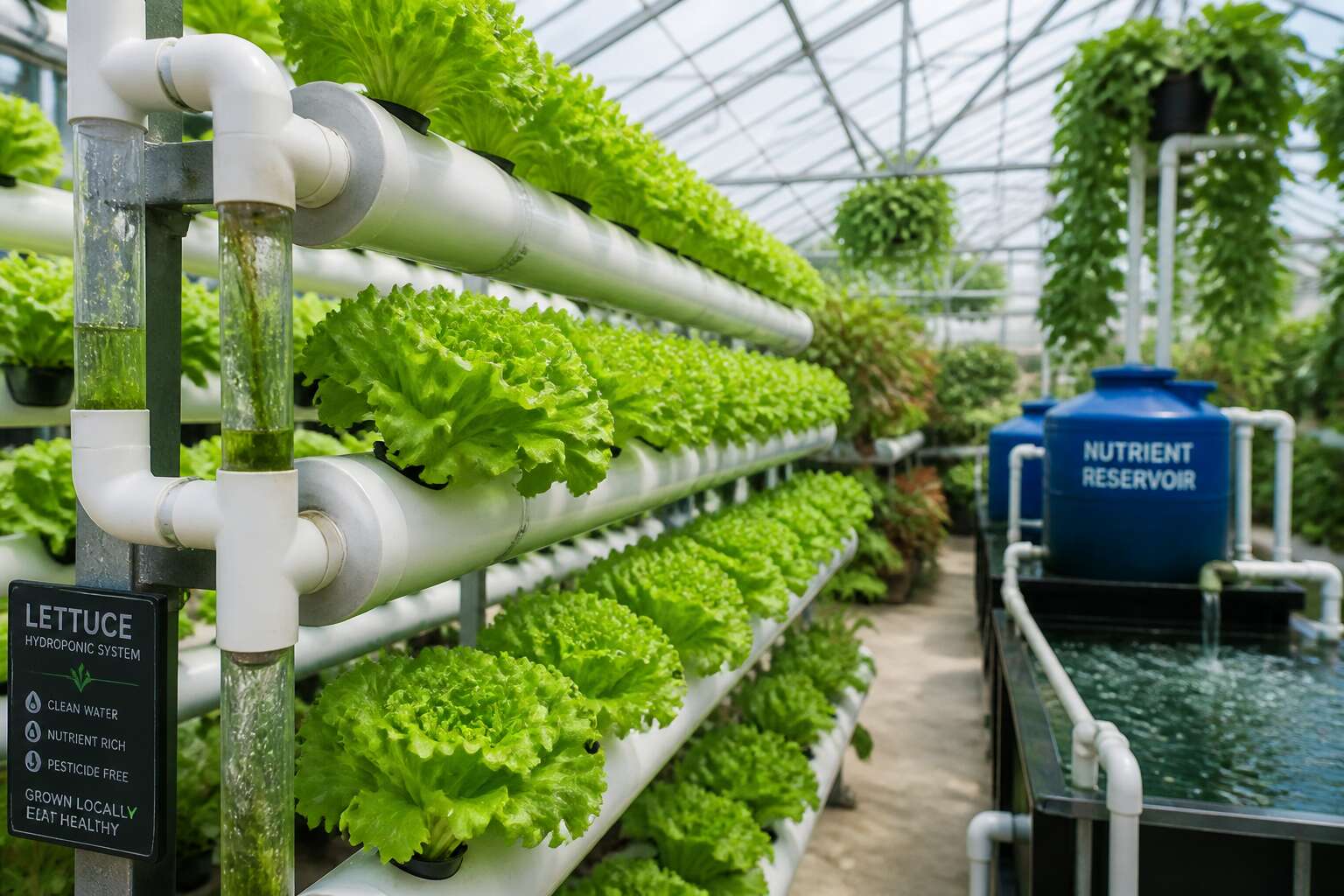
In the heart of Johannesburg, a former textile factory now hums with leafy green crops. Indoor commercial farms and urban warehouses have become the unexpected answer to a persistent question: where does hydroponics take place when arable land runs scarce? These converted spaces house layers of nutrient rich water instead of soil, with racks stretching toward strong artificial lights and climate sensors maintaining a constant hum.
A typical facility might repurpose any of these structures:
- obsolete shipping containers
- disused factory floors
- subterranean parking garages
Each offers the same advantage: a controlled environment where weather related crop failure becomes nearly obsolete. Hydroponics, once confined to research labs, now thrives behind unremarkable industrial facades.
Vertical Farming Facilities
Consider the vertical farm inside a former bank headquarters in Sandton. Each floor holds a different crop, arranged in shelves that climb toward the ceiling. The question, where does hydroponics take place, now has a new answer: anywhere with a lift and a reliable power grid!
These indoor commercial farms operate with precise routines. No soil, no weather, no fuss. The plants receive nutrient solutions through closed loops, while sensors adjust light spectra and humidity by the minute. A visitor might notice the absence of insects, the lack of mud, and the strange silence of growth without wind.
- Microgreens on misted trays
- Basil under red and blue LEDs
- Spinach in vertical towers
Walking between the racks, you realise that vertical farming facilities have turned agriculture into a controlled indoor practice. The yield per square metre is staggering, yet the real advantage is predictability.
Greenhouse Operations
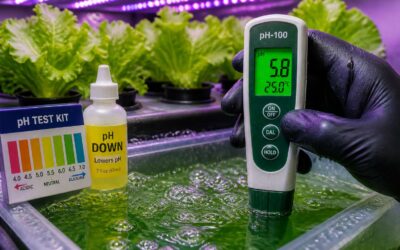
Inside the Boland’s glass valleys, a different answer emerges. Where does hydroponics take place? It happens in the long corridors of commercial greenhouses, where rows of cucumber vines stretch toward a filtered sun. The soil is gone, replaced by perlite and aerated water. I have seen workers glide between the aisles, checking pH meters and flow rates with quiet precision. Every leaf receives nutrient solution through drippers, never through rain.
Greenhouse operations rely on thermal mass and careful ventilation. The plants drink from revitalised nutrient streams. A single glasshouse can produce eight harvests of leafy greens each year, regardless of the Western Cape winter. The heat retained in concrete floors keeps roots warm while fans push stale air toward roof vents.
- Tomatoes in bag culture
- Strawberries on elevated gutters
- Sweet peppers under shade nets
These systems answer that question with quiet consistency, turning open sky into a measurable resource.
Controlled Environment Agriculture Sites
Some answers to where does hydroponics take place live behind steel doors where weather reports lose all meaning. Indoor commercial farms operate as controlled environment agriculture sites, often occupying repurposed factories or purpose built units on industrial estates. At one facility outside Pretoria, I watched basil grow under red light while rain hammered the roof. The system recirculated every drop of water, and filtered air kept pollen and pests outside.
These farms depend on reliable electricity. South African operators invest in solar and battery banks to survive load shedding, which shapes every design decision. They harvest year round, planning crops by market price rather than calendar.
- Nutrient film technique
- Deep water culture
- Aeroponic misting chambers
Each configuration answers the question of where does hydroponics take place in a different economic context. The growing environment itself becomes the product: predictable, sterile, and completely indifferent to the weather.
Outdoor and Open-Air Setups
Rooftop Gardens
As concrete cities heat under the African sun, rooftops become practical spaces. This is one answer to where does hydroponics take place. It unfolds above traffic, in shallow trays of perlite and recycled rainwater.
Consider the psychological shift. Tending a rooftop garden breaks the monotony of indoor cultivation. The wind, the birds, the unfiltered light demand resilience. Growers adapt daily, shielding fragile lettuce from gusts or cooling reservoirs during heatwaves. This open-air vulnerability requires honest observation.
- Nutrient film technique channels along parapet walls
- Drip lines feeding tomato towers
- Fogponic misters for leafy greens
Yet the real question, where does hydroponics take place, is answered less by location and more by intention. Rooftop gardens thrive because they require constant adjustment to weather, a challenge no warehouse can replicate.
Community Allotments
On a community allotment in Cape Town, the question where does hydroponics take place becomes shared schedules. Plots are tidy, but the reservoir and nutrient station belong to everyone. One does not adjust the pH without consulting Brenda, who has strong opinions about iron chelate. It is communal governance.
Open-air setups here sit in full sun, exposed to the south-easter that rattles shade netting. Hydroponic gullies line raised beds, with simple timers controlling the flow. Because the site is communal, maintenance is a rotation.
- trimming roots that clog the lines
- scrubbing algae off pipes
- recording yields in a shared notebook
When a newcomer asks why bother with electricity when soil works fine, the answer appears in the harvest. Lettuce is crisp, basil abundant, beds produce through the Cape winter. Where does hydroponics take place, wherever a group agrees to share water.
Pop-up Hydroponic Stands
Saturday morning at a flea market in Pretoria, a pop-up hydroponic stand answers the question where does hydroponics take place in about ninety seconds. The farmer arrives with a bakkie loaded with nutrient tanks and grow trays, and lettuce is already crisp before the coffee stand opens!
These open-air setups thrive on impermanence. They move between festivals, school fetes, and busy intersections. Timers run off a car battery. The pump is a pond unit. Nothing is bolted down, which is why security guards eye the equipment with suspicion.
- Weekend farmers markets in Joburg
- Street corners near taxi ranks in Durban
- Pop-up events at Cape Town beaches
Each stand works because the crops are sold within hours. That is the trick. Where does hydroponics take place in this format? Anywhere the crowd is thick and the shade is light.
Agricultural Research Stations
At agricultural research stations, the question of where does hydroponics take place finds a scientific answer. These outdoor sites stretch across the Highveld, where rows of troughs sit under shade netting. Researchers measure nutrient uptake as the wind moves through the crop. The sun does most of the work. A backup generator hums in the background, ready for the inevitable load-shedding!
I visited one such station near Bethlehem last autumn. The lead agronomist showed me how they test lettuce varieties against local pathogens. Every data point gets recorded by hand. Weather readings dictate when to adjust the nutrient solution.
The work follows a yearly rhythm:
- Winter trials focus on cold tolerance.
- Spring brings pest pressure studies.
- Summer tests heat stress responses.
Outdoor conditions change every calculation. A sudden hailstorm can destroy a month of work. That is the risk researchers accept. Where does hydroponics take place in this context? It happens in the open, where conditions remain unpredictable.
Educational and Institutional Settings
University Research Labs
Wander into any agricultural science faculty in South Africa, and you might mistake the overflowing benches for a florist’s workshop. University research labs quietly offer one answer to where does hydroponics take place. Here, plants serve measurement rather than market. They grow in precisely calibrated nutrient films, subjected to daily scrutiny bordering on the obsessive. It is a social ritual of sorts, with postgraduate students arguing over electrical conductivity values as if they were debating cricket scores.
These institutional settings excel at testing the unglamorous variables, from light spectra to root temperatures. I take particular pleasure in watching a controlled study contradict a textbook. That is the moment research earns its keep!
School Science Programs
Walk into a South African high school biology class during spring, and you might find a hydroponic tower standing beside the chalkboard. This is another place where does hydroponics take place: the school science program. Here, learners measure pH levels before they memorise the periodic table, and they watch roots dangle into nutrient mist as if observing a slow miracle. The curriculum gains a living laboratory, one that fits neatly onto a windowsill or a corridor corner. I have seen a Grade 10 student gasp when a lettuce head doubled in size overnight.
Some schools rotate these projects:
- growing herbs for the tuck shop
- testing different nutrient solutions
- comparing growth rates against soil plots
These programmes teach patience and precision alongside plant science. The real lesson emerges when a system fails and students troubleshoot the pump or the lighting. That hands-on struggle answers the question with every drop.
Prison and Correctional Facilities
Inside a correctional facility in the Western Cape, a row of PVC pipes carries nutrient water past spinach. This is one answer to where does hydroponics take place: in prison and correctional facilities. The system sits behind a security fence, but its purpose reaches beyond the concrete.
Inmates learn to monitor EC levels and adjust pH, skills that translate to agricultural work after release. The routine builds discipline. A warden once told me that men who tend the lettuce at dawn argue less in the afternoon. Food costs drop, and the harvest feeds the kitchen directly.
These programmes run in several locations:
- Pollsmoor’s vegetable unit
- St Albans prison’s herb garden
- Kgosi Mampuru’s training site
Each system produces fresh produce while giving offenders a tangible trade. The closed loop of nutrients and labour offers a quiet kind of rehabilitation, measured in grams and growth.
Museum and Exhibition Spaces
The question of where does hydroponics take place finds an unexpected answer inside museum walls. At the Cape Town Science Centre, a vertical nutrient film system grows rainbow chard behind glass. Visitors watch roots dangle in mist, and they see the future of food production in miniature. It is alive!
Museums use hydroponics to demonstrate closed-loop agriculture without soil. They show the mechanics of pumps and timers. They let children touch the humidity. Some institutions install interactive rigs that allow visitors to adjust nutrient strength and witness the plants respond in real time.
- The Iziko Museum’s living wall of herbs
- The Johannesburg Botanical Garden’s demonstration tower
- The Durban Natural Science Museum’s aquaponic tank
These spaces transform passive viewing into a sensory lesson. A museum curator once said that a lettuce seedling changing colour overnight convinces more visitors than any diagram ever could. Hydroponics in these venues makes the invisible visible, one drop of nutrient solution at a time.
Residential and Small-Scale Locations
Home Kitchens and Balconies
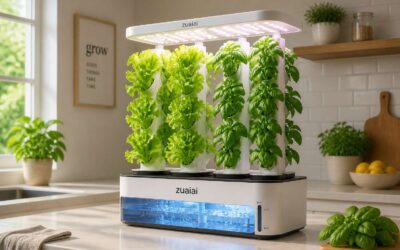
In a sunny corner of a Johannesburg flat, fresh basil grows without a single grain of soil. The answer to where does hydroponics take place includes some of the smallest domestic spaces imaginable. Home kitchens and balconies across South Africa host these soil-less gardens.
Water scarcity shapes this trend. Hydroponic systems recirculate nutrient solutions, using a fraction of the water that traditional pots demand. Load shedding adds complication, but passive wick systems need no electricity at all!
Popular home configurations include:
- Glass jars sprouting herbs on windowsills
- PVC pipe channels along balcony railings
- Bucket systems for leafy greens like spinach and lettuce
These micro-orchards produce weekly harvests. A family in Durban grows their entire salad supply on a two-metre shelf. In Pretoria, an apartment dweller cultivates strawberries against a kitchen wall. So when people ask where does hydroponics take place, the answer reaches into the home itself, turning private spaces into productive gardens.
Basement Grow Rooms
Basements offer an unexpected answer to where does hydroponics take place. A Johannesburg homeowner converts a 12 square metre cellar into a nursery for lettuce, using LED arrays and flood tables. The absence of windows becomes an advantage. No sunlight means complete control over photoperiod, and the thermal mass of concrete keeps nutrient temperatures steady through winter nights.
Thick walls buffer Highveld temperature swings. Basement growers also sidestep load shedding because DC pumps run off deep-cycle batteries charged during daylight hours.
Common configurations include:
- Drain-to-waste tables for herbs
- NFT channels for strawberries
- Aeroponic towers for leafy greens
The shelving and pump investment stays modest. Families in Pretoria and Cape Town harvest year-round from rooms that once held old furniture and dust.
Garden Sheds and Patios
Almost every South African property has a garden shed or a patio. Those spaces answer where does hydroponics take place for many urban growers. A gardener in Durban converted a corrugated iron shed into a lettuce nursery using vertical gutters and a nutrient reservoir. Patios offer a simpler path, with a shallow tray and a small pump replacing soil borders.
- A water tank or reservoir
- Net pots and growing media
- A timer-controlled pump
- A simple nutrient solution
These setups show where does hydroponics take place for the home grower. I have seen a patio produce more kale than a traditional garden bed. The scale is limited, but the harvest is personal. Residents in Bloemfontein grow cherry tomatoes and basil without converting their living rooms. The open air on a patio requires attention to temperature, yet the proximity to the kitchen makes daily monitoring easy.
DIY Hydroponic Kits
A shelf in a Soweto kitchen holds a DIY hydroponic kit that yields lettuce every month. That shelf answers where does hydroponics take place for thousands of home growers. The kits arrive as flat boxes, and assembly takes an afternoon. You supply the water, the nutrients, and a bit of patience.
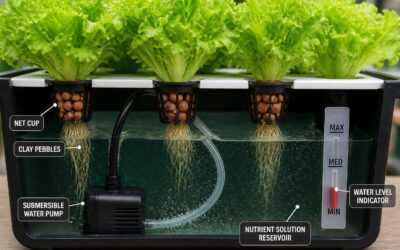
A typical kit includes:
- a growing tray with a fitted lid
- a submersible pump
- net cups and clay pebbles
- a timer for the light cycle
The plastic tubing connects the reservoir to the tray. The pump runs on a simple schedule.
These kits sit on counters, in laundry rooms, or inside unused wardrobes. I have seen a kit in a Pretoria flat grow more herbs than a garden border. The scale is small, but the process is real. Temperature matters, yet a regular home loses no more heat than a greenhouse does. That is the practical case for asking where does hydroponics take place: it takes place where people already live!
Specialized Environments
Arid and Desert Regions
Ask where does hydroponics take place, and arid regions may not come to mind. In the Namib or the Kalahari, rainfall is rare. Hydroponic systems use up to 90% less water than soil farming. The nutrient solution recirculates, so evaporation is minimal.
These facilities sit inside shaded structures. Gravel or sand replaces soil as the growing medium. Solar panels run the pumps, and cooling pads manage heat. Leafy greens thrive year round, even when outside temperatures surpass 40 degrees Celsius.
Growers choose crops with short cycles:
- Lettuce matures in three weeks.
- Kale tolerates saline water.
- Basil needs less cooling.
Solar irradiance and brackish water dictate the siting of these farms. Fertile soil is irrelevant.
Urban Food Deserts
A block away from a taxi rank in Tshwane’s CBD, a repurposed shipping container grows leafy greens. The pavement outside has no fresh produce for sale, a common marker of an urban food desert. In such zones, where does hydroponics take place is answered by micro farms that occupy disused municipal lots and narrow service alleys.
These structures run on nutrient film technique and recirculating pumps. They use no soil, and they use roughly a tenth of the water of a conventional plot. The crops, Swiss chard and spring onions mostly, go from tray to spaza shop within the same day.
Each unit follows a strict rhythm:
- Nutrient solution testing at sunrise
- pH adjustment before midday
- Harvest and distribution by late afternoon
The question of where does hydroponics take place stops being about rural farmland entirely. It becomes a record of cramped urban spaces where a grow light, a pump, and a rack of trays fit into what was once empty concrete.
Marine and Offshore Platforms
Off the coast of West Africa, decommissioned drill ships now grow butter lettuce. Seawater pounds the hull, but inside the old mess hall, nutrient film technique runs in silence. The salt air corrodes everything except the sealed PVC channels.
Where does hydroponics take place on a floating platform? The answer lies in the ballast tanks, now converted into root chambers, and on the helicopter deck, where UV-resistant grow bags shield against spray. Conditions are brutal. The system uses desalinated water and oscillating pumps that adjust for wave movement.
- Crews favour quick-cycle crops like baby spinach and rocket
- Nutrient reservoirs sit on gimbals to stay level in rough seas
- Harvests align with supply boat schedules, cutting spoilage
Offshore platforms are harsh, cramped, and expensive to retrofit. Yet they produce fresh leaves a hundred kilometres from shore. Where does hydroponics take place is no longer a question of soil or climate. It is a question of whether a flat surface, a pump, and a power source exist.
Space Exploration Simulations
Inside a white cylinder in the Utah desert, six researchers harvest lettuce from a sealed chamber. The structure is called the Mars Desert Research Station. Nutrient film technique feeds the plants because the local soil is dry basalt. No earth, no rain, no microbes. Everything travels through recirculated water.
These stations mirror the constraints of a Martian outpost. Air handling units scrub humidity while LED panels reproduce a solar spectrum.
- Nutrient lines are sterilized between crop cycles
- Seeds are selected for compact growth and quick harvest
- Harvest data goes back to engineers designing space farms
The answer to where does hydroponics take place may one day be written on another planet.

0 Comments