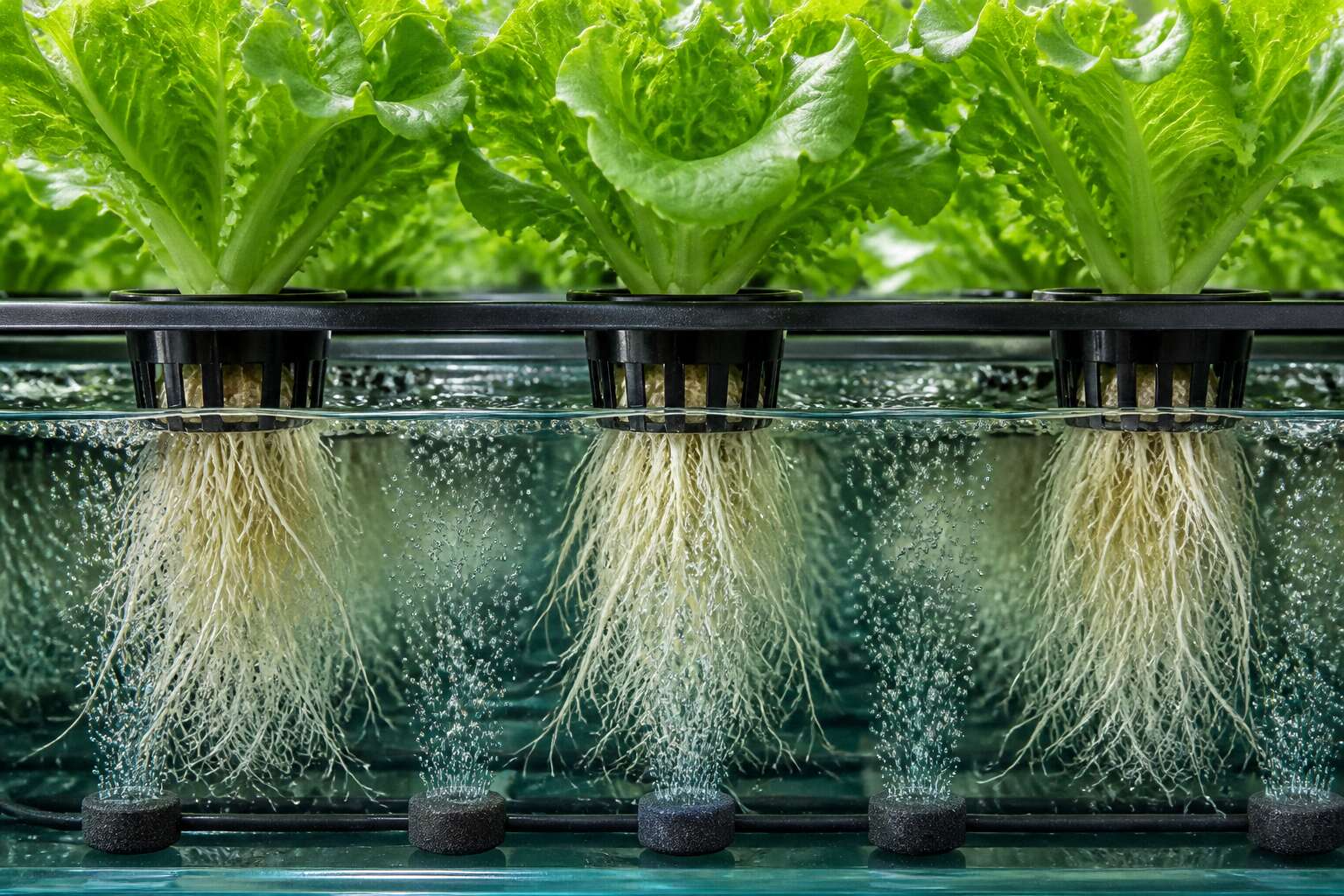
Essential DWC Components and Reservoir Design
Net Pots, Grow Media, and Plant Support
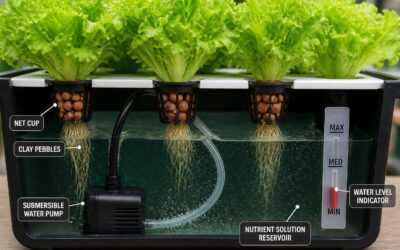
Deep water culture rewards precision. The reservoir holds the nutrient solution that feeds every root. A dark, food-grade container prevents algae and maintains stable temperatures. For a hydroponic system deep water culture, the reservoir must sit level and allow easy monitoring.
Net pots hold the plants above the water. Their mesh must let roots reach down freely. The grow media inside, clay pebbles or perlite, keeps the stem in place while keeping the root crown dry. Key components include:
- Light-proof reservoirs with secure lids.
- Net pots sized to plant spread.
- Support collars for heavy stems.
That support becomes critical as plants mature. Heavy fruit will topple without structure. The air pump and stone complete the oxygenation loop. Every element works together in a hydroponic system deep water culture, and skipping one weakens the entire system!
Air Pump, Tubing, and Air Stone Placement
Every root in the reservoir depends on dissolved oxygen. In a hydroponic system deep water culture, the reservoir is the central holding tank. A dark, food-grade tote blocks light and prevents algae. Choose a vessel with a flat base and a secure lid. Add a float marker to track water levels without lifting the lid.
Oxygenation begins with the air pump. Sit it above the water line to prevent siphoning during a power outage. Silicone tubing connects the pump to the air stone. Run the tubing in a straight path and avoid sharp bends.
Place the air stone directly beneath the root zone, not at the reservoir wall. In a hydroponic system deep water culture, fine bubbles rise and circulate the solution, keeping dissolved oxygen high. For larger reservoirs, two stones on separate lines distribute oxygen more evenly. A gentle, steady boil across the surface beats a violent churn.
Nutrient Reservoir Capacityand Lid Stability
Your hydroponic system deep water culture is only as forgiving as its reservoir. A cramped tote forces nutrient levels to swing wildly, while a generous tank holds steady through the day. South African heat makes this especially clear. I have watched a modest 20 litre reservoir climb past 28 degrees Celsius by noon, and the plants suffered for it.
Lid stability deserves equal respect. A flimsy lid bows under the weight of your plants, shifting the root zone and admitting stray light. Choose a tote with a reinforced rim and a snug fit! Press down on the lid before you commit. If it flexes under your hand, it will flex under your garden.
Water Temperature Control and Insulation Techniques
Water at 25 degrees Celsius holds 14 percent less oxygen than at 18 degrees. That difference decides whether a hydroponic system deep water culture thrives or fails. South African summers test every reservoir. I have lost plants to water above 26 degrees Celsius. The root zone suffocates slowly. The remedy is insulation, applied deliberately.
The reservoir needs a wrap of reflective foil or closed cell foam. These materials block radiant heat. The tote should sit off the ground. Concrete floors absorb heat and transfer it upward. A simple pallet or foam board underneath creates a thermal break. White exterior surfaces help. Dark totes attract heat; light ones reject it.
Essential components for temperature management include:
- A floating thermometer for daily checks
- Reflective insulation wrap
- Cooling bricks or frozen water bottles in extreme heat
Every component in a hydroponic system deep water culture depends on this balance.
How DWC Supports Root Development and Nutrient Uptake
Oxygenation Through Continuous Bubbling
Dissolved oxygen below 3 mg/L stalls root respiration entirely. In a hydroponic system deep water culture, the continuous bubbling from an air stone is the only thing standing between healthy white roots and a rotting tangle.
Each bubble creates micro-turbulence at the root surface. This turbulence prevents the formation of a stagnant boundary layer, where nutrients become scarce and waste products accumulate. As the bubbles rise, they also agitate the root mass, prompting the plant to produce more root hairs. More root hairs mean more surface area for absorbing nitrate, phosphate, and trace minerals. The process is mechanical, yet its effect on nutrient uptake is biological and immediate.
Direct Nutrient Uptake by Suspended Roots
Direct contact changes everything for a root system. In a hydroponic system deep water culture, roots hang directly in the nutrient solution, with no grow media to obstruct contact. Every root tip and root hair has immediate access to dissolved minerals. This arrangement triggers rapid root expansion because plants perceive abundant resources, eliminating the need to forage or compete for space. Roots thickenand expand, increasing the surface area for absorption. Consequently, plants channel more energy into shoot growth.
The efficiency of direct uptake becomes evident in root morphology. Suspended roots face minimal mechanical stress, so they generate numerous branching root hairs, each acting as an independent gateway for element absorption. These hairs pull critical minerals straight into the vascular system:
- Nitrate for amino acids
- Magnesium for chlorophyll
- Zinc for enzyme activation
This stress-free pathway ensures nutrients move directly to root tissues, making the system responsive to solution shifts.
Choosing Plants That Thrive in DWC
Leafy Greens and Quick Growing Herbs
Leafy greens reward a grower with visible progress almost daily. In South Africa, where summer heat can punish soil gardens, a hydroponic system deep water culture keeps plants hydrated and cool. Lettuce, Swiss chard, and spinach develop strong root masses that dangle into the oxygenated water below.
Quick growing herbs like basil, mint, and coriander also flourish here. These plants prefer consistent moisture, which DWC delivers without the constant attention that outdoor beds demand.
For a first attempt, choose:
- Butterhead lettuce
- Baby leaf spinach
- Genovese basil
- Thai coriander
These varieties tolerate warmer water temperatures and return quickly after harvest. They suit the home grower who wants steady yields from a compact setup.
Heavy Feeding Vegetables in Large Reservoirs
The transition from quick herbs to heavy feeding vegetables signals a shift in ambition for any grower. In a hydroponic system deep water culture, these plants demand more than a modest bucket can offer. Tomatoes, peppers, and eggplant are hungry, developing extensive root masses that require generous reservoir volumes. A larger water body buffers pH swings and nutrient depletion, giving the grower room to correct imbalances before stress settles in.
Consider the practical demands of these crops. They crave stable temperatures and high dissolved oxygen, conditions that a properly sized DWC setup can deliver. For South African growers, this means shielding reservoirs from midday sun, while maintaining vigorous aeration to support fruiting loads. The satisfaction comes from watching a single pepper plant anchor itself into the water, drawing sustenance directly from the solution.
- Beefsteak tomatoes
- Sweet bell peppers
- Japanese eggplant
These varieties toleratethe rigors of indoor cultivation, producing tangible rewards over several months. Choose them when your hydroponic system deep water culture is ready to carry weight, not just leafy greens.
Seedling Hardeningand Transplanting Without Shock
Only 30% of seedlings survive transplanting into a hydroponic system deep water culture without proper hardening. Choose resilient varieties like Swiss chard or dwarf beans that tolerate root disturbance. These plants establish quickly when their roots meet oxygenated water.
Hardening off means gradually exposing seedlings to the reservoir environment. Start with one hour of dangling roots in humid air, then increase exposure over three days. A simple checklist works well:
- Reduce humidity levels slowly
- Introduce a weak nutrient solution
- Monitor leaf turgor for wilting signs
For transplanting without shock, lower the net pot gently so roots dangle into the water. Avoid touching fragile root hairs. The hydroponic system deep water culture rewards patience; a sudden temperature swing or rough handling causes stalled growth.
Rotation Planting to Maximize Year Round Harvests
Choosing plants for a hydroponic system deep water culture demands strategy. Lettuce, spinach, and Swiss chard perform reliably. Basil and mint also thrive in constant oxygen. Rotation planting secures your harvest through South Africa’s seasons. I stagger plantings every two weeks. This pattern prevents harvest gluts. My rotation list works well:
- Fast growers: rocket, baby kale, coriander
- Mid season: loose leaf lettuce, mustard greens
- Slow but sturdy: celery, dwarf beans
Stagger these groups across the year. In summer, heat tolerant varieties like Swiss chard shine. In winter, cold hardy greens thrive. The hydroponic system deep water culture responds to this rhythm, rewarding careful planning with steady yields. I once skipped rotation and harvested arugulafor three months straight, which humbled me.
Mistakes to Avoid and Troubleshooting
Low Dissolved Oxygen and Root Suffocation
A stalled air pump for just sixty minutes can turn pristine white roots into a brown, slimy mess in a hydroponic system deep water culture. That is faster than most growers anticipate.
The most common mistake is overfeeding. Concentrated nutrient solutions ferment quickly in warm water, forming a biofilm that coats the air stone and steals dissolved oxygen. This creates an anaerobic zone where roots suffocate even while the pump runs.
When dissolved oxygen drops, roots don’t just stop growing. They develop a sour odor and lose turgor pressure. I’ve watched growers add more air stones, but the real culprit is often a collapsed airline or a water level that sits too deep, drowning the crown.
- Inspect the air stone for calcium scale or organic slime.
- Lift the reservoir lid and observe the root mass for brown discoloration.
- Test the air pump’s output with a hand over the outlet.
Restoring dissolved oxygen requires removing decaying matter and sometimes lowering the water surface. In any hydroponic system deep water culture, low oxygen is the primary cause of root death. Monitoring water clarity and manually stirring the reservoir weekly prevents rot. That habit saves more crops than any additive!
Nutrient Strength Imbalances During Heat
Heat turns nutrient strength into a moving target. When reservoir temperatures climb, plants drink faster and feed slower. That gap creates a toxic concentration in the water. A common mistake is chasing leaf color with extra fertilizer. The plant is already burning at the root tip.
- Test the solution at dawn, not midday, for an accurate baseline.
- Dilute with plain water if the PPM reads high, do not dump the reservoir.
In a hydroponic system deep water culture, I see growers top off with full strength nutrients during a heatwave. That is backwards. The water level drops, the roots stay wet, and the remaining solution turns caustic. Use half strength until the heat breaks. Watch the new growth, it recovers faster than the old leaves. This simple adjustment saves the crop every time.
Light Leaks and Algae Outbreaks
Algae outbreaks in a hydroponic system deep water culture are a matter of poor housekeeping, not bad luck. The green film spreading across your reservoir is a social climber. It arrives through the smallest courtesy, a sliver of light where the lid meets the net pot, and stays as long as you leave the door open.
The first mistake is fighting the bloom instead of the breach. Chemical treatments and darkening agents treat the symptom, while the light leak remains. Walk around your setup at night with a torch. Every glow is an invitation.
Check the usual offenders:
- Gaps around net pot lids
- Translucent air tubing
- Cracks in the reservoir wall
- Loose fill ports or access hatches
Seal these with black silicone or light proof tape. A clean reservoir keeps roots white and the whole system honest.
Air Pump Failures and Backup Strategies
In South Africa, load shedding often cuts power for hours. This directly impacts dissolved oxygen levels in a hydroponic system deep water culture. Air pump failure immediately reduces root oxygenation, and oxygen levels drop quickly.
Common mistakes when an air pump fails are predictable. Delaying action at the first sign of reduced bubbling is number one. Placing the pump below the reservoir causes siphoning. Ignoring the air stone’s buildup is another error.
- Check the power outlet first.
- Inspect tubing for kinks or cracks.
- Test the pump with a separate air stone.
Backup strategies are simple. A battery operated air pump, kept with fresh batteries, covers short outages. For longer load shedding slots, connect a second pump to a deep cycle battery with an inverter. This keeps your hydroponic system deep water culture oxygenated through any blackout. Clean the air stone monthly and replace tubing annually to avoid most failures.
pH and EC Fluctuations and Safe Adjustments
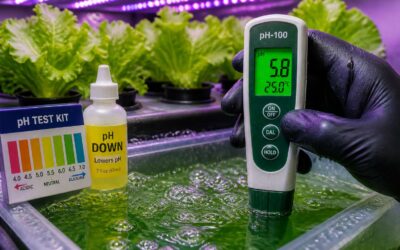
A pH reading that drifts without warning can wipe a leafy green harvest in three hours. In a hydroponic system deep water culture, roots take up nutrients across a narrow pH window. Two mistakes cause most swings, testing without calibration and rushing to fix numbers with strong doses.
Calibrate your probe every two weeks using fresh buffer solutions. Check EC after topping up the reservoir with plain water. If EC reads high, dilute gradually rather than dumping nutrients. Add pH adjuster to a separate bucket of water, then stir in a small stream. Wait one hour. Retest before adding more.
- Calibrate weekly during heat waves.
- Test EC at the same time each day.
- Never mix concentrated nutrients together directly.
Root Rot Prevention with Beneficial Microbes
A brown tinge on the roots, a faint sour smell. These appear only after the damage has spread inside a hydroponic system deep water culture. The first common mistake is leaving dead roots to float. They become breeding ground for rot. The second is sterilizing the reservoir with bleach, which kills beneficial microbes too. Beneficial microbes prevent rot by colonizing the root zone and outcompeting pathogens. I add a microbial product weekly and remove slime immediately.
- Check the reservoir temperature each morning.
- Inspect the root mass for discoloration.
- Replace the microbial solution after a heat spike.
This trio of habits stops the decay before it starts. Without them, the rot returns.
Maintenance and Optimization Strategies
Cleaning and Sanitizing Between Plant Cycles
Once the last leaf is harvested, the real work begins. Every hydroponic system deep water culture grower knows that leftover root fragments and nutrient sludge are more than unsightly. They are a biological hazard waiting to compromise the next crop.
I treat the empty reservoir with a peroxide solution before scrubbing. This oxidizes organic gunk that plain water only redistributes. The lid, the air stones, and especially the tubing all need attention. Biofilm thrives in those dark corners, quietly preparing to sabotage the next planting cycle.
Common culprits to eliminate:
- Crusty salt deposits from evaporated nutrient solution
- Slimy bacterial colonies on submerged surfaces
- Dead root fibres trapped around the net pot supports
A sanitized system gives young seedlings a fighting chance. It also prevents the new crop from inheriting old ailments. The cleanup is a reset. The reward is a fresh season of vigorous growth, free from the ghosts of harvests past.
Nutrient Refreshingand Top Off Schedules
Plants drink more than they eat. In a hydroponic system deep water culture, the water level drops every day while nutrients stay behind. That is why a top off schedule matters. Replace what the plants consumed with plain, pH-balanced water. Do not add fresh nutrients, or the EC climbs and roots burn. I have seen too many growers make that mistake.
A full nutrient refresh is different. Every two to three weeks, drain the reservoir completely and mix a new batch. Old solution loses balance, especially in warmer weather. The plants take up some elements faster than others, leaving the rest to drift.
Signs that a refresh is overdue:
- EC readings creep upward between top offs
- pH swings harder after each adjustment
- Water develops a faint, sour smell
This rhythm keeps the hydroponic system deep water culture productive without guessing.
Monitoring Water Temperatureand Oxygen Saturation
There is a precise moment when the water in a hydroponic system deep water culture turns against its keeper. The temperature creeps past 22 degrees Celsius. The dissolved oxygen saturation lags behind the bubbling. Root metabolism slows. Nutrient uptake falters. I maintain a ruthless vigilance over these two metrics. A thermometer and a dissolved oxygen meter are essential tools. Monitoring is a ritual performed at dawn, when the reservoir is coldest!
- Fluctuations of more than two degrees between day and night.
- Oxygen saturation readings below 8 milligrams per litre.
- A sluggish surface film despite the active air stones.
Optimization is not about drastic intervention. It is about trusting the readings and adjusting the air pump slowly. The hydroponic system deep water culture rewards this patience. It yields a slow, steady green under the relentless glare of the grow lights.
Supporting Large Plants with Trellis or Net Lids
The hydroponic system deep water culture becomes dangerous when a mature vine begins to pull its own weight. The lid groans. The net pot tilts. I have seen a root mass tear free during a nutrient top off. A trellis or net lid is not an accessory. It is a structural commitment.
Daily vigilance keeps the burden balanced. I tie new growth loosely, leaving room for the stalk to thicken. Net lids hide the waterline, so I check the gap between lid and reservoir for trapped roots.
- Inspect anchor points for wear before the lights switch on.
- Lift fruit clusters to confirm the trellis holds the weight.
- Trim growth that pushes against the lid seam.
Each adjustment is small. The hydroponic system deep water culture rewards that caution with an even canopy and roots that stay submerged.
Scaling from Small Bins to Large Reservoirs
Scaling a hydroponic system deep water culture from a 20 litre bin to a 200 litre reservoir changes maintenance habits more than plant growth. Larger water volumes resist temperature swings, yet they conceal mistakes for longer. A nutrient error in a small bin shows up within hours. In a large reservoir, the same error lingers for days.
Small bins forgive a missed check. Large reservoirs accumulate subtle imbalances until the plants register the damage. I watch the surface for film, the pump for vibration, and the waterline for hairline cracks. Top off volumes become misleading because the waterline does not reflect what the roots actually receive.
- Air stones that suited a small bin only churn the surface of a larger one.
- The distance from pump to the far end of the reservoir tests circulation.
- A second pair of hands helps when lifting a lid that now weighs more.
Each increase in scale asks for a new discipline. The hydroponic system deep water culture rewards those who keep a close ledger.
Automating with Timers and Sensors
Timers and sensors remove the guesswork from a hydroponic system deep water culture. You set a schedule and the hardware follows it, no matter how busy your day gets. Air pumps hum on a cycle, nutrient pumps deliver at the same hour, and a temperature sensor sends a warning to your phone if the reservoir drifts past 24 degrees. This approach does not eliminate maintenance; it shifts your attention to the data.
Consider what deserves automation:
- Oxygenation cycles with a mechanical timer.
- Water temperature monitoring with a digital probe.
- Nutrient delivery via a dosing pump and float switch.
Your leadership role shrinks to reviewing logs and catching faults early.

0 Comments